
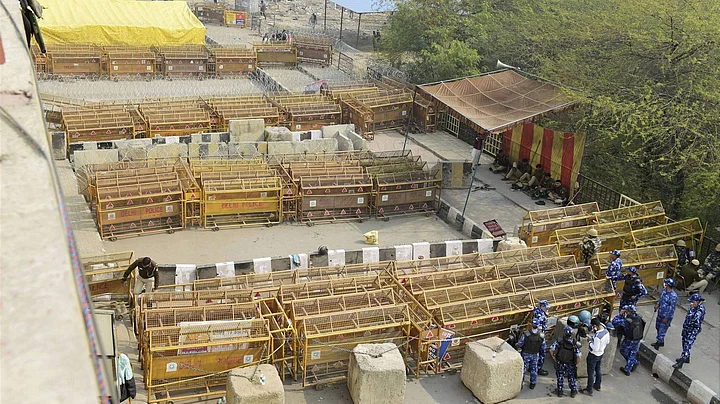
Pictures and videos of the massive blockades at the sites of farmer protests at the Delhi borders have drawn attention because of their militaristic look, with huge concrete blocks, concertina wire, spikes, iron nails, and more.
Unlike the regular mobile barricades set up by the police to contain protests, the new blockades at Ghazipur, Singhu and Tikri are of a far more imposing and permanent nature, involving walls, cemented obstacles, and the digging up of roads using JCBs.
Thus far, much of the criticism of these new blockades has focused on the imagery of them, the rhetoric of a state at war with its own people.
However, the problems with these blockades go beyond rhetoric; as The Times of India and The Indian Express report, the police’s fortifications have also cut off the protesting farmers from water and sanitation facilities.
Which begs the question:
Do these blockades violate human rights law, whether domestic or international?