
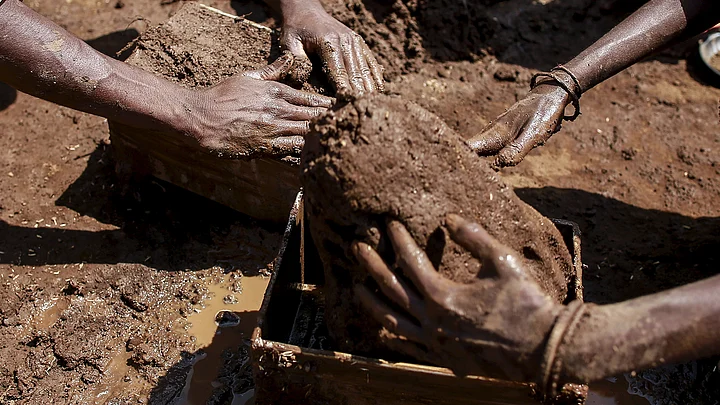
What is bonded labour, if not the result of an asymmetrical social structure? It is a long-standing trend in society that forces mainly the economically poor to agree to do unpaid labour in lieu of their loans or borrowing.
Generations are forced into unpaid labour to pay for a meagre amount that was borrowed. This is how the baton of slavery is passed from one generation to the next. The poor labourer has no choice but to accept his situation as his destiny, and live like a slave in independent India.
Even after 75 years of independence, India has not been able to wash the stains of bonded labour. In fact, I believe that the menace is deepening in society. Recently, Supreme Court Justice Hemant Gupta made a rather disagreeable comment on bonded labour.
"Do you know who are bonded labourers? They are not bonded. They take the money and come there, and are engaged by brick kilns," Justice Gupta observed, while hearing a plea on behalf of a woman worker who was allegedly subjected to repeated rape by an associate of a brick kiln contractor in Jammu.