
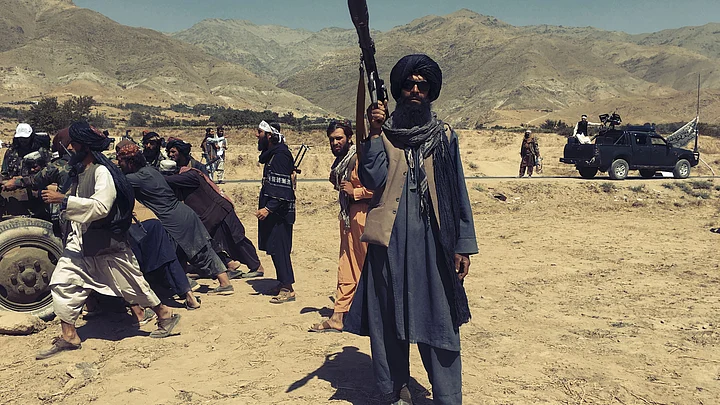
On 15 August, the Taliban swept into Kabul after the Afghan president fled and the government collapsed. By now, it is clear to the world that Pakistan and China see the fall of Afghanistan to Taliban as a win for their own plans, be it for Afghanistan’s economic subjugation for the exploitation of its mineral resources and market, or for using Afghanistan as a base for promoting terror activities to invoke pressure on countries like India.
But beyond what is clear, there are several things that are still unanswered.
The recent visit of Russia's top security official, Nikolay Patrushev, for discussing concerns on drug trafficking, Islamic fundamentalism and instability in Central Asia with his Indian counterpart was significant. It was a follow-up meeting after Indian Prime Minister Narendra Modi and Russian President Vladimir Putin agreed to establish a permanent bilateral channel to discuss Afghanistan.
These developments beg the question: how will India and Russia move forward with their combined efforts against terrorism, and other common issues, such as drug trafficking? Given that the two countries have followed almost completely opposite trajectories on Afghanistan in the last few decades, it’ll be interesting to see how they work together on the Afghanistan problem now. Moscow may want to take India aboard, but is it willing to offend Pakistan?