Who are India’s civilisational icons in statecraft and politics? The high probability answers would be Kautilya/Chanakya, the third century BCE author of Arthashastra and key advisor to Chandragupta Maurya, for statecraft; and Mahatma Gandhi, who led an astounding peaceful mobilisation to overthrow over two centuries of British colonial rule, for politics.
What was the common thread through these icons’ ideologies? If I were permitted to invent a doctrine, I would call it the “zero-point-five principle of politics”.
Kautilya said: “A king should always act in such a way that his power is increased”. In other words, a king should not be hidebound by any absolute ideology or committed to an unalterable, pre-conceived action. He should remain flexible and willing to change positions and policies in the pursuit of his power and citizens’ welfare. Several centuries later, Charles de Gaulle rephrased Kautilya: “Nations have no permanent friends or allies, they only have permanent interests”.
Mahatma Gandhi articulated his zero-point-five theorem but, and inevitably, with a moral catchline: “It’s unwise to be too sure of one’s own wisdom. It is healthy to be reminded that the strongest might weaken and the wisest might err…I have repeatedly observed that no school of thought can claim a monopoly of right judgment”. Like Kautilya, Gandhi too was batting for an adroitly open mind, willing to align with new truths and realities despite a clash with long-held beliefs. His bete noire, Winston Churchill, rephrased the Mahatma most colourfully: “If Hitler invaded Hell, I would at least make a favourable reference to the Devil in the House of Commons”.
The Zero-Point-Five Principle of Politics & Diplomacy
So, what am I driving at? Simply that an “absolutist” or “maximal” stance in diplomacy and politics is usually self-defeating, even dangerous. A zero-one, either-or, black-white approach often traps you in a one-way alley, without an exit route. Hence, my invented doctrine of “zero-point-five politics”, a position which is smack in the middle of zero and one, that puts no fetters, allowing you to swing towards zero, but flip right back nearer one, without at any point getting chain-anchored to either zero or one, the two extremes.
Unfortunately, we the descendants of Kautilya, have forgotten the guru’s core teaching. But we can still course-correct if we play the proverbial what-if game with the master, ie, how would Kautilya handle the prickly events that have bedevilled our foreign policy?
Even-Handed Between Bangladesh’s Two Begums
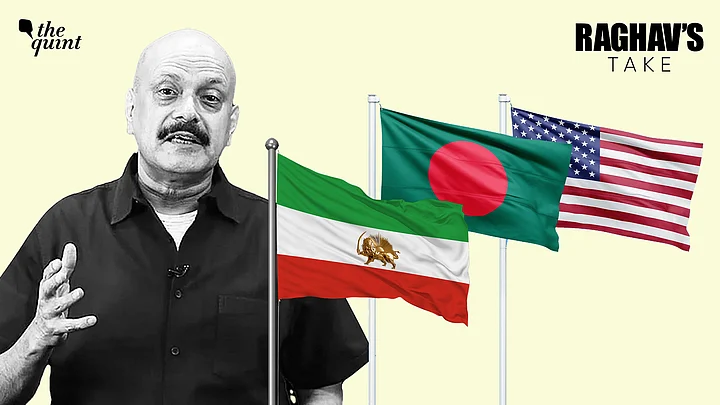
Let’s begin with Bangladesh. Kautilya would have been delighted that Sheikh Hasina stormed back to power in 2009, dislodging Begum Khaleda Zia who was relatively inimical towards India. Hasina, on the other hand, was a natural ally who would “increase India’s power” in the sub-continent. She cracked down on insurgents creating trouble in Assam and Tripura. She expanded commerce, becoming India’s largest trading partner in South Asia. She became an effective bulwark against China’s infrastructure creep. Kautilya would have affectionately hugged her for these pro-India actions.
But Kautilya would not have switched off his anti-absolutist antenna. Perhaps not publicly, but on track two he would have warned Hasina against her dictatorial instincts.
And when Hasina arrested Begum Zia to win the 2024 election virtually unopposed, Kautilya would have visibly shed his “100 pro pro Hasina” rhetoric. He would have stood up for Begum Zia’s rights and Bangladesh’s democracy. Kautilya would have known that if he continued with his “absolute” support for the increasingly unpopular Hasina, he would trigger a groundswell of anti-India sentiment. He would have understood the imperative of balance, of zero-point-five politics. So, if Kautilya had been India’s foreign minister, we would not have become a pariah once Hasina was deposed by a popular revolution in Bangladesh!
Clever Semantics for the Mercurial Donald Trump
While dealing with Hasina may have been quite straightforward, what could Kautilya do against the belligerent and maverick Donald Trump? How could he counter the outlandish claim that POTUS had practically “ordered” a cease fire in Operation Sindoor? How India and Pakistan had cowered before Trump’s threat to inflict horrendous tariffs?
Kautilya’s first impulse would have been to deny “absolutely”, to unequivocally clarify that Trump had no basis to make that claim. But then Kautilya would take a step back, and perhaps also a deep breath. He would curb his zero-one response and revert to the zero-point-five diplomatic credo.
“Thank you, Mr President, for leaning hard on Pakistan. Two billion citizens of South Asia owe you a debt of gratitude for knocking sense into renegade heads. You have done more for peace than a clutch of Nobel Laureates put together”.
That’s it. Just a bit of semantic flexibility, and Kautilya would have killed two birds with one stone: removed the scowl from the Emperor’s face, and shaved off several percentage points from the blighted tariffs!
Khamenei: Oppose the Excess, Empathise with the Aggressor
If Kautilya thought he could now rest a bit, the Emperor assassinated Ayatollah Khamenei, igniting an inferno across the Middle East. Even the inscrutable Kautilya was perplexed. How should he respond? His sworn enemy, Pakistan, despite its allegiance to the Emperor, had come out punching: “Pakistan expresses deep sorrow over the martyrdom (emphasis mine) of Ayatollah Ali Khamenei; targeting the leader of a sovereign state constitutes a dangerous escalation”.
But Pakistan stopped short of naming and shaming America and Israel. Of course, China and Russia had no such compunction or restraint.
Kautilya scanned the statements of other big powers. The European trio of France, Germany, and UK played very safe, avoiding the assassination, and sticking to the motherhood-and-apple-pie formulation of “de-escalation and negotiations”. Despite its NATO genes, Turkey “strongly condemn(ed) the assassination of Iran’s Supreme Leader”.
Kautilya was tempted to cop out like the Europeans. Why poke the Americans and Israelis in the eye? Silence was an “absolutely” safe construct. For a while Kautilya was tempted. But then he remembered the zero-point-five principle. Absolutism is self-defeating. His silence would be seen as a zero-one endorsement of the America/Israel axis, and that was problematic.
Warily (and wearily) Kautilya took out his mobile and rapidly typed a tweet: “India opposes any violence designed to kill people, especially the Head of a Sovereign State. Nonetheless, India understands and empathises with the frustration and impulses that trigger the immoral act of retributive justice. Yet, India has always stood for calm and peaceful diplomacy to resolve injustice and the wrongful conduct of nations”.
Kautilya was pleased. What an intelligent articulation of zero-point-five statesmanship! First “oppose” an excess, then “empathise” with the aggressor.
Before turning off the light, Kautilya sent a WA message to his Prime Minister. It was Isaiah Berlin’s famous words decrying absolutism and advocating the middle path: “The pursuit of the ideal has led to horrors, revolutions, bloodshed, and tyranny”.