
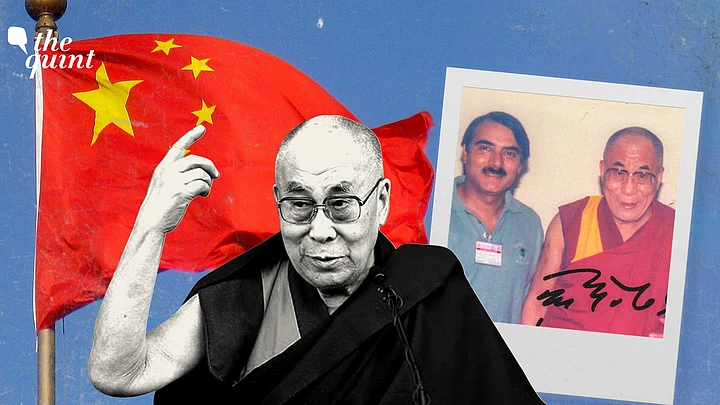
(This is Part 1 of a two-part series on the waning relevance of Tibetan monk Dalai Lama and the subsequent rise of Buddhism in its colonizer China and the political implications these may have.)
Flounced out of my political appointment in the Prime Minister's Office with Narasimha Rao-led Congress losing the elections, and with nothing to do, I gladly accepted the request of Rinpoche Duboom Tulco—the Director of Tibet House, to be a member of the organising committee of the "World Festival of Sacred Music" that was to be inaugurated by His Holiness the Dalai Lama in April 2000 in Bangalore. During the festival, I was given charge of the Dalai Lama’s security which was in the safe hands of the Karnataka Police—and I still had nothing to do.
One afternoon, I found myself alone with His Holiness as he waited to shower his blessings on a small group of mystified westerners. I reminded him that I had launched my book SILK ROAD ON WHEELS: Travels Through Central Asia, Chinese Turkestan and Tibet through his pious hands during a sermon he delivered at the Buddha Jayanti Park in New Delhi. “That was a naughty book,” he said, giggling.