
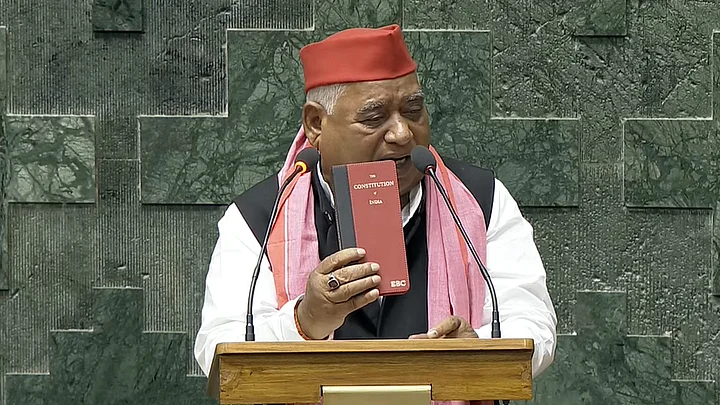
Samvidhan zindabad! Manniya Netaji amar rahe! Veerangana Uda Devi amar rahe! Maharaja Bijli Pasi amar rahe! Manniya Akhilesh Yadav zindabad! PDA zindabad! Babasaheb Bhimrao Ambedkar zindabad! Unka samvidhan zindabad!
Holding up a red-black pocket version of the Constitution, Awadhesh Prasad concluded his oath as a new Member of Parliament (from Faizabad) on 25 June by paying tribute to the Constitution and his party’s leadership. It was natural for him to remember his former leader, the late Mulayam Singh Yadav or Netaji, and hail the current Samajwadi Party president Akhilesh Yadav and his successful PDA (Pichda Dalit Alpsankhyak) strategy that trumped the Bharatiya Janata Party in the recently-concluded Lok Sabha election.
It was also in sync with the SP’s current political approach that Prasad, a Dalit by caste, evoked Ambedkar, an icon for the depressed and marginalised Hindu classes in the country, and the constitution, which provides these communities with their basic rights. However, what added a new dimension to his oath-taking was his mention of two historical personalities from the Pasi (Dalit) community to which he belongs.
Uda Devi, a Dalit woman freedom fighter from the war of independence in 1857, and Maharaja Bijli Pasi, a ruler in Awadh from the 12th century, are two of the biggest contemporary icons of the Pasi people.