(This article is part of The Quint’s climate coverage that seeks to explain the key issues ahead of COP31 in Antalya, Türkiye later this year. Become a member to support us.)
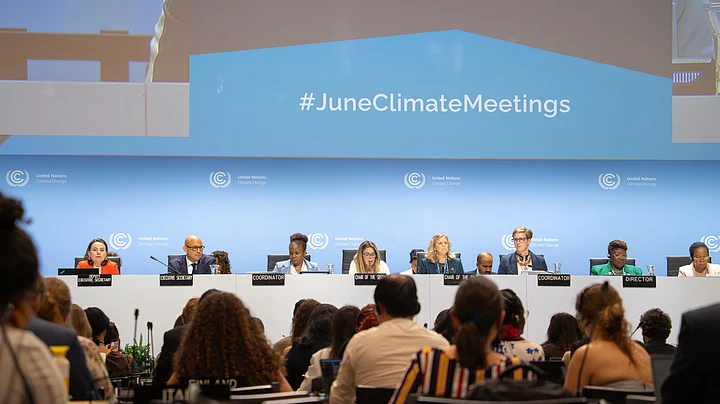
The multilateral climate talks at Bonn, Germany, which intercede the annual Conferences of the Parties (COPs), have concluded with a familiar mix of negotiated compromises, lingering disagreements, and incremental progress across several agenda items.
While the annual COPs command global attention, the relatively low-profile climate talks at Bonn handle the substantive work of climate diplomacy.
The Subsidiary Bodies (SBs) to the UNFCCC meet twice every year, at the Bonn intersessionals in June and at the COPs. Negotiations at the SBs focus on advancing the implementation of previous agreements, addressing the scientific and technical aspects of climate policymaking, and drafting recommendations for the subsequent COP.
Recommendations made at the Bonn talks often feed directly into the decisions adopted at COP, giving them a significant agenda-setting role.
Taking place at a time of a geopolitically triggered global energy crisis, the Bonn talks underlined the urgent need to bridge the gap between climate ambition and implementation. However, inconclusive negotiations and few tangible outcomes left many disappointed.
Persistent deadlocks underscored the sluggishness of the international response to the climate crisis and highlighted a growing erosion of trust in multilateral processes.
The conference also hosted several sessions on prominent COP Presidency-led initiatives, which have come about in response to the limitations of the formal multilateral process in moving from negotiations to implementation. Together, these two tracks (formal and informal) now define the architecture of global climate governance. The question is whether either can actually deliver.
Persistent Divisions
For a conference centred on implementation, the question before the delegates was how to operationalise on-ground climate action.
Thus, it is no surprise that divisions over climate finance once again featured prominently across various thematic areas.
Finance emerged as a sticking point in the negotiations on the Global Goal on Adaptation (GGA).
Developing countries demanded the inclusion of the COP30 agreement, to triple adaptation finance by 2035, in the GGA. This was opposed by developed countries due to concerns that an inability to meet their financial obligation might be linked to a lack of progress on adaptation.
The deadlock over adaptation finance highlighted the longstanding challenge of implementing the GGA, a goal that has been under negotiation for over a decade.
The Climate Finance Work Programme (CFWP), which was established at COP30 to implement developed countries’ finance obligations under Article 9.1 of the Paris Agreement, also did not find space in the formal agenda of COP31.
Additionally, negotiations failed to clarify how the Baku-to-Belém Roadmap to $1.3 trillion would be operationalised, leaving major questions of implementation unresolved. Divergences emerged—and remained—on whether the roadmap is the appropriate tool to implement the New Collective Quantified Goal (NCQG) agreed at COP29, which has itself been criticised for falling short of expectations.
Developing countries once again highlighted that the roadmap lacks clarity on how developed countries will meet their NCQG targets.
Aside from finance, trade emerged as another contentious issue between the Global North and South.
In response to the push by developing countries to include unilateral trade measures such as the EU’s Carbon Border Adjustment Mechanism (CBAM) in multilateral climate negotiations, COP30 decided to organise three dialogues on trade and climate.
The first such dialogue took place this time at Bonn. Developing countries expressed concerns over the inequitable burden such measures placed on them, while their developed counterparts presented such measures as legitimate approaches to climate externalities.
It remains to be seen how the upcoming trade dialogues manage to assuage the concerns of the developing countries and deliver concrete outcomes.
Longstanding and newly emerging divisions thus defined the talks at Bonn, once again highlighting the challenges of climate multilateralism in bringing about effective cooperation.
A Dual-Track Process
Parallel to the faultlines in multilateral climate cooperation, the conference at Bonn shone a brighter spotlight on the voluntary initiatives that have emerged on the sidelines of such climate meetings.
While formal negotiations focus on the incremental process of text-based consensus-building, voluntary initiatives attempt to build smaller coalitions of like-minded actors geared towards addressing specific challenges of implementation.
Notably, the Brazilian COP30 Presidency had created an implementation initiative under the Global Climate Action Agenda. At Bonn, the incoming COP31 President, Türkiye, widened this agenda by announcing new targets.
The most prominent of these non-negotiated targets is the collective global goal to increase the share of final energy demand met by electricity from just over 20 percent today to 35 percent by 2035.
Such initiatives are presented as ways to avoid prolonged negotiations and directly get to the task of implementation. But they have been underwhelming when it comes to delivering results.
Their modalities, accountability frameworks, and ability to feed into the formal process remain underdeveloped.
For instance, beyond the grand announcement of the electrification goal, Türkiye did not provide details on how the target will be achieved, who will fund it, or if it will be fully driven by renewable energy.
The COP31 Presidency has stressed that it will bring the voluntary and the consensus-based processes closer together by adding momentum to the Action Agenda through formal negotiations.
The summit in November will reveal if this convergence can be achieved, though it seems like this dual-track process is here to stay.
What Is to Come at COP31?
The takeaways from Bonn point to a COP31 that will likely be politically charged with intense agenda-setting battles.
For India, a notably small delegation at Bonn and largely remote participation may have reduced its chances to secure outcomes in its favour.
It will be crucial for India to participate more proactively by being in negotiation rooms with all the diplomatic and technical resources at its disposal, in order to advance its interests, especially on climate finance.
More broadly, the unfinished business at Bonn is going to be taken up at COP31, where negotiators will once again confront the challenge of ironing out disagreements.
The primary task before the COP31 Presidency is two-fold: finding common ground on climate finance and trade, and operationalising the Presidency-led initiatives so that they can deliver tangible outcomes.
The challenge before countries is to find ways to reconcile disagreements in an international context marked by rising economic protectionism and geopolitical tensions.
At a time when governments are grappling with the social and economic repercussions of the energy crisis, the real test for climate multilateralism will be its ability to keep climate priorities at the forefront alongside other challenges of the global agenda.
(Isha Sharma is Research Lead and Aman Srivastava is Fellow and Coordinator, Climate Policy, at the Sustainable Futures Collaborative. This is an opinion piece. The views expressed above are the author's own. The Quint neither endorses nor is responsible for the same.)