
Cough Syrups: Do Prescription Rules Matter if the Real Issue Is Manufacturing?
The problem with India's cough syrups is that they aren't just a simple cough syrup anymore, doctors tell The Quint.
advertisement
Last week, Indian news organisations carried a seemingly straightforward public health announcement: the Union Health Ministry had amended the Drugs Rules, 1945 to tighten the sale of cough syrups.
Headline after headline described this move as the end of over-the-counter cough syrup sales—and the beginning of a "prescription-only" regime. Doctors welcomed the decision, with some calling it a long-overdue step that could curb misuse and improve patient safety.
No, Over-The-Counter Cough Syrups Aren't Really 'Banned'
A closer reading of the actual amendment suggests a picture that is open to interpretation. Let's break it down.
Under India's Drugs and Cosmetics Rules, medicines that explicitly require a doctor's prescription are generally listed under Schedule H, Schedule H1, or Schedule X. These schedules contain specific restrictions on sale and dispensing, including requirements that they be sold only on the prescription of a registered medical practitioner.
The recent amendment did not move cough syrups into any of these schedules. Instead, it removed the word "syrup" from an entry in Schedule K, a schedule that grants exemptions from certain licensing requirements under the Drugs Rules.
Exclusion of cough syrups from the Schedule K exemption clause does not automatically make them prescription-only products. “A cough syrup is a oral liquid formulation that may contain one or more active pharmaceutical ingredients. If any of them belongs to the Schedules H, H1 or X, the product becomes prescription-only. Else, it would be a non-prescription item”, clarifies Dr Santanu Kumar Tripathi, a veteran clinical pharmacologist.
A Technical Distinction That Matters
While policymakers clearly expressed an intention to curb over-the-counter access of cough syrups, the legal mechanism adopted focuses on retail licensing rather than moving them to a prescription drug category.
Before the amendment, cough syrups could be sold under relaxed provisions in villages with populations below 1,000, where licensed pharmacies were unavailable, as well as in grocery stores and the like.
The Health Ministry's press release states that removing the exemption means cough syrups must now be sold through duly licensed pharmacies only.
“Whether the amendment alone is sufficient to make all cough syrups prescription-only in practice remains unclear,” says Dr Tripathi.
Furthermore, many prescription only medications such as antibiotics and steroids are being sold by pharmacies despite the existing rules," says Dr Santanu Tripathi. "Even though these rules are made by the centre, it’s enforcement becomes the responsibility of the state drugs control. The implementation is what we now must keep an eye on," he says.
A Manufacturing Problem Disguised as a Retail Problem?
While many doctors agree that restricting over-the-counter sales may reduce indiscriminate consumption, others argue that the recent poisoning incidents exposed failures that occurred long before medicines reached pharmacy shelves.
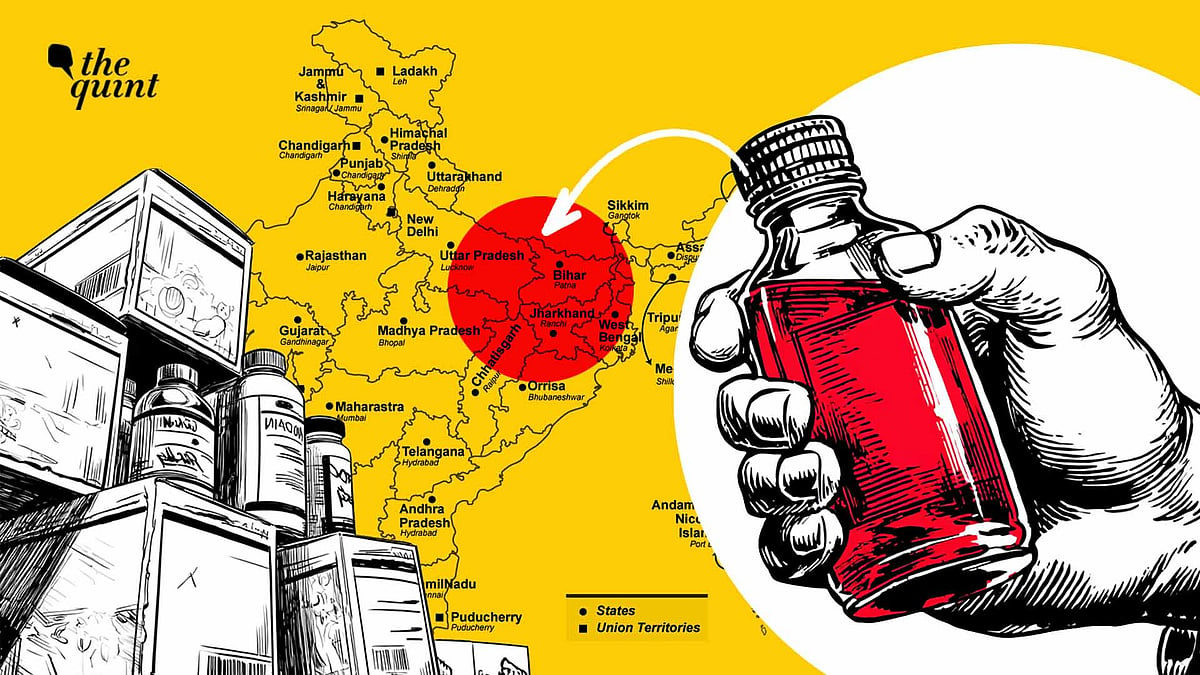
Since 2022, Indian-manufactured cough syrups contaminated with toxic industrial solvents have been linked to the deaths of more than 140 children within India, as well as in other countries, including Gambia and Uzbekistan. In 2025, at least 17 children in Madhya Pradesh died after consuming a cough syrup later found to contain extremely high levels of diethylene glycol (DEG), a toxic chemical associated with kidney failure, multi-organ failure, and death.
"The contamination issue has nothing to do with whether the syrup was bought over the counter or prescribed," says Dr Yogesh Jain, a paediatrician and public health physician based in Chhattisgarh. "The problem happened because of failures in manufacturing, quality assurance, and regulation."
Dr Tripathi adds that understanding how syrups are manufactured is key to understanding why such incidents recur.
In contamination events such as the Madhya Pradesh outbreak, the danger arises when solvents usually used in manufacturing, like glycerol, are contaminated by DEG. That also means the risk is not unique to cough syrups, according to Dr Tripathi.
He explains,
Experts say preventing such incidents requires stronger oversight of excipient manufacturers, mandatory testing of high-risk solvents, better traceability of pharmaceutical ingredients, and more robust quality-control systems.
"The critical issue is whether pharmaceutical-grade solvents are being sourced and tested properly," Dr Jain says. "No prescription requirement can prevent contamination if the problem begins at the manufacturing stage."
The concern is not merely theoretical. The WHO and UN agencies have repeatedly identified weaknesses in excipient oversight, supply-chain verification, and laboratory testing as major contributors to DEG poisoning outbreaks across multiple countries.
Do Children Need Cough Syrups at All?
For some clinicians, the debate extends beyond contamination to the medicines themselves.
"The problem is that it isn't really a simple cough syrup anymore," says Dr Jain. "It contains multiple ingredients, many of which may not be necessary."
Many cough syrups sold in India are fixed-dose combinations containing cough suppressants, antihistamines, decongestants, and bronchodilators. While widely prescribed, experts have, for years now, questioned whether these multiple ingredients offer meaningful benefits, particularly in children.
International guidelines have increasingly discouraged the routine use of cough-and-cold medicines in children because benefits are limited while adverse effects—including sedation, agitation, tachycardia and, rarely, seizures—can occur.
Dr Jain argues that the market has steadily shifted away from simpler, single-ingredient medicines towards more complex combinations.
Dextromethorphan, for instance, remains a recognised cough suppressant and is available as a standalone medicine in many countries. In India, however, single-ingredient preparations are far less visible than combination products.
A review of major Indian online pharmacy platforms by this reporter found that products marketed for dry cough overwhelmingly consisted of combinations of dextromethorphan with antihistamines, decongestants, or other agents. Standalone dextromethorphan syrups were notably difficult to locate.
Dr Jain believes commercial incentives may partly explain this trend. "Before the [COVID-19] pandemic, a 100-150 ml bottle commonly cost around Rs 55-65. Today, similar-sized products may cost Rs 120-150," he says.
Some experts argue that market incentives may favour combination products over simpler formulations. Fixed-dose combinations can command higher prices while making it more difficult to assess the effectiveness and safety of individual ingredients. This further contributes to a situation where potentially more rational alternatives are increasingly difficult to find.
Why Adults Keep Reaching for Cough Syrups
The trend also raises broader questions about how cough medicines are marketed and prescribed.
Historically, syrup formulations were developed largely for children and others who could not easily swallow tablets or capsules. Yet, cough syrups continue to be heavily marketed to adults, even when alternative formulations may be available.
"People have come to associate treatment of cough with a bottle of syrup," he says. "But there is no reason every adult with a cough requires a syrup formulation."
Some clinicians argue that much of the relief patients experience comes not from the active ingredients but from the demulcent, or soothing, effect of the syrup itself. Alternatives such as lozenges and honey in appropriate age groups and supportive care may provide similar symptomatic relief in many cases.
"The question we should be asking is whether all these ingredients are necessary in the first place, and why we do not have single-ingredient options," Dr Jain says.
Will Prescriptions Change Behaviour?
Some experts also questioned how much the new rule will change real-world use of cough medicines.
In many households, medicines prescribed for one illness are often retained and reused for subsequent episodes. Parents may administer leftover cough syrup to another child with similar symptoms rather than seek a fresh consultation.
Likewise, clinicians note that obtaining prescriptions may not be difficult in settings where cough syrups continue to be routinely and indiscriminately prescribed.
"If doctors continue prescribing the same medicines, then simply requiring a prescription may not significantly change usage patterns," says Dr Jain.
Experts say this highlights the importance of community education alongside regulation.
"The expectation that every cough needs a syrup is deeply entrenched," he adds.
A Longer List of Reforms
For many experts, the government's decision is best viewed as one component of a broader reform agenda.
The recent contamination incidents have exposed vulnerabilities at multiple levels of India's pharmaceutical ecosystem—from manufacturing and quality assurance to prescribing practices and medicine use in households.
At the manufacturing level, experts point to inadequate oversight of excipients, inconsistent testing of raw materials, weak supply-chain traceability and limited laboratory capacity.
At the market level, they raise concerns about the dominance of complex multi-ingredient formulations whose clinical value is often uncertain and whose commercial success may not always reflect therapeutic need.
And at the household level, medicines are often shared, reused or administered without a clear understanding of their benefits and risks.
For that reason, experts say preventing future tragedies will require interventions at multiple levels: stronger manufacturing oversight, better quality-control systems, improved regulation of pharmaceutical ingredients, more rational prescribing practices, and sustained public education about when cough medicines are—and are not—necessary.
"Firstly, the CDSCO needs to clarify the exact legal implications of the amendment, so that the state enforcers do not interpret it differently," says Dr Tripathi, adding:
(Christianez Ratna Kiruba is a Guwahati-based internal medicine doctor and a freelance health journalist. She is the lead editor of Nivarana a public health storytelling platform. This is an opinion piece. The views expressed above are the author's own. The Quint neither endorses nor is responsible for the same.)
- Access to all paywalled content on site
- Ad-free experience across The Quint
- Early previews of our Special Projects
Published: undefined