
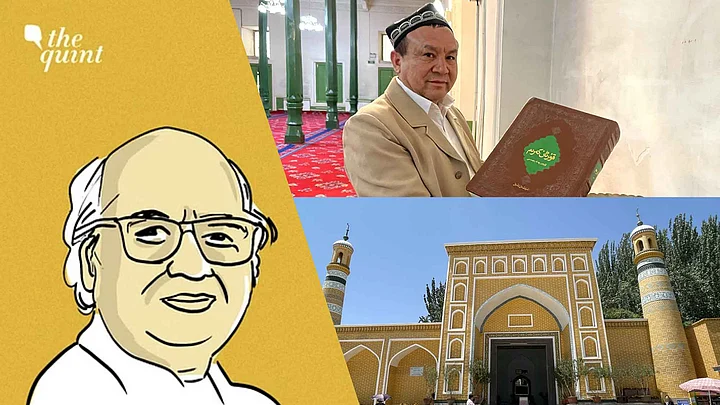
Indians know very little about the Xinjiang Uyghur Autonomous Region, China’s westernmost and predominantly Muslim province, which occupies a pivotal place along the ancient Silk Route. This ignorance is as baffling as it is unhelpful. It militates against India’s own vital national interests. Xinjiang shares a border ─ and close civilizational links ─ with India. Indeed, these links were so close during its Buddhist past that a Chinese government publication acknowledges that this region was known as a “Small India” in the first millennium.
In the modern era, as I have described in the first of this three-part article, this fast-prospering province is emerging as China’s new Shenzhen, a hi-tech gateway to Central Asia, West Asia, and South Asia (Afghanistan and Pakistan). India can ill afford to remain geographically and culturally unconnected to these vast regions, as well as to western China, which is becoming a new powerhouse of that country’s growth.