
(This is Part two of a three-part series on the author's recent extensive travels in Xinjiang, China's only predominantly Muslim province and his observations on where the Indo-China ties currently stand, independent of the Western view. Read part one here.)
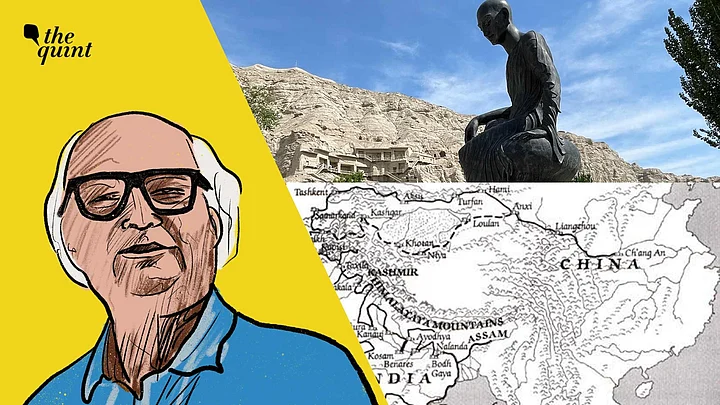
Kumarajiva, his black stone statue in a meditative pose sitting on a lotus pedestal, looked every bit the great scholar-monk he was. In the background, the Kizil Buddhist Caves carved out on the face of a barren hill also appeared immersed in endless meditation.
The ruination of the spiritual and artistic treasure in these once magnificent shrines, first by bigoted human hands and later by centuries of exposure to nature’s unkind forces, had not disturbed their Zen-like calm. Rather, in line with the teachings of the Great Buddha, both the place and the person who made it famous seemed to be intently reflecting upon the causes of mankind’s perennial follies and sufferings, and the ways to overcome them.