
'Shekhar Tonite' and the Political Optics of the Late Night Talk Show
We do not need another safe, state-sanctioned talk show, writes Debiparna Chakraborty.
advertisement
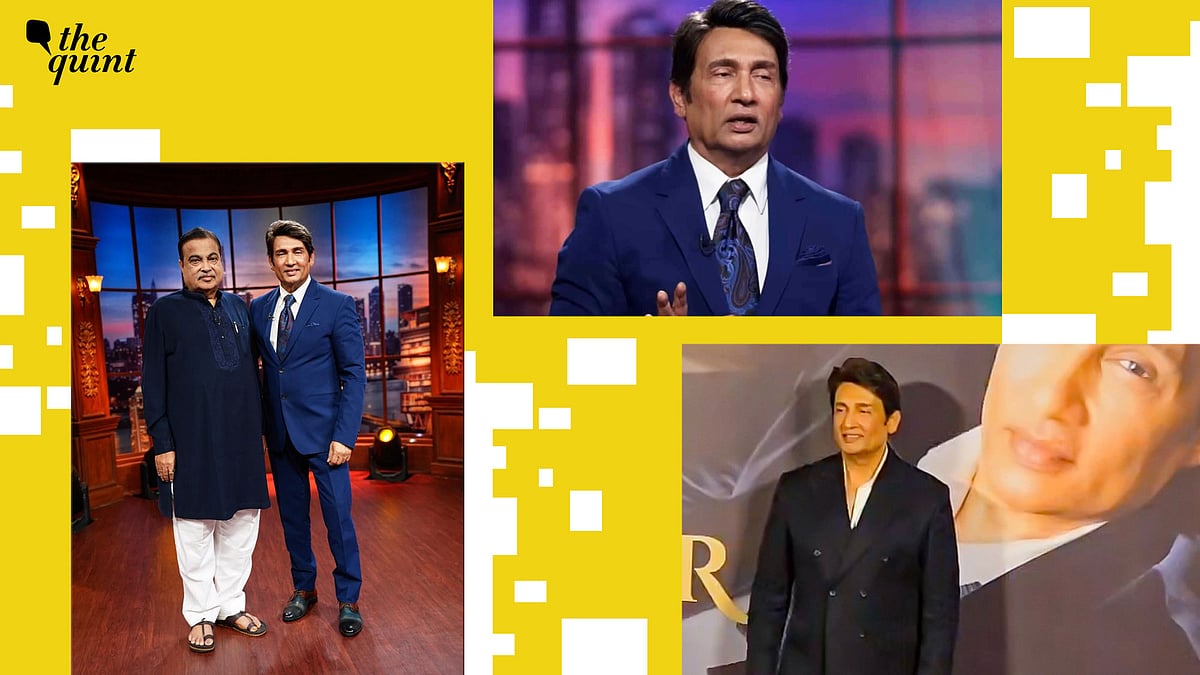
Shekhar Suman has returned to our screens with a talk show created by his son Adhyayan Suman. Botoxed to the absolute T, he is pitching himself to a generation that has mostly forgotten about him. For those who do not remember the late 90s' absolute chokehold of Movers & Shakers, Suman’s new digital avatar, Shekhar Tonite, comes bearing hefty promises.
Suman claims to be a truth-teller, a microphone for the critical thinkers, a voice for the people who still dare to question.
Politics of the Late Night Show
We are living in an era where “muzzle velocity” is a legitimate political metric. We have a dozen overlapping societal, political, economic, and existential crises hitting us at a mile-a-second speed.
To promise a platform of fearless critique right now is a massively tall task to live up to. It is especially heavy when you look at the global landscape.
We just watched American The Late Show host Stephen Colbert sign off for the final time on CBS after an 11-year run, following years of political pushback from US President Donald Trump and a network corporate alignment that reeks heavily of political appeasement. Then we have techno-autocracy to deal with.
When international journalists, even those from countries like Norway, where press and media freedom rank among the highest in the world, dare to question power, they feel the immediate wrath of tech bros working in absolute cahoots with such governments. Norwegian journalist Helle Lyng Svendsen asked Prime Minister Narendra Modi, during his joint interaction with PM Jonas Gahr Støre in Oslo, why he refuses to take questions from the Indian press. Within days of posting her criticism on X, her Meta accounts, both Facebook and Instagram, were abruptly suspended.
Suman’s bit about how new West Bengal Chief Minister Suvendu Adhikari’s version of “sabka saath, sabka vikaas”—the Bharatiya Janata Party’s (BJP) omnipresent national tagline—and how he will only take care of those who voted for him and not everyone in the state, is a valid observation and genuinely funny, and perhaps why went viral.
But, based on the rest of his pilot episode and the opening monologue of the second, Shekhar Tonite is already tripping over its own feet.
Towing the Line
Suman's political satire has been uneven so far. The jokes targeting Mamata Banerjee and the recent West Bengal election results, where Adhikari won, ending a 14-year-long Trinamool Congress (TMC) rule and securing the BJP its first real footing in Bengal, simply do not land. Suman adopts a half-broken, heavily accented Bengali that feels lazy, dated, and just a tad too try-hard.
He treats Gadkari as a dear, praising him for “all” he has done for the country's infrastructure, his grand highway projects, and his green energy initiatives. He is defined as the “good guy” of the establishment.
Suman does bring up the serious accusations surrounding Gadkari’s ethanol blending policies, but then he lets him off the hook entirely. Gadkari easily dismisses the entire controversy as a campaign orchestrated by the Opposition to malign his stellar reputation. And what does our brave, critical-thinking host do? Nothing. There is zero cross-questioning. Suman has no follow-up or pushback.
Gadkari happily claimed on the Tonite couch that he has never had to fight elections on the basis of religious bigotry, nor has he had to rely on plastering his face all over billboards to get recognition for his work.
He took a moment to praise his own sons for carving out their “own” careers without relying on his massive political name. He even dissed politicians who change parties like chameleons—in 2009, Suman contested elections in Patna as a Congress member and joined the BJP in 2024, only to quit in 24 hours.
Gadkari also noted that the day the public stops voting for politicians who utilise such tactics is the day true change will happen.
In 2012, Gadkari was accused of allegedly lobbying for a Rs 70,000 crore dam project favouring specific contractors, a charge he strongly denied as "politically motivated".
In 2018, Rashtriya Swayamsevak Sangh (RSS) members themselves accused him of fraudulently transferring land belonging to a cooperative society to secure a multi-crore loan for a company owned by his sons.
In 2009, a seven-year-old girl, Yogita Thakre, was found dead inside a car parked on the premises of Gadkari's Nagpur residence.
In 2021, there was a report stating that Swedish manufacturer Scania had allegedly gifted him a luxury bus to secure Indian contracts; a bus later spotted in a Nagpur compound linked directly to him, used by a company with financial ties to his sons, Sarang and Nikhil.
There was an intentional attempt to draw a neat line between the BJP of the past versus the BJP of the now, pandering to the delusion that the current state of the ruling party has not been actively architected by the exact ideologies it preached decades ago.
All Talk
To give credit where it is due, Suman’s monologues take shots at the political spectrum: the Aam Aadmi Party, TMC, Congress, Thalapathy Vijay, NEET scams, and Raghav Chadha—no one is spared.
The fear of getting muzzled in 2026 is entirely legitimate. Nobody wants their work deleted or a state tax raid at their doorstep. But if Suman is going to be this incredibly tame of an interviewer, especially while conversing with dubious political guests, then what exactly is he adding to our pop culture and political commentary scene?
We do not need another safe, state-sanctioned talk show. If you want to see what actual cross-questioning looks like in modern Indian digital media, you look at someone like the chaotic and intrepid Samdish Bhatia.
Shekhar Tonite wants the prestige of being a revolutionary late-night show but if Suman wants to truly speak for a generation of critical thinkers, he needs to realise that smooth compliance is actually a faster way of getting accused of being an industry plant or a stooge.
(The author is an independent film, TV and pop culture journalist who has been feeding into the great sucking maw of the internet since 2010. This is an opinion piece. The views expressed above are the author’s own. The Quint neither endorses nor is responsible for them.)
- Access to all paywalled content on site
- Ad-free experience across The Quint
- Early previews of our Special Projects
Published: undefined