
Quad's Manila Moment: Why India Has Reason to be Both Satisfied and Wary
The Quad turns operational with AI and supply chain, but its future hinges on US-China ties, writes Manoj Joshi.
advertisement
In terms of impact on strategic and security issues, the seventh Quad Leaders Summit was the most consequential event in the cluster of high-level diplomatic meetings that took place earlier this week in Manila.
These meetings were built around the 49th Association of Southeast Asian Nations (ASEAN) Summit and the 21st East Asia Summit (EAS) hosted by the Philippines and included bilateral summits such as the ASEAN-US Special Summit, the 23rd ASEAN-India Summit, and the US-Thailand Bilateral meet.
Prime Minister Narendra Modi led the Indian delegation to the summit-cluster, and the Quad meeting produced hard security commitments, strategic supply chain agreements, and provided for high-stakes diplomatic signaling on the eve of an important US engagement with China.
The EAS adopted two flagship joint documents for strengthening cooperation against cyber fraud and online scams. Leaders stressed the importance of maintaining peace and a rules-based order in the South and East China Seas. There were also practical issues taken up such as the Seafarers Safety Initiative proposed by PM Modi and plans to host an EAS Maritime Heritage Festival in Lothal, Gujarat.
Indo-Pacific Strategic Alliance
According to the Observer Research Foundation, India plans to leverage its Digital Public Infrastructure (DPI) stack and fintech capabilities, such as cross-border UPI payments already pioneered with Singapore, now hopes to build interoperability with ASEAN.
New Delhi can be satisfied that the 23rd India-ASEAN summit enabled PM Modi to present a new set of cooperation proposals across maritime security, cyber, nuclear energy, space, critical minerals and travel. Notable among these initiatives was the decision to provide free e-visas for tourists from the ASEAN countries.
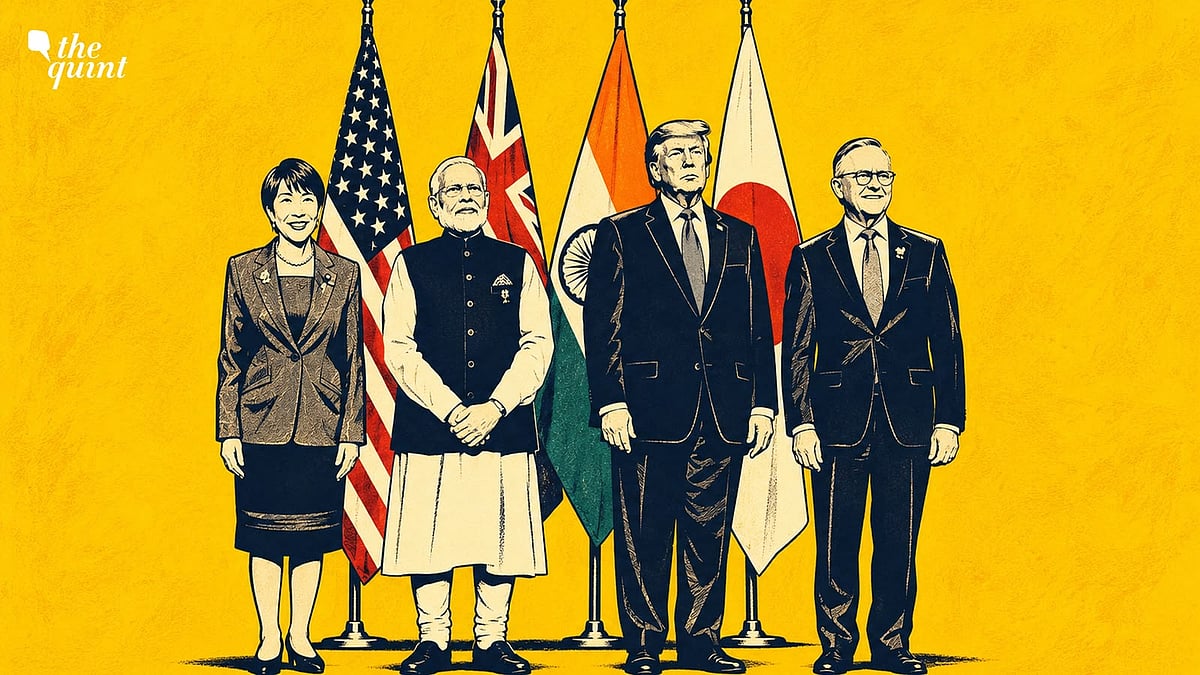
The Quad summit brought together US President Donald Trump, PM Modi, Australian Prime Minister Anthony Albanese, and Japanese Prime Minister Sanae Takaichi for their first in-person leaders’ summit since 2024.
The Quad also announced the Indo-Pacific Maritime Surveillance Collaboration to enhance information sharing and maritime domain awareness. As part of this Quad, countries will conduct the first formal joint maritime patrol aircraft exercise scheduled for 2027. Using P8 aircraft which the US, Australia and India operate and Japan’s P3C Orions, this will be a part of Exercise Sea Dragon 2027 to be held off Guam in March 2027.
The US-China Determinant
The Quad is evolving from a consultative grouping into a more operational partnership, even though it deliberately avoids becoming a formal military alliance. Its activities are increasingly directed at addressing the challenges posed by China's growing influence over regional supply chains, maritime activities, and critical technologies.
However, the future of the grouping is inevitably linked to the evolving US-China relationship. The question is how far the Quad can develop if Washington is simultaneously pursuing a transactional relationship with Beijing. There is a distinct possibility that a deeper US-China understanding may not necessarily accommodate Indian interests. This is one reason why New Delhi will want the Quad to develop its own institutional momentum rather than remain dependent on the changing dynamics of US-China relations.
While there is a sense of achievement around the summit in Manila, there cannot but be a twinge of regret in New Delhi which missed out the prestige of hosting the summit because it was not held in the last two years. Australia, Japan, and the US have all hosted Quad summits, but India remains the only member which has not done so.
In New Delhi, the Quad would have been the sole focus putting India at the centre of Indo-Pacific diplomacy. Instead the meeting had to compete for attention with the ASEAN Summit, the EAS, and the build-up for the trilateral US-China-Russia summit in Shenzhen.
India can have some comfort from the fact that it preserves the chair for 2027 and could host the 2027 event in New Delhi. Accepting the Manila exception for Quad alongside the ASEAN-India Summit allowed PM Modi to visibly pair Quad security alignment with non-confrontational regional outreach, helping reassure ASEAN nations that the Quad complements rather than undermines ASEAN centrality.
Also, it gives New Delhi the opportunity in 2027 to give the Quad a wider geographical and economic agenda by bringing the Indian Ocean Region into sharper focus. An Inaugural Quad Business Leaders Forum will be held in Mumbai in early 2027 to bring together businessmen, government officials, and policy experts in the Quad countries to promote commercial deals and partnerships.
Gridlocks That Remain
While the successes of the Manila cluster of summits have been highlighted, two serious failures deserve to be mentioned. The Manila summit maintained the exclusion of Myanmar's political leadership from the bloc's high-level meetings, while opening the possibility of a gradual restoration of its political representation if there was meaningful progress on the Five-Point Consensus. This is a pragmatic approach, but it also reflects ASEAN's continuing inability to influence the course of the crisis.
The other is the inability of ASEAN and China to conclude negotiations on a long-delayed South China Sea Code of Conduct. Days before the ASEAN summit began, it was announced that while a provisional agreement had been reached in 80 percent of the draft, there were important unresolved issues such as whether the Code will be legally binding.
The Manila cluster of summits can be viewed as a collective exercise in shaping the regional policy agenda. Summits are not isolated events but milestones in a continuing process of diplomacy, providing opportunities to initiate new policy directions, conclude negotiations that have been underway for some time, or make mid-course corrections to existing initiatives.
The Manila meetings reflected all three dimensions. Taken together, they represented not merely a series of diplomatic engagements but an attempt to recalibrate regional relationships, advance cooperation and respond to a changing strategic and economic environment.
(Manoj Joshi is a Distinguished Fellow, Observer Research Foundation, New Delhi. This is an opinion piece and the views expressed above are the author’s own. The Quint neither endorses nor is responsible for the same.)
- Access to all paywalled content on site
- Ad-free experience across The Quint
- Early previews of our Special Projects
Published: undefined