‘Focus on Indo-Pacific Security’: Jaishankar Chairs Quad Foreign Ministers Meet
The meeting included US Secretary of State Marco Rubio, Australian FM Penny Wong, and Japan’s Toshimitsu Motegi.
advertisement
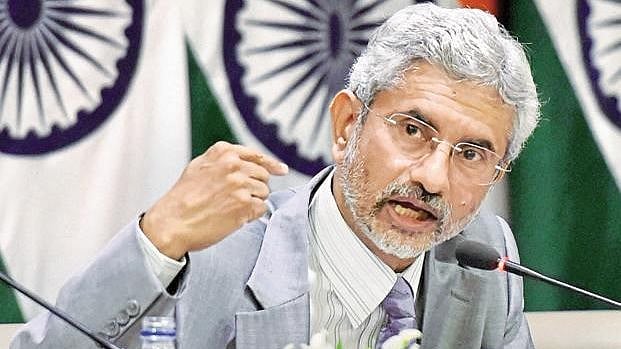
Foreign Ministers from India, the United States, Australia, and Japan convened in Delhi on 26 May for the first Quad Foreign Ministers meeting in nearly a year.
The meeting was hosted by Indian External Affairs Minister Subrahmanyam Jaishankar at Hyderabad House, with all four ministers—US Secretary of State Marco Rubio, Australian Foreign Minister Penny Wong, and Japanese Foreign Minister Toshimitsu Motegi—scheduled to call on Prime Minister Narendra Modi.
The discussions focused on maritime security, economic cooperation, and the impact of ongoing global conflicts on the Indo-Pacific region.
According to The Hindu, Jaishankar emphasised the need for the Indo-Pacific to remain a driver of global growth and highlighted the importance of enhancing strategic confidence, maritime security, and economic choices. He stated, “As maritime democracies, pluralistic societies, and market economies, we share a responsibility towards a free and open Indo-Pacific.”
Key topics discussed included supply-chain resilience, critical minerals, and the impact of the West Asia conflict on maritime and energy security as coverage revealed. The closure of the Strait of Hormuz and its implications for freedom of navigation and global supply chains were highlighted as pressing concerns for the four maritime democracies.
Japan’s Foreign Minister Toshimitsu Motegi underscored the need for Indo-Pacific nations to strengthen resilience and economic security, while US Secretary of State Marco Rubio called for operationalising the Quad’s agenda to address significant global challenges, as analysis showed.
“The Quad remains a vital framework among countries that share fundamental values and strategic interests. It has delivered concrete results across a wide range of areas, including maritime security, economic security, and cybersecurity,” Motegi stated.
Australian Foreign Minister Penny Wong reiterated the importance of ensuring freedom of choice for countries in the region regarding security and development.
The ministers last met in July 2025, where they updated the Quad’s goals to focus on maritime and transnational security, economic prosperity, humanitarian assistance, and the launch of the Quad Critical Minerals Initiative as reported.
The current meeting aimed to build on these priorities, with particular attention to the challenges posed by the Iran conflict and US-China relations.
Energy security and the movement of critical minerals and semiconductors were also central to the agenda, given their importance to the global AI industry and the potential for supply-chain disruptions as further details emerged.
The ministers discussed strategies to ensure the stability of these supply chains and the continued growth of the Indo-Pacific region.
Australian Foreign Minister Penny Wong described the Quad as a “vital partnership” for shaping a peaceful, stable, and prosperous Indo-Pacific, while also noting the deepening cooperation between Australia and India in trade, defence, and strategic technology at the end of the session.
“Together, Australia, India, Japan and the United States are delivering concrete outcomes on shared interests, including maritime security, critical minerals supply, infrastructure development and disaster relief,” Wong said.
The meeting also addressed the broader strategic environment, including the deteriorating security situation and economic stress in the region as discussions concluded. The ministers reaffirmed their commitment to a free and open Indo-Pacific and agreed to continue working together to address emerging challenges.
Note: This article is produced using AI-assisted tools and is based on publicly available information. It has been reviewed by The Quint's editorial team before publishing.