
Dharmendra Pradhan's Resignation: Inside the Modi-RSS Bid to Contain the Crisis
The RSS had taken a very grim view of the police action against the CJP protesters, reports Manish Anand.
advertisement
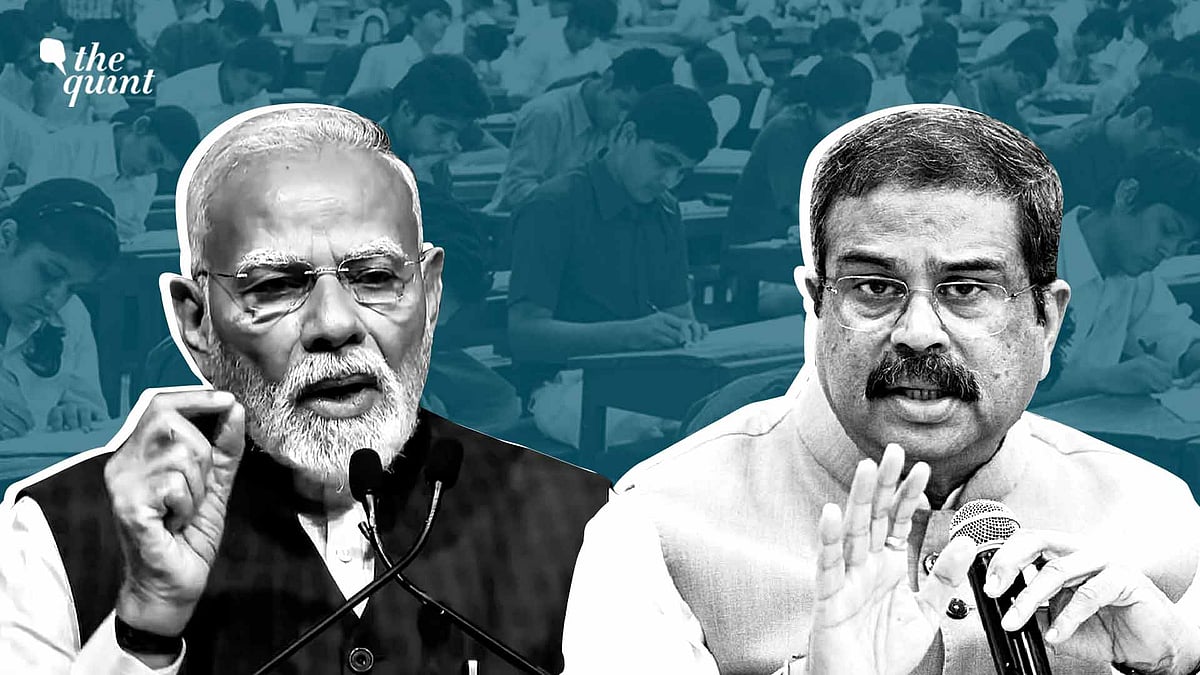
On Saturday, 26 July, the five-week-long student protest movement led by the Cockroach Janata Party (CJP), which culminated in the resignation of Education Minister Dharmendra Pradhan and dealt a major blow to Prime Minister Narendra Modi's image, came to an end.
Modi and the Rashtriya Swayamsevak Sangh (RSS), in unison, read the writing on the wall that the CJP protest posed an extraordinary challenge—not just to the image of the Central government, but also the Bharatiya Janata Party (BJP)’s prospects in the big election cycle unveiling from February 2027.
The RSS is learnt to have shared blunt feedback with the Prime Minister of a major rupture in the core constituency of the BJP on account of the police action against the CJP protestors on 20 July when they had launched their ‘Chalo Sansad' march.
Sources told The Quint the Prime Minister took personal charge of the damage-control effort, adding that instructions to the government's interlocutors—Union ministers JP Nadda and Jitendra Singh—were clear:
Pradhan's Exit and Team Modi Rupture
According to sources, the RSS has taken a very grim view of the police action against the CJP protesters. The organisation was alarmed to see the strategy deployed by the government to deal with the CJP protest.
First, the permission to the CJP to hold the protest at Jantar Mantar, then the forcible removal of the face of the agitation, Sonam Wangchuk, and finally the police crackdown against the student protestors were seen within the RSS as a flawed approach.
The Modi government's strategy to deal with the CJP protest is being attributed to Union Home Minister Amit Shah, according to RSS sources. Once the RSS initiated damage-control measures, the Prime Minister was advised to course-correct, they added.
On the PMO’s watch, Nadda and Singh began discussions with the CJP representatives. It has been reliably learnt that the Prime Minister wanted to change gears in response to the student protest, empathising with the cause of the protestors. Dialogue in place of confrontation seemed to be the message from the PMO for damage control.
Pradhan is widely known to be a key Shah loyalist. He was also believed by many within the BJP to have lost Prime Minister Narendra Modi's trust after the Solicitor General of India told the Supreme Court that the Prime Minister was personally monitoring preparations for the NEET retest.
According to BJP sources, the fact that Modi did not drop Pradhan from the Union Cabinet before the CJP protest began was largely attributed to his proximity to Shah.
Election Cycle Panic in the BJP
As a heavy election calendar of Assembly elections looms from February 2027 with the BJP’s own turfs in Uttar Pradesh, Uttarakhand, Goa, and Gujarat at stake, apart from polls in high-stakes Punjab and Himachal Pradesh, alarm bells rang in the RSS.
Feedback was channelled that the key support base had begun turning vocally aggressive against the Modi government. The BJP’s support base had begun facing pressure from youngsters, who were openly supporting the CJP cause. For the RSS, the protesters' attack on the Prime Minister himself came as the trigger to press the panic button.
It was calculated that the Prime Minister would stake his own appeal among the people to pull back the government from a crisis, as he had done during the year-long farmers’ protests when he recalled the three contentious farm laws, already enacted by Parliament. Modi’s reel empathising with students’ concerns was the first set of damage-control interventions.
Can Modi Retrieve the Situation for the BJP?
A section of the BJP leaders believe that irreparable damage has been caused to the image of the party, as well as 'Brand Modi', by the CJP protest. They hope that the end of the CJP protest will provide breathing space to the BJP—and that the Prime Minister will unveil a major Cabinet reshuffle to send a message of course correction to address concerns of students.
The CJP’s calling off of the agitation, per BJP leaders, will also help the government to get back to the normal business of Parliament. The Opposition parties may trumpet major victories for a few days, but the Prime Minister will seek to connect with the youth with a set of measures on the policy front to undo the damage, the sources within the BJP added.
The likelihood of Pradhan getting back in the Union Cabinet is remote, said sources, who added that he can at best now hope for a respectable place in the BJP.
In the aftermath of the CJP protest, the BJP now seems nervous about the 2027 Assembly elections, which will be seen as a semi-final ahead of the 2029 Lok Sabha elections. With the Prime Minister and the RSS now working on a script for damage control, the next few months would reveal the action plan to regain the momentum that now seems to have derailed for the saffron camp.
(The author is a senior Delhi-based journalist, with over two decades spent in tracing the BJP and Indian politics. This is an opinion piece and the views expressed are the author's own. The Quint does not endorse or is responsible for them.)
- Access to all paywalled content on site
- Ad-free experience across The Quint
- Early previews of our Special Projects
Published: undefined