
Bangla Sahib Row: Sheltering Protesters isn't Violation of Sanctity, it's Sikhi
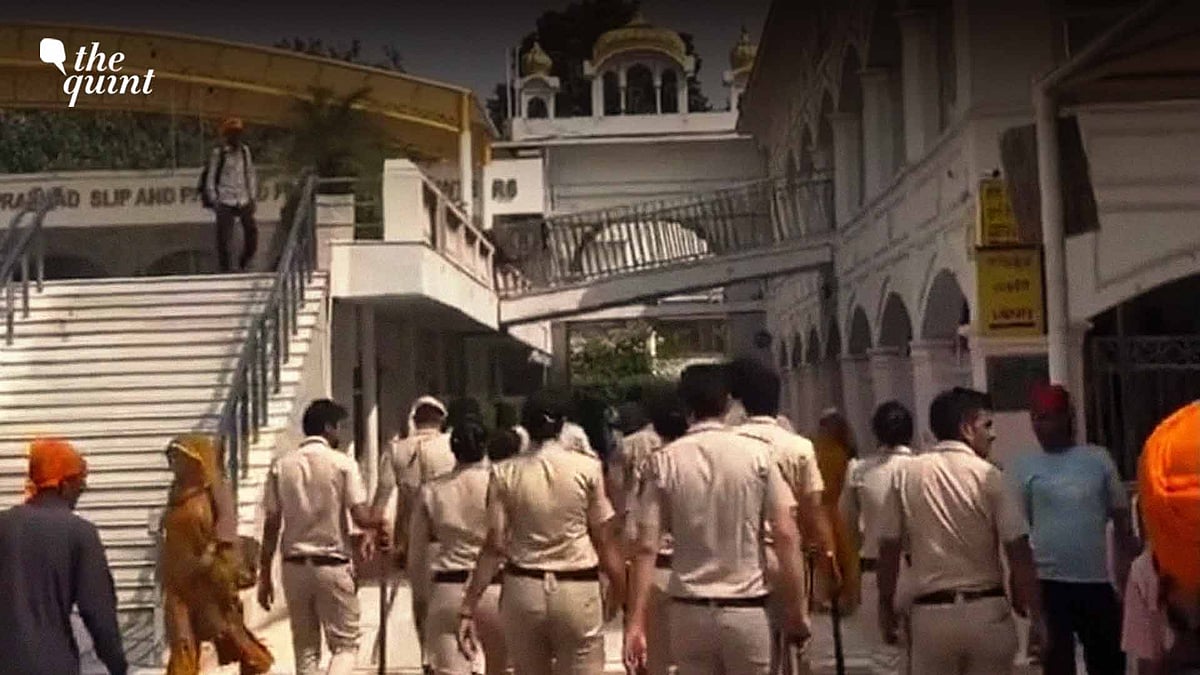
As detentions continued into 11 October, the gurdwara stood tall between the protestors and the police personnel.
advertisement
On 10 October, students, activists, and Opposition leaders responding to the Cockroach Janta Party (CJP)’s call to protest against Chief Election Commissioner Gyanesh Kumar faced a massive security deployment across Delhi. Around 14,000 to 23,000 police and RAF personnel were deployed, with heavy barricading, roadblocks, and widespread restrictions that brought large parts of the capital to a standstill. As police chased, manhandled, and beat peaceful protesters, many sought shelter inside Gurdwara Bangla Sahib.
As detentions continued into 11 October, the gurdwara stood tall between the protestors and the police personnel.
This is not the first time Gurdwara Bangla Sahib has sheltered protestors. During the CJP protest against Education Minister Dharmendra Pradhan in July, the gurdwara offered refuge to many protestors trying to escape the police lathi-charge and possible detention.
Now, Bharatiya Janata Party (BJP) leader Manjinder Singh Sirsa has condemned the use of the Gurdwara Sahib as a place of protest in a posted video on social media. The Delhi Sikh Gurdwara Management Committee (DSGMC) President Harmeet Singh Kalka, a former member of the Delhi Legislative Assembly, has also posted a video questioning the use of the gurdwara premises for protests.
However, that did not deter the protesters from using the gurdwara as a safe haven from police beatings—and the sevadars from opening up the doors and langar for them.
Langar at Gurdwara Bangla Sahib on 10 October, Saturday.
(Photo: Aliza Noor/The Quint)
The Message of Sikhi
Gurdwara Bangla Sahib carries the legacy of the eighth Guru, Guru Harkrishan Sahib, who selflessly served people during the smallpox and cholera epidemic in Delhi. He cared for the sick irrespective of caste or creed and contracted smallpox himself.
He passed away in 1664 when he was only eight. His legacy is one of selfless service, compassion, and standing with those who suffer. The shrine was established at the site by Sardar Baghel Singh in 1783, following the Sikh forces' capture of parts of Delhi from Mughal rule.
Gurdwara Bangla Sahib on 10 October, Saturday.
(Photo: Aliza Noor/The Quint)
Guru Harkrishan Sahib's successor and granduncle, Guru Tegh Bahadur Sahib, says in his Gurbani:
ਭੈ ਕਾਹੂ ਕਉ ਦੇਤ ਨਹਿ ਨਹਿ ਭੈ ਮਾਨਤ ਆਨ ॥
“One who does not frighten anyone, and who is not afraid of anyone else.”
Sikhs neither believe in frightening anyone nor are they afraid of anyone.
The DSGMC emerged later as a separate body for managing gurdwaras in Delhi. In post-Independence India, the Punjabi Suba movement was also closely associated with the Akal Takht. Politics has always been intertwined with the Gurdwara Sahib, and our Gurus have never shied away from engaging with the political realities of their times.
'No Enemy or Friend in the Wounded'
This tradition of standing up for justice has never been limited to political struggles. It is equally rooted in the Sikh principle of serving humanity without discrimination.
People trolling gurdwaras for providing shelter to protestors and condemning them for doing so should remember Bhai Kanhaiya Ji, who offered water to wounded Mughal soldiers during battles against the Sikhs. When fellow Sikhs complained to Guru Gobind Singh Ji, Bhai Kanhaiya Ji explained that he saw no enemy or friend in the wounded, only human beings in need. He saw the Guru's face in everyone.
Guru Gobind Singh Ji upheld his actions and instructed him to continue serving the wounded, regardless of which side they belonged to.
So, this is not simply about right or wrong, or what BJP leaders are trying to portray. Their selective silence in response to right-wing voices expressing hostility towards the Gurdwara Sahib also raises a question: are their statements really about the sanctity of the Gurdwara Sahib, or about their loyalty to their political party?
Several videos show Delhi Police entering into the Gurdwara Sahib premises and detaining young protestors, something which many political leaders have condemned. However, Sikh leaders in the BJP have remained silent on the matter.
Perhaps the most disappointing response came from HS Phoolka, who has spent decades fighting for justice for the victims of the 1984 anti-Sikh violence. Having fought cases for genocide victims, he knows better than most the devastating consequences of mob violence and the role the police played in enabling it in 1984. His tweets justifying the Delhi Police's entry into Gurdwara Bangla Sahib are, therefore, particularly troubling.
Sikhs have always stood up for justice, and are often praised for their commitment to righteousness, as they did today. Yet, when it comes to their own issues, their struggles and grievances are often sidelined, and their political rights misinterpreted or ignored.
The principle that Gurdwara Bangla Sahib upheld is the very principle Sikhs have always stood for: helping those in need, standing up for justice, and refusing to turn away those seeking refuge.
Places built in the name of humanity must stand for humanity. And that is precisely what Gurdwara Bangla Sahib did.
(Nishtha Sood holds a degree in Politics and International Relations from SOAS, London, and writes on terrorism laws in India, linguistic movements, and issues of identity. Jagpreet Singh is an activist and social worker based in Chandigarh, known for his work on the ground and his active involvement in Punjab’s protest movements. This is an opinion article and the views expressed above are the author’s own. The Quint neither endorses nor is responsible for them.)
- Access to all paywalled content on site
- Ad-free experience across The Quint
- Early previews of our Special Projects
Published: undefined