
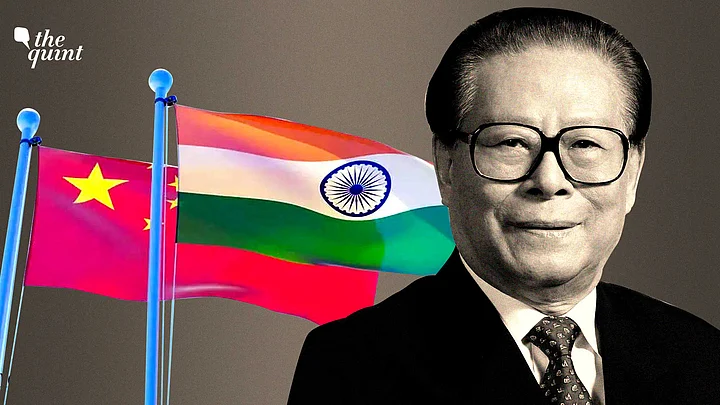
The demise of former Chinese President Jiang Zemin (1926–2022) on Wednesday 30 November marks the end of what is being nostalgically recalled as a golden era for China. He will be long remembered for deftly steadying the wobbly Chinese ship of state after the tragic turbulence engendered by the 1989 Tiananmen Square student uprising.
An unlikely candidate for the top post in China, Mr Jiang—who was seen more as a diligent technocrat who could be trusted to implement the party directive—was brought into the leadership loop by Chinese supremo Deng Xiaoping in mid 1989 in the aftermath of the Tiananmen crackdown. The unlikely candidate stayed at the helm of all affairs Chinese for 14 years before handing over the baton to his successor Hu Jintao.
An astute politician who could read the changing texture of the tea leaves in Beijing, as President, Jiang Zemin was a worthy successor to Deng and proved his mettle by accelerating the economic reforms and progressive privatisation of the local industry through the SEZ (special economic zone) route.