
Whether the special status of Jammu and Kashmir, enshrined in the Constitution of India, will be restored or not, whether the Central government’s decision of 5 August was lawful or illegal, a five-member bench of the Supreme Court of India headed by the honorable Chief Justice DY Chandrachud has completed the hearing, the decision of which is yet to come.
While the case is sub-judice in the apex court, the central government of the Bhartiya Janta Party has brought various changes through legislative and administrative measures, that is, via Lieutenant Governors.
However, the Opposition parties like National Conference (NC), People's Democratic Party (PDP), and Indian National Congress (INC) have maintained that since the matter is sub-judice before the Supreme Court, the Union government has no moral authority to enact legislation regarding J&K and Ladakh.
The primary goal of the BJP to adopt this strategy is to strengthen its political ground, in which it has failed miserably so far.
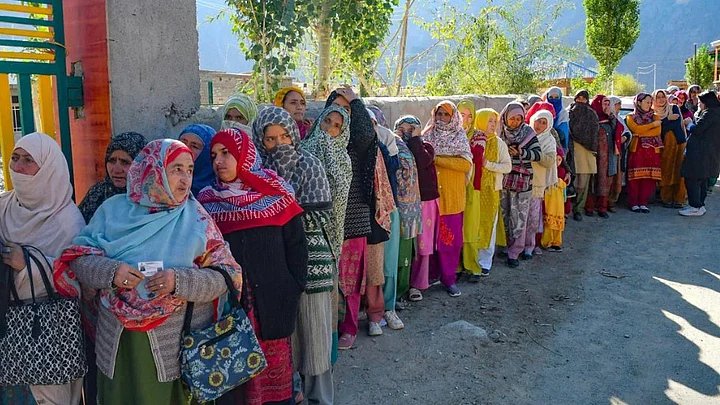
The recently concluded Ladakh Autonomous Hill Development Council elections (October 2023) in Ladakh, and before that, District Development Council elections in 2020 in J&K proved to be the last nail in the coffin of the ruling party's narrative that people are happy with its decision.