
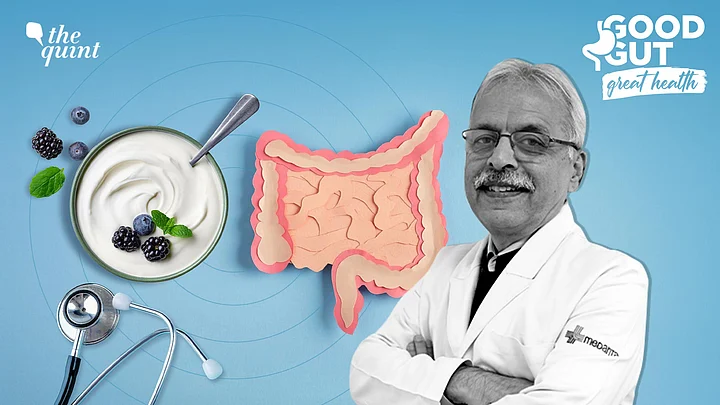
(This is the third article in a series by gastroenterologist Dr Ashwini Setya, in which he unpacks how lifestyle, environment, diet, and hidden exposures affect your gut health. Read the first two here and here.)
From your traditional dahi to bottled kombucha and pharmaceutical-grade supplements, probiotics have become part of India’s health mainstream often promising to “fix” your gut, boost immunity, aid digestion, and even improve mental health.
The pitch is seductive: Add a daily dose of “good bacteria” and let it work like a magic bullet for modern health problems.
But does it really work as promised on the label? To answer that, it helps to step back from all the claims and understand what we are dealing with.
Inside Your Gut's Living Ecosystem
The human body is not just a collection of cells; it is a complex ecosystem, home to trillions of microorganisms, including bacteria, fungi, viruses, and archaea. Collectively, these microbes and their genes are known as the human microbiome.
This vast, diverse population resides on and inside our bodies, with the largest and most extensively studied community being in the gastrointestinal tract—or gut.
The gut microbiome is a key player in maintaining our overall health, influencing everything from digestion and metabolism to immunity and even mental well-being.
The relationship between humans and our microbiome is a symbiotic one. We provide the microbes with a warm, nutrient-rich environment, and in return, they perform essential functions that we can't do on our own.
For example, gut bacteria ferment undigested food components, especially dietary fibre, producing short-chain fatty acids (SCFAs). These SCFAs serve as a crucial energy source for the cells lining the colon, strengthen the intestinal barrier, and have anti-inflammatory effects.
The microbiome also helps in the synthesis of certain Vitamins, like B and K, and plays a vital role in training and modulating our immune system to distinguish between harmful pathogens and beneficial microbes.
An imbalance in this delicate ecosystem, known as dysbiosis, has been linked to a variety of diseases and disorders.
Factors like diet, stress, antibiotic use, and environmental toxins can disrupt the balance of the microbiome, leading to an overgrowth of harmful bacteria and a reduction in beneficial species.
This imbalance is associated with conditions such as irritable bowel syndrome (IBS); ulcerative colitis and Crohn’s disease—collectively known as inflammatory bowel disease (IBD); obesity; type 2 diabetes; allergies; and certain autoimmune diseases.
Probiotics: The Role of "Good" Bacteria
By definition, probiotics are live microorganisms that, when administered in adequate amounts, confer a health benefit on the host. These are often referred to as "good" or "friendly" bacteria and yeasts.
Probiotics work through several mechanisms to restore balance to the gut microbiome and support health.
By colonising the gut, probiotics compete with harmful bacteria for nutrients and adhesion sites on the intestinal wall, effectively pushing them out.
Some probiotics are known to produce substances like bacteriocins, lactic acid, and hydrogen peroxide, which create a hostile environment for disease-causing organisms.
Probiotics enhance the integrity of the intestinal lining, preventing harmful substances and pathogens from "leaking" into the bloodstream.
They interact with immune cells in the gut, helping to regulate immune responses and reduce inflammation.
Certain probiotics help with the digestion of lactose and other complex carbohydrates.
Are Commercially Available Probiotics Really Safe and Effective?
Probiotics are widely available in commercially produced foods and dietary supplements, including yoghurt, probiotic shots, and drinks. The effectiveness of commercially available probiotics is a subject of ongoing scientific research and debate.
While some claims are supported by robust clinical evidence, many are not. The effectiveness of a probiotic is highly strain-specific, meaning a specific health benefit proven for one strain (e.g., Lactobacillus rhamnosus GG) may not apply to another, even within the same species.
Furthermore, the dose, formulation, and quality of the product are critical factors.
Efficacy in Treating Specific Disorders
Probiotics promise a lot, but their benefits only make sense when viewed in the context of the gut’s complex inner world. Before judging the claims on the label, it’s worth understanding how the microbiome works and where “good bacteria” actually fit in.
Antibiotic-Associated Diarrhoea (AAD) is one of the most well-studied applications of probiotics. Antibiotics can disrupt the natural balance of gut bacteria, which, in turn, can lead to diarrhoea.
Numerous clinical trials have shown that specific probiotic strains, such as Lactobacillus Rhamnosus GG and Saccharomyces Boulardii, can significantly reduce the risk and duration of AAD.
The chosen probiotic should be taken alongside the antibiotics and continued for one to two weeks after the antibiotic course has ended.
IBS is a very common gastrointestinal disorder characterised by symptoms like bloating, gas, abdominal pain, and altered bowel habits.
Research suggests that certain probiotic strains, particularly those containing a combination of Lactobacillus and Bifidobacterium, can help alleviate some of these symptoms, especially bloating. However, the results are varied.
Also, some studies have suggested that as IBS is a functional disorder of the GI tract, the effect of probiotic is more likely to be a placebo effect.
IBD, which includes Crohn's disease and ulcerative colitis, is a chronic inflammatory condition of the gut characterised by ulcers in the intestines.
Evidence supporting the use of probiotics as an adjunct treatment is thin. Even for those probiotics found to be of some use, the efficacy depends heavily on the specific IBD subtype and the probiotic strain used.
There is some emerging evidence for the use of probiotics in other conditions like certain respiratory tract infections, dental caries, and atopic dermatitis.
However, for many other diseases and general "wellness" claims, the scientific evidence is often limited, inconclusive, or requires further research.
Safety and Limitation of Probiotics
For most healthy individuals, commercially available probiotics are considered safe.
For patients who have a severely compromised immune system or are suffering from a critical illness, there is an extremely rare but serious risk of developing systemic infection. Hence, the of probiotics should be used judiciously in such cases.
It is crucial to note that because probiotics are often regulated as food supplements rather than medicines, they do not undergo the same rigorous testing and quality control.
This can lead to a lack of assurance regarding the potency, viability, and purity of the product. The number of viable bacteria listed on the label (colony-forming units or CFUs) may not be accurate by the time the product is consumed.
Suffice it to say that the commercially available probiotics are not a one-size-fits-all solution. While some products containing specific, well-researched strains have demonstrated clear benefits for certain conditions like AAD—and some symptoms of IBS—many others lack strong scientific backing for their generalised health claims.
The safety profile for healthy individuals is excellent, but caution is warranted for people with compromised immune systems or serious medical conditions.
(Dr (Prof) Ashwini Kumar Setya, MD DM PGDMLE, is a Senior Consultant at Medanta Institute of Digestive & Hepatobiliary Sciences and Holy Family Hospital, New Delhi. This is an opinion piece and the views expressed above are the author’s own. The Quint neither endorses nor is responsible for the same.)