
Beyond Optics, Mamata's SC Theatrics Are a Masterclass in Political Rhetoric
One can't dismiss Mamata’s SC foray merely as a piece of political theatre aimed at her Bengal electorate.
advertisement
Mamata Banerjee knows how to take the fight to the enemy. And turn it into a huge political advantage for herself. She has done it time and again in the past, most spectacularly against the Communist Party of India (Marxist) in Nandigram in 2007, an agitation that eventually led to the ouster of the Left Front government in West Bengal and her storming into power in 2011.
More recently, the Bengal Chief Minister and Trinamool Congress supremo has fought back against the formidable election machinery of the Bharatiya Janata Party (BJP) with a persuasive mix of nativistic rhetoric, sweeping welfare schemes, and her own undeniable charisma and connect with the masses. Despite widespread allegations of corruption and misrule, she won the state for a third time in 2021, her party garnering a massive 213 out of 294 Assembly seats and nearly 48 per cent of the vote share.
And now, with the Assembly elections slated to take place a few months down the line, Mamata, the battle-hardy high priestess of political strategy, has pulled off another dramatic coup.
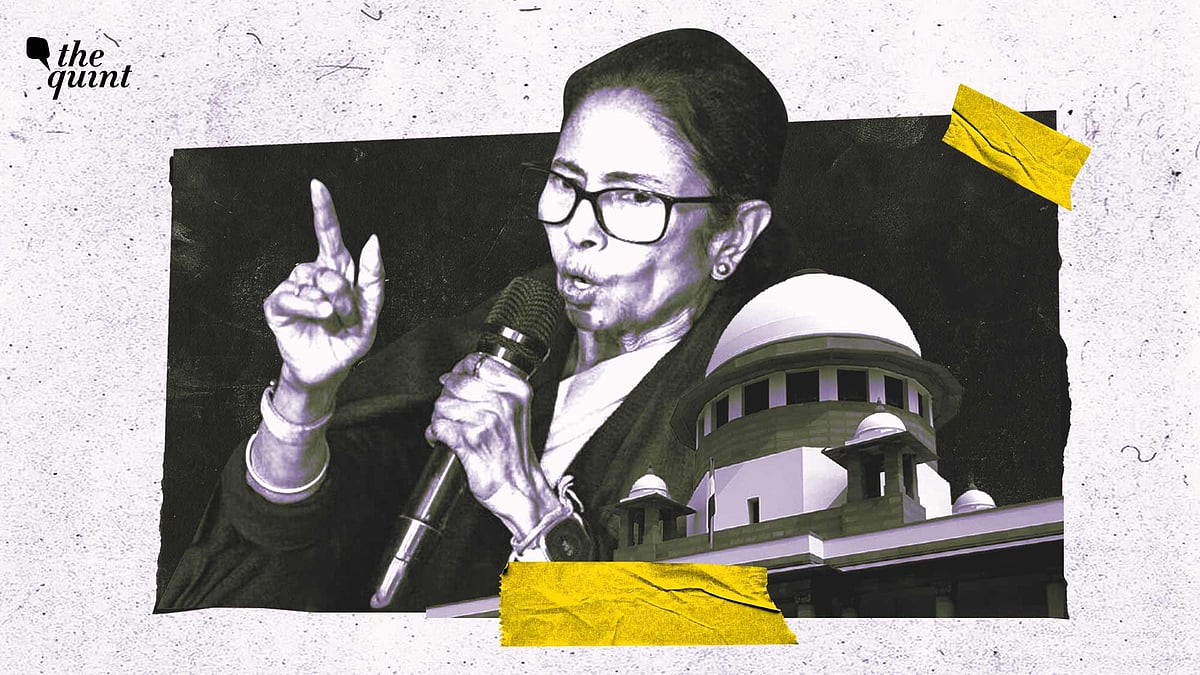
On Wednesday she marched into the Supreme Court of India and personally argued her case challenging the Special Intensive Revision (SIR) of electoral rolls in the state, alleging that the exercise was being conducted hurriedly and unfairly before the upcoming elections, leading to the disenfranchisement of lakhs of voters.
Underneath the Drama Lies Shrewd Politics
It was a masterful exercise in optics, of course. The spectacle of the somewhat frail looking Mamata in her trademark white saree and sandals, walking determinedly into the apex court to fight the case against the “excesses” of the Election Commission of India (EC) is bound to resonate with the people of Bengal this election season.
The videos of the Chief Minister—submitting her impassioned plea to the three-judge bench that she has come to it seeking justice, that the Commission’s Special Intensive Revision (SIR) of voter rolls exercise in the state was designed for the “deletion rather than inclusion” of names in the voter list, that the EC has been deaf to its complaints, that Bengal was being unfairly targeted whereas Assam, ruled by the BJP, is going to the polls without undergoing the SIR exercise, and so on—are already going viral, no doubt.
This is the image of “Didi” that her voters lap up—brave, unbending, ever the underdog who takes on the mighty, ready to lead the fight on the streets as fiercely as she is ready to lead the fight in the highest court of the land.
The unprecedented move by a sitting chief minister was also aimed at giving a high-voltage emotional charge to the four petitions (Mamata’s is the latest one, filed on 28 January) against the SIR exercise being heard in the apex court, including the plea that the upcoming Assembly elections in the state be carried out based on the 2025 voter list.
A Flawed Process Causing Voter Distress
The SIR of electoral rolls in Bengal has been fraught, to say the least. While the names of 58 lakh voters have been deleted already and multiple booth level officers have died by suicide—Mamata claimed that 110 BLOs have perished so far—one of its most contentious aspects is that thousands upon thousands have been pushed into the list of Logical Discrepancies because of minor mismatch in their names and other details.
The EC, for its part, contends that these observers were brought in because the state government did not provide enough people to assist in the SIR process.
Needless to say, the lakhs of voters’ names already deleted and those that have been relegated to the no-man’s-land of “Logical Discrepancies” translate into the TMC potentially losing significant chunks of its vote bank. Bengal’s plea in the Supreme Court also includes the allegation that there is a sharp gender bias in the deletions (many more women than men), deletions based on an unusually high number of young deaths, and particular communities facing more deletions than others.
The EC has been unmoved by these complaints from the Bengal government. And Mamata, like other leaders of the Opposition, has called it out as having sold its soul and its independence, acting in the interest of the BJP government at the Centre rather than in the interest of conducting free and fair elections and safeguarding the democratic rights of the people of India.
SIR vs Anti-Incumbency
While the SIR process in Bengal is undoubtedly flawed—everyone knows someone whose name has been unjustly left out or who has been called for a hearing on fallatious grounds—Mamata is aware that losing large proportions of her vote bank, which may or may not include illegal immigrants, could seriously damage her prospects in the coming polls.
Knowing that she can do little to put the genie of corruption and lumpenism back in the bottle, Mamata has been trying to dispel the other allegation against her regime, which is of minority appeasement. To this end, she has launched the construction of several big-ticket Hindu temples, apart from inaugurating a massive Jagannath temple in Digha.
The TMC chief’s fight against the SIR in the Supreme Court is, therefore, almost an existential one.
Battling anti-incumbency, and the disaffection over corruption and misgovernance, she needs the polls to be conducted on the basis of status quo ante, ie, the electoral rolls of 2025. She needs to fight the SIR process every step of the way. Her bravura turn in the top court, pleading the case of voters in her state who stand to lose their democratic rights, is part of this effort.
Will she overcome the odds and pull off another stunning victory in the upcoming elections?
Watch this space.
(Shuma Raha is a journalist and author. This is an opinion piece and the views expressed are the author's own. The Quint does not endorse or is responsible for them.)
- Access to all paywalled content on site
- Ad-free experience across The Quint
- Early previews of our Special Projects
Published: undefined