
Why BJP’s Bengal Victory Does Not Automatically Translate to UP
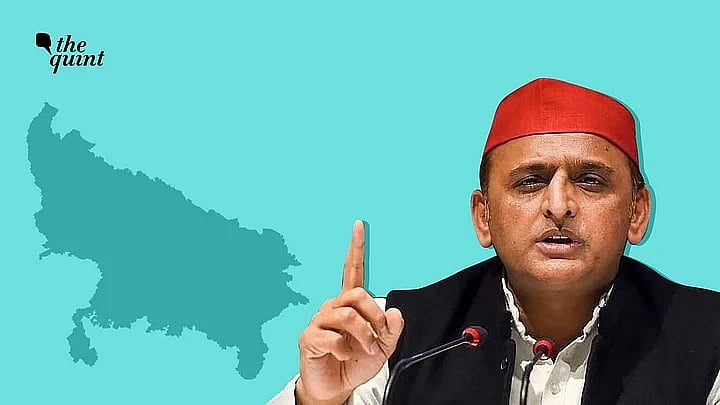
Like the BJP did in West Bengal, the SP has managed to occupy almost the entire Opposition space in UP.
advertisement
With the Bharatiya Janata Party's (BJP) resounding victory in West Bengal, is the game over for the Opposition in India’s politically most crucial state, Uttar Pradesh, which goes to polls in less than a year?
On the face of it, the odds heavily favour the ruling party. Despite little grassroots organisation and the absence of a local charismatic leader in Bengal, the BJP has demolished the Opposition’s last citadel in the East. In Uttar Pradesh, where the party has had a phenomenal rise since the advent of Prime Minister Narendra Modi and has been under Chief Minister Yogi Adityanath's "bulldozer rule" for nearly a decade, it looks like child’s play for the ruling party to sweep to a third successive term in office.
Unsurprisingly, the Opposition is deeply demoralised at the moment at its prospects in the state where it is vital for it to keep alive—not just for its own sake but the future of competitive politics in the country.
The two states have vastly different social fabrics and political backgrounds, making it difficult to draw parallels between them. It is, therefore, important to examine the key factors that led to Mamata Banerjee’s ouster and then see whether they would apply in any significant way in Uttar Pradesh.
Anti-Incumbency Works Differently in UP
There are three main causes being attributed to the rout of the Trinamool Congress (TMC) in West Bengal.
A strong anti-incumbency wave against the Mamata government after three successive terms that surely provided a tail wind to the BJP’s pirate ship to catch up with Didi’s craft to assault those aboard.
Second, there is good reason to suspect that the SIR (Special Intensive Revision) deletions were tailored to diminish the hardcore base of the TMC.
Finally, and perhaps most importantly, is the communal polarisation of Bengali Hindus against the sizeable Muslim minority base of the TMC on the issue of infiltrators from neighbouring Bangladesh.
Now, let us see if these three vital triggers that propelled the BJP demolition of Mamata’s fiefdom are valid in exploring the politics of Uttar Pradesh in the run up to the state polls.
Clearly, there is no question of anti-incumbency against Akhilesh Yadav and his Samajwadi Party (SP), the principal opponent of Chief Minister Yogi and the ruling BJP, who will be the target of people dissatisfied with their rule for two consecutive terms.
Indeed, there have been indications of the palpable decline in support for the ruling dispensation among several segments of the electorate, particularly backward, lower, and Scheduled Castes in the previous Assembly poll—and even more drastically in the 2024 parliamentary elections.
BJP’s Rise in Bengal vs Decline in UP
There is also a big difference in the electoral curve of the BJP in West Bengal and Uttar Pradesh over the past decade.
On the other hand, the BJP has been on the decline for over a decade in Uttar Pradesh. In the 2014 general elections, the BJP won 71 seats, while in 2019, it won 62, and then further slumped to just 33 in 2024. Similarly, in the 2017 Assembly elections, the BJP won 312 but dropped 57 seats to 255 in the last 2022 Assembly elections.
Akhilesh Has Occupied the Opposition Space
In contrast, Akhilesh Yadav and the SP has been on the ascendent in recent years. In the 2019 Assembly polls, the party won 111 seats, a substantial gain of 64 from the 47 he had won in the previous state elections. He upped his performance further in the 2024 Lok Sabha polls by winning as many as 37 parliamentary seats, an increase from just five seats in the previous national elections.
There are those who will scoff at the Yadav chieftain’s chances against the BJP juggernaut regardless of the former’s growing strength by pointing out that the recently completed SIR deletions that knocked more than 2 crore voters from the electoral lists in Uttar Pradesh would make it into an uneven playing ground just like in West Bengal.
However, curiously, the two different set of SIR deletions seem to be dissimilar with the one in Bengal, pointedly concentrated in TMC strongholds eliminating their voter bases. In Uttar Pradesh, such overt bias is not visible.
In fact, most of the deletions have been in urban BJP strongholds like Lucknow, Ghaziabad, Noida, and Kanpur, while the least in rural areas where the SP is traditionally strong. However, there is no detailed data available to know about possible microscopic surgery to harm the Opposition’s chances in the state.
The Limits of the ‘Infiltrator’ Narrative in UP
Finally, the bogey of Bangladeshi infiltrators that was so relentlessly used by the Sanghi propaganda machine in West Bengal is simply not there in Uttar Pradesh despite obvious communal polarisation.
However, as the 2024 parliamentary polls proved in Uttar Pradesh—just a grand temple in Ayodhya or a spectacular Kumbh Mela—does not make Hindutva an overwhelming electoral force for which it needs a credible bogey. After 10 years of being crushed under the boot of the Yogi regime, Muslims in the state are difficult to portray as a menacing lot and I am doubtful where they would be a major issue.
So, despite the drubbing in Bengal, Akhilesh and the Opposition need not entirely give up on Uttar Pradesh. Yet, it remains a huge task for them to galvanise their supporters and activists at the booth level over the next year. What they desperately need is to first work in unison and generate an anti-incumbency wave against Yogi, as controversial a figure as Didi. That remains their only hope.
(The writer is a Delhi-based senior journalist and the author of ‘Behenji: A Political Biography of Mayawati’. This is an opinion piece. The views expressed above are the author’s own. The Quint neither endorses nor is responsible for the same.)
- Access to all paywalled content on site
- Ad-free experience across The Quint
- Early previews of our Special Projects
Published: undefined