'Dhurandhar' Review: Ranveer Singh Leads A Tedious, Rage-Bait Gangster-Spy Saga
Dhar’s approach to violence isn’t “stylish,” nor is it entertaining or tragic. It’s pointed and purposeful.
advertisement
A group of wide-eyed, middle-aged men stare at a collection of TV screens, periodically erupting with joyful screams and frantic hugs of celebration. The scene is intentionally framed like a group of male friends watching a cricket match that their team is winning.
Except what’s unfolding on those screens is the live coverage of the 26/11 terror attacks, as innocent people are gunned down. The cheering men are a group of top Pakistani officials, ISI top brass, gangsters, arms dealers and businessmen. One of them is even on the phone to one of the terrorists, gleefully barking instructions about which hostages to kill next.
The sequence that follows—the screen turning blood red to show a transcript and voice recording of what the film says are real clips of that phone conversation. That one chilling (intentionally and otherwise) sequence says it all about the pandering optics, incendiary agenda, and rage-fuelled aesthetic of Aditya Dhar’s Dhurandhar.
Dhar’s sprawling narrative weaves a turbo-charged, Mirzapur-style rise of a gangster tale with a spy saga that spans the planning of every horrid terrorist attack on Indian soil since the early 2000s. The fate of the entire country is literally intertwined with the actions of one man and his rise to power within a world of lawless, thunderous gangsters. If that isn't a “winning, crowd-pleasing” commercial formula, I don’t know what is.
Rage-Bait Cinema
Along with Shashwat Sachdev’s score, which is instrumental in bringing the fire, Dhar’s capable craft ensures the film isn’t ineffective—but it is tedious, so much so that any stretches that threaten to shine get drowned out in the endlessness and so much-ness of the film.
In violence, agenda, and runtime—restraint is certainly not on offer here. Instead, Dhurandhar feels like a 7-8 episode, handsomely produced series imposed on us as a gruelling film. The story is even split into 8 chapters (or I think it was 8, I stopped counting after a point) and we're told there’s a second part (season?) coming our way in March 2026.
Arjun Rampal in a still from Dhurandhar
(Photo Courtesy: Jio Studios)
Dhurandhar follows the revenge long game of two men across a decade, if not more. Ajay Sanyal (an effective R. Madhavan) is an intelligence veteran who makes hitting back at Pakistan his personal mission, after repeated terror attacks on Indian soil. But Sanyal has his hands tied by the political machinery, so he opts for the waiting game (“waqt and sabr”, he says repeatedly) by having an Indian operative infiltrate enemy ranks. Enter mysterious spy figure Hamza Ali Mazari (Ranveer Singh), who arrives in Lyari, Karachi, in the early 2000s with the mission of working his way up local gangs to dismantle them from within and send key intel back home.
The top don in town is arms dealer Rehman Dakait (an excellent, simmering Akshaye Khanna), who supplies arms to the ISI for all their terrorist activities. Other key players include ISI top brass Major Iqbal (an impressively unsettling Arjun Rampal), crooked politician Jameel Yamali (Rakesh Bedi is the only actor who seems to be having any fun), and rogue cop and encounter specialist SP Chaudhary Aslam (Sanjay Dutt). In Dhar’s hands, Karachi is a lawless land ruled by a nexus of these ruthless, bloodthirsty figures.
Rocking Star Ranveer
I don’t know how much of Dhurandhar, its characters, and events are dramatised and fictionalised. What I will say is—from what I’ve read, the Lyari gang war of the early 2000s sounds cinematic as hell. But, shaky optics in mind, it’s not exactly our story to tell. Anyway, back to the undercover snooping. On his first night in Lyari, in true “hero movie” fashion, Hamza is randomly jumped and beaten by a group of local goons. One of them even gropes his crotch and then prepares to rape him, before being chased away by the cops. I guess in Aditya Dhar’s hypermasculine worlds, there’s no greater way to show spine-chilling evil than queerness.
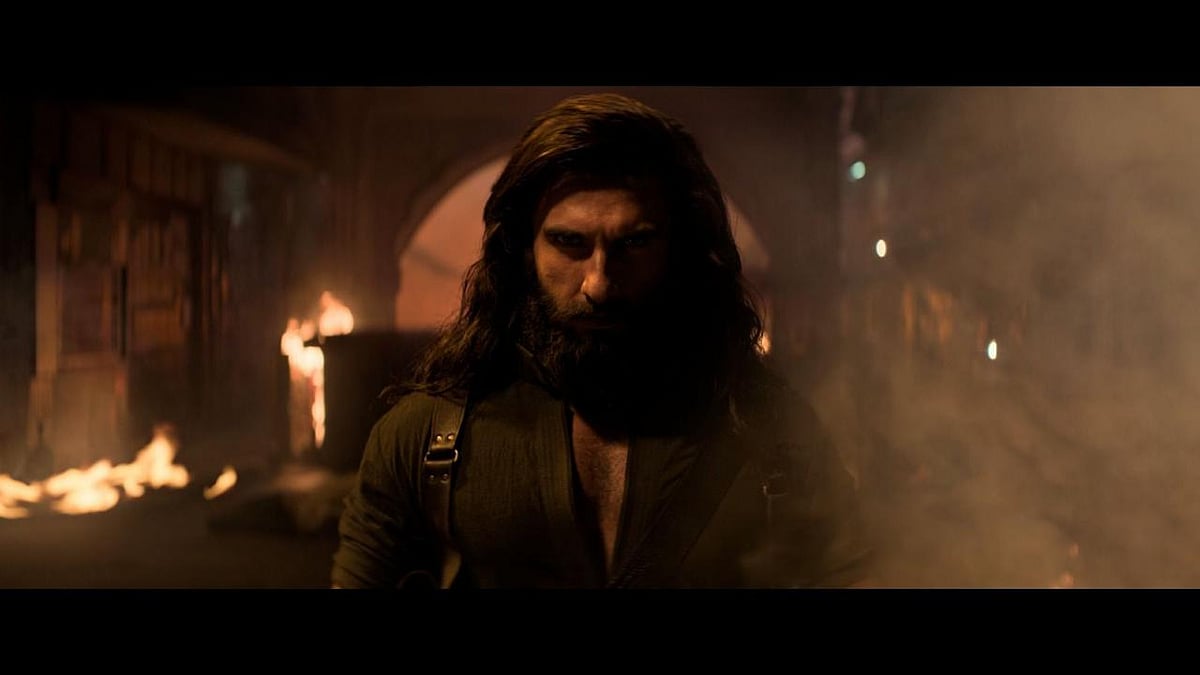
As Hamza, Ranveer Singh isn’t always easy to stomach and doesn’t quite get lost in the role as we’ve come to expect from him. Especially in the espionage-focused first half—which clocks in at a mere two+ hours.
Ranveer Singh in Dhurandhar
(Photo Courtesy: Jio Studios)
So, when he works at a tea shop for a year (looking like…that) before Rehman welcomes him into the gang with open arms, it feels odd. Even in Singh’s performance, the actor is at odds with the star. Hamza looks and moves like an action hero waiting for an explosion he can walk away from in slow motion.
I remember an interview from a few years ago where Singh was gushing over Rocking Star Yash in K.G.F. In Dhurandhar, it would appear, sees him finally getting to live out those dreams. The problem is that Rocky Bhai is out of place in what hopes to be a slick espionage thriller series centred on a hiding-in-plain-sight everyman.
One Giant Set-Up Movie
Perhaps that's why Dhurandhar feels like one long set-up movie—building up dreaded villains and introducing key figures—presumably paving the way for the more explosive second part, which sees Hamza take charge. If anything, it’s interesting how comfortable Singh is with being relegated to the background of his own film, considering this is less Hamza’s story and more the Lyari gangster story.
Hamza arrives in Pakistan, Hamza works at a tea shop for a year. Hamza infiltrates Rehman’s gang. Hamza relays key intel back home. Hamza falls in love. Hamza makes moves to climb the espionage ladder, and so on. I’m all for waqt and sabr, but there’s a fine line between painstaking and painful.
R Madhavan in Dhurandhar
(Photo Courtesy: YouTube)
And then there’s the matter of the horrid, graphic violence. Most filmmakers will tell you that there's nothing as impactful as violence left to the imagination. But Dhar leaves nothing to it. He amplifies it, underlines it, zooms into it. We see brains bashed in, multiple decapitations, bodies beaten to a pulp, knives hacking at throats, stabbings aplenty, and one particularly horrific torture scene (as seen in the trailer). As a fan of mainstream Indian cinema, I consider my threshold for violence to be fairly high, but here I was squirming in my seat.
Dhurandhar releases in theatres on 5 December.
(Suchin Mehrotra is a critic and film journalist who covers Indian cinema for a range of publications. He's also the host of The Streaming Show podcast on his own YouTube channel. This is an opinion piece, and the views expressed above are the author’s own. The Quint neither endorses nor is responsible for the same.)