
First COP33, Now Bonn: Has India Missed a Trick?
India is not attending the crucial mid-year climate talks that kicked off in Germany's Bonn on 8 June.
advertisement
(This article was first published in April 2026. It has been republished in light of the Indian government's decision to not send a delegation to the crucial mid-year UN climate negotiotions in Germany's Bonn this year—and instead attend virtually.)
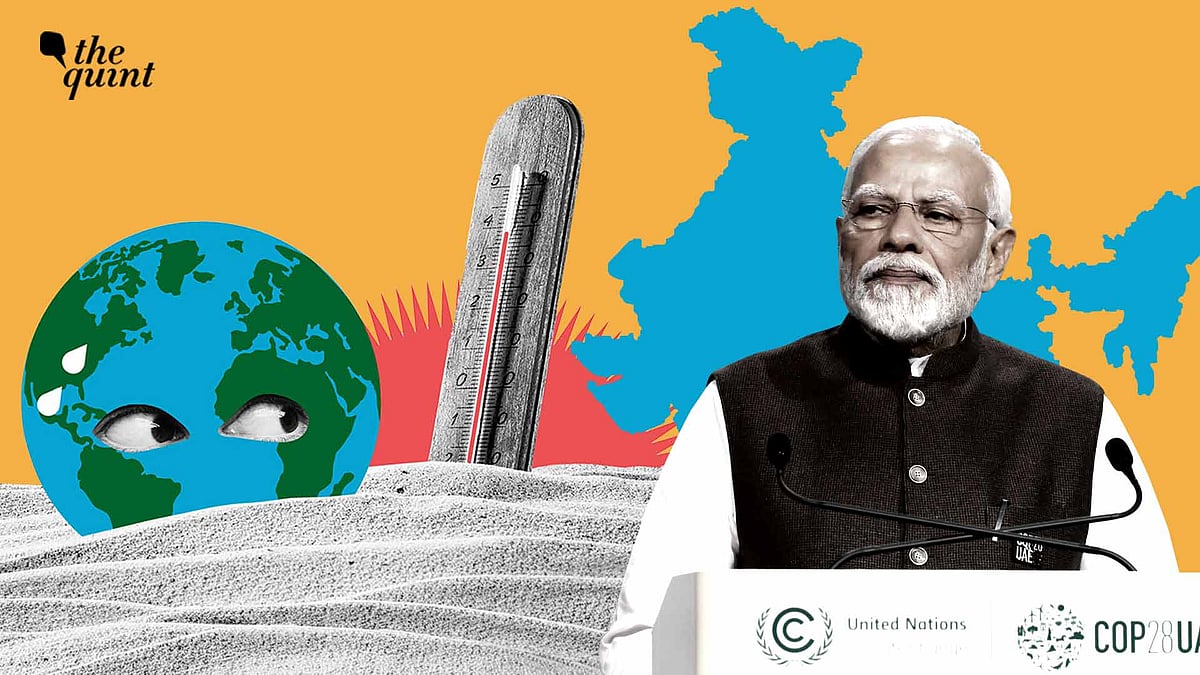
Earlier this year, India withdrew its bid to host COP33—the 33rd annual climate conference of the United Nations Framework Convention on Climate Change (UNFCCC)—in 2028, vaguely stating that it had done so after reviewing its commitments.
While the withdrawal was quiet, the decision itself speaks volumes about India's shifting climate priorities.
For years, India has been attempting to build up its presence on the global stage, particularly in climate negotiations. Its first Nationally Determined Contribution (NDC) to the Paris Agreement aimed to reduce the emissions intensity of its GDP by 33-35 percent below 2005 levels by 2030, among other goals.
After reaching this milestone 10 years ahead of schedule, India revised the target up to 45 percent in 2022, demonstrating that while the targets were set conservatively, India’s actions were far more ambitious, particularly for a country with such low historical and per capita emissions.
India's 2023 contribution to the deliberations around the new climate finance target (the New Collective Quantified Goal, or NCQG) was submitted on behalf of the like-minded developing countries (LMDC) group.
It also used its 2023 presidency of the G20 to foreground greater climate ambition, and to convene an Independent Expert Group to explore avenues for reforming multilateral development banks.
It was in this context that India offered three years ago to host COP33, sending a clear signal that it was set to play a more proactive role in international climate affairs and setting the stage for a more prominent overall global profile.
So what changed?
The Cost and Benefits of Hosting COP
Hosting a COP is no easy task. It is an extremely resource-intensive exercise that can strain local budgets, infrastructures, and logistics across its two weeks.
It could have, however, also yielded significant benefits, allowing India to indeed emerge as a leader of the Global South, to showcase its many low-carbon development achievements and local innovations at home, and to shape the multilateral discourse in its vision and elevate its national priorities to the world stage.
Hosting such a large event could also have had more tangible spillovers into other sectors, such as boosting tourism, hospitality, and construction.
Yet, after laying all the groundwork through its roles during its G20 presidency and in the COP processes, it has withdrawn its bid for COP33 just over two years before the event is to be hosted, leaving many surprised.
A Response to the Shift in Global Climate Landscape
This decision is not made in silos. It comes at a pivotal moment for global climate action.
Since 2023, political momentum on climate action has weakened globally, and trust in the multilateral negotiating process has eroded, more so due to the weak 2024 NCQG on Climate Finance outcome.
Indeed, the US has withdrawn from the Paris Agreement again and is actively curbing domestic clean technology development. The UK is halving its global climate finance commitments, and the EU is externalising some of the costs of its low-carbon transition through its Carbon Border Adjustment Mechanism (CBAM).
Compounding these trends are the supply chain shocks arising from the disastrous Iran war, which are prompting a retreat to dirtier fuels like coal and wood in the short run, while creating a stronger case for energy independence—driven by renewable sources—in the long term.
In response to these global developments and its own domestic constraints, India’s position on climate has also shifted in the past 2-3 years, towards an increased focus on adaptation and a belief that continued development is the best way to build resilience against climate impacts.
The Global North’s backtracking has then presented two choices for India:
It could either also scale back its climate ambition, justifiably noting that it should not bear a proportionately larger burden of decarbonisation.
It could step forward and seize the opportunity to steer discussions, establish global leadership, and help bring its priority issues to the forefront.
A Missed Opportunity to Establish Climate Leadership?
While the need to continue to develop is an unquestionable imperative, the premise for the shift in India’s position is questionable.
As one of the most climate-vulnerable countries in the world (over 85 percent of its districts are exposed to extreme climate events), and one that has not received significant global support for climate action, being in a position to reshape the climate agenda and bring discussions back on track is in India’s interests.
Further, mitigation does not preclude development; the two can reinforce each other, and mitigation can build resilience while reducing the need to adapt—think of decentralised solar energy bringing energy security to rural hinterlands, or clean technology manufacturing creating jobs and financial stability while reducing trade vulnerabilities.
Lastly, development does not automatically guarantee greater resilience unless done carefully—the unplanned construction in India’s mountainous regions and the recent spate of floods and landslides is a vivid case in point.
In shifting its position and withdrawing its bid, India has signalled that it is choosing to focus on immediate interests, thereby risking harm to its long-term domestic needs.
As its rivalrous neighbours raise their international profiles—China economically through its clean tech exports, and Pakistan through its mediating role in the Iran war—India has surrendered an easy opportunity to step up.
In a period of heightened geopolitical uncertainties and growing climate impacts, time will tell how this affects us.
(Aman Srivastava is Fellow and Coordinator, Climate Policy, at the Sustainable Futures Collaborative. This is an opinion piece, and the views expressed above are the author’s own. The Quint neither endorses nor is responsible for the same.)
- Access to all paywalled content on site
- Ad-free experience across The Quint
- Early previews of our Special Projects
Published: 16 Apr 2026,11:09 AM IST