
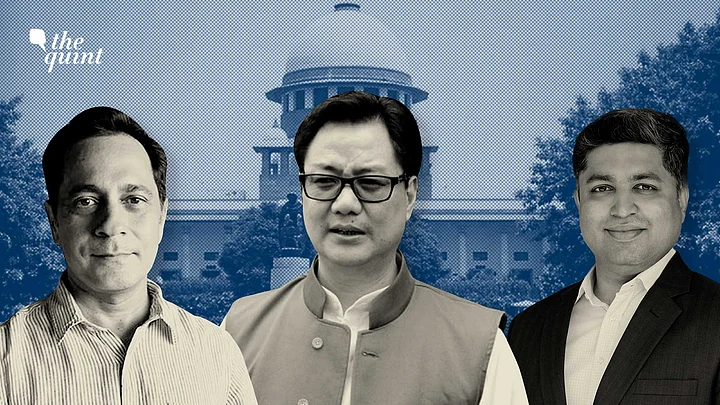
Does the decades-old Collegium system have any relevance in modern-day judiciary? This has been the most asked question from several quarters after Union Law Minister Kiren Rijiju took on the Supreme Court's process of appointment of judges in India.
Weighing in on the issue, Saurabh Kirpal—a senior advocate whose name was recommended this year for elevation to the Delhi High court, narrows down on the hits and misses of the Collegium system.
Responding to what could have been a landmark decision of the Supreme Court in terms of LGBTQAI+ rights in India, Kirpal states how his sexuality was discerned to be a potential roadblock to his selection and how this dated procedure turns the clock back for those seeking representation in the judiciary.
When it comes to decision-making, judicial delay is a staple that has been plaguing our system for a very long time. This 'delay', if you ask me, is a pernicious kind of bacteria or termite eating into and destroying the system from within. Such as in cases of Sedition, the Executive has taken some action which it may not have otherwise. Especially in recent years, the cases shot up dramatically and one often lives with the fear of landing up in jail and not getting bail, on top of that which is not quite the case except for perhaps, a few headline ones.