
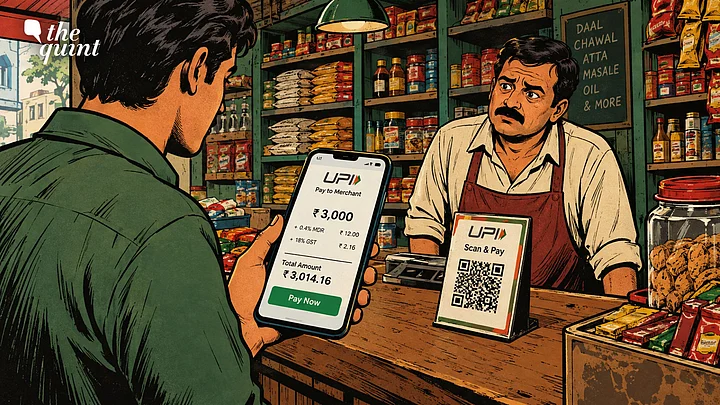
On 14 September, a gazette notification quietly redefined 'free UPI'.
Instead of a guaranteed 'free UPI' for everyone, the law now only covers payments up to Rs 2,000.
The new rates came out a day later. From 15 October, merchants receiving over Rs 2,000 via UPI must pay a Merchant Discount Rate (MDR) of 0.4 percent, capped at Rs 300. The government set a flat Rs 5 fee for railway, fuel, telecom, and insurance payments.
Small merchants receiving up to Rs 1 lakh a month via QR codes do not pay this fee. Transfers between individuals also remain free.
In August 2022, the Finance Ministry called UPI a "digital public good" and promised they would not charge for it. In June 2025, they dismissed rumours of an MDR on UPI as "completely false, baseless, and misleading".
Now, they have officially announced the MDR, and officials say they will not roll it back. The Opposition calls it a "UPI tax". I go further.
This is the Bank Transaction Tax (BTT) that the Bharatiya Janata Party (BJP) government has wanted for a decade, now disguised as a bank charge. The government defends it by saying the merchant pays, not the customer, and that the State can no longer subsidise UPI. Neither argument holds up.