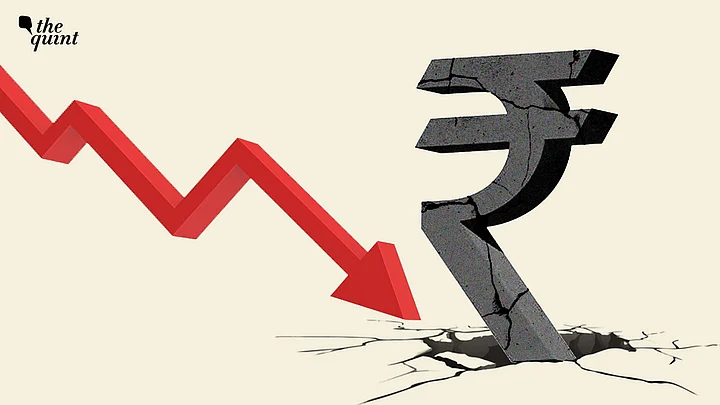
The government on 28 July approved the proposal of the Reserve Bank of India (RBI) to introduce one billion pieces of polymer (plastic) notes for both rupees 10 and 20 notes for field trials.
Earlier, on 17 July, Bhartiya Reserve Bank Note Mudran Private Ltd. (BRBNMPL) called for global tenders to source ‘opacified polymer substrate sheets’ for plastic currency notes trials of these two denominations. The bids will close on 18 August.
The RBI had initiated plans to field test one billion plastic Rs. 10 notes in 2012, which was later abandoned. One more attempt was planned in 2018, which was also abandoned. This is the third in a series in the last 15 years.
Why did RBI abandon the plans to introduce plastic notes earlier? Why has RBI decided to go ahead with this experiment now? Does it make sense to experiment with Rs. 10 and Rs. 20 notes? Is the move an acceptance of the failure of demonetisation of Rs. 500 and Rs. 1000 notes carried out in November 2016?
Why Earlier Experiments Failed
The Government of India (GoI), in December 2012, approved RBI’s proposal to introduce one billion pieces of Rs. 10 banknotes on polymer substrate on a field trial basis in five cities with the objective of increasing banknotes’ life but ‘not to combat counterfeiting’.
The RBI decided to abandon the plans on account of technological challenges, material testing issues, and ink-wearing problems under India’s extreme weather conditions and also for ATM machine compatibility.
The RBI again initiated a proposal for considering plastic notes in 2018. The discussions led upto the point of agreement on making a trial for the Rs. 50 banknote. However, the idea (as no formal announcement was made) was abandoned as use of animal tallow in making polymer substrate could hurt religious sentiments of some people, particularly in view of Indian practice of some people using saliva by fingers to count notes.
In 2019-20, the RBI decided to shift its strategy away from plastic notes to experiment with varnished covered normal paper notes- Rs. 100 banknote was chosen (RBI Annual Report 2019-20). This experiment also did not progress.
No further move was initiated in the next six years.
The Questions RBI Hasn't Answered
The RBI suddenly decided to issue a tender for 2 billion polymer notes. No announcement was made in the Budget 2026-27.
The RBI Annual Report for 2025-26, released in May 2026, made no mention of it as part of the 2025-26 agenda under implementation. Instead, it talked of strengthening of Indian banknotes through introduction of new/upgraded security features. Nor did the agenda of BRBNMPL for 2026-27 contain any hint. It only mentioned improvement in substrate of banknotes for enhanced durability as per its agenda Utkarsh 20229.
The RBI has not issued any concept paper or technical note to clarify whether earlier concerns (ink-wearing, heat-warping, machine incompatibility, fears of animal tallow use etc.) have been addressed or have been found to be non-existent.
In the tender issued, RBI has stated that only those bidders would be short-listed ‘whose sample polymer note/sheet passes the evaluation test for absence of Animal tallow/DNA content satisfactorily’.
There are three to five major global vendors, including CCL Secure, De La Rue and Lousenthal, which control around 90percent of the worldwide polymer banknotes substrate and technology market, though there are, in all, about 10 to 15 specialised firms which operate in this segment.
Some newspaper/social media reports suggested that M/s Adani has developed facilities for production of polymer substrate for banknotes and the RBI announcement was to create a supply market for it. A quick check on the claim suggests that Adanis are building a petrochemical facility in Mundra Gujarat for making PVC polymer and not BOPP polymer, which is required for banknotes.
It will be interesting to see whether Adanis participate in the tender, with or without a global joint venture partner.
The Issue Of Animal Tallow
The plastic notes are in circulation in about 60 countries- mostly in industrialised countries with cold climates. There are, however, quite a few hot, tropical climate countries—Vietnam, Malaysia, Oman, and even our neighbour Maldives—which also use polymer notes.
The apprehension that polymer notes may not be suitable for hot and humid countries like India is therefore quite misplaced.
The world also does not care for use of animal tallow, which indeed is used in production of BOPP film for preventing raw polymer pellets/sheets from sticking together and to reduce machine friction. None of these 60 odd countries therefore put any such conditions. There was an agitation against polymer notes in the UK when the presence of tallow was confirmed in the newly introduced 5 pound notes. The Bank of England refused to back down on cost consideration. The protests died down.
The RBI insistence on the polymer substrate without use of animal tallow may lead to either the established players to skip the tender or ask for significantly higher costs for producing the polymer substrate with substitute fats.
It will need to be seen what kind of higher costs are asked by the established vendors if any of them chose to bid. It will be worth watching to see any of the established international bidders filing bids, with or without Adanis, and the additional price asked for.
Why Start With Small Notes
The RBI Annual Report 2025-26 informs that 27.57 billion (16.1percent of total) notes of Rs. 10 and 14.05 billion (8.2 percent) notes of Rs. 20 were in circulation at end March 2026 with value of 0.7 percent each of total value of notes (Rs. 41,240 billion) in circulation.
These two small denomination notes thus commands a negligible proportion of value of currency-notes in circulation. Their relative share, in terms of volume, is also rapidly declining from 29.9 percent and 9.8 percent respectively from end March 2018.
On the contrary, the Rs. 500 banknote is the principal note in circulation- at the end 2026, 70.55 billion notes in circulation (41.2 percent) with value of Rs. 35,274.08 crore (85.5 percent).
As the polymer notes will be much costlier (without insistence of absence of animal tallow) than convention cloth-cum-paper notes and the cost of making a Rs. 10/ Rs. 20 banknote being almost equal to the cost of Rs. 500 notes polymer notes (with similar security features), it makes better sense to switch over to plastic notes of higher denomination notes.
Cash Never Went Away
The express purpose of demonetisation was elimination of black money by taking out cash. Another principal objective added later was to promote digital payments. While digital payments have grown impressively (particularly UPI), the cash in the system has also gone up.
At the end of October 2016 (demonetisation took place in November 2016), total cash in circulation was Rs. 17.17 trillion. Total cash in circulation at end June 2026 is Rs. 41.94 trillion. The cash has gone up nearly two and a half times. It has also increased in terms of a proportion of GDP.
Is the move to introduce polymer notes an acceptance of the fact that cash will continue to remain dominant in India?
Where The Experiment Could Help
Given the fact that cash would remain in circulation in large quantities, it makes sense for India to switch over to polymer notes.
Two major changes are, however, needed in RBI’s current strategy.
First, the concern over animal tallow use in production of BOPP substrate for polymer notes needs to be dropped. The BOPP substrate produced with animal tallow use in production is the global standard and is far cheaper than any substrate insisted to be produced without it. The RBI should not care for the concerns of those who use saliva in handling notes as the BOPP films are used in so many products without any outcry.
Second, instead of experimenting with smaller notes (Rs. 10 and Rs. 20) the government/RBI should go for larger notes (Rs. 100, Rs. 200 and Rs. 500) as that would be highly cost effective in terms of the value of notes.
That would be an experiment worth doing.
(The author is an economic and fiscal policy advisor, SUBHANJALI, former Finance & Economic Affairs Secretary, and author of 'The $10 Trillion Dream'. This is an opinion piece and the views expressed are the author’s own. The Quint neither endorses nor is responsible for them.)