
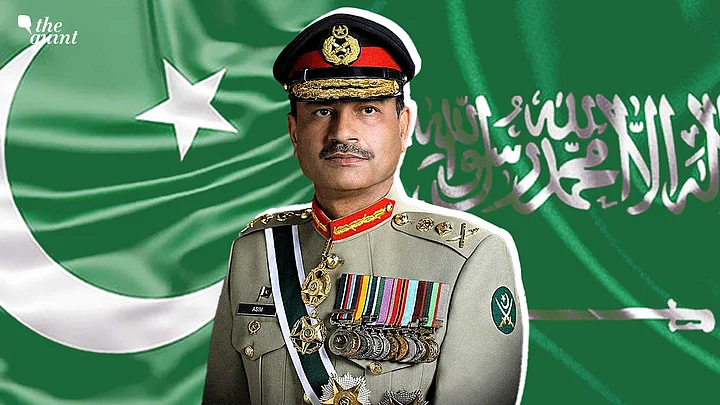
Weeks after the passing of the Lahore Resolution asking for a separate Muslim homeland in 1940, Saudi Crown Prince Saud bin Abdul Aziz visited Karachi with five of his brothers, three of whom subsequently became kings. He was hosted by Muhammad Ali Jinnah and even before Pakistan gained independence, Saudis funded Jinnah’s frequent pleas, eg, as during the Bengal famine.
Saudis even facilitated the meeting of Jinnah’s team with United Nations (UN) delegates in 1946, and expectedly became the first country to recognise independent Pakistan, the only country in the world to be established in the name of religion.
As Khadim al-Haramayn as-Sarifayn or custodian of the two holy mosques, the Saudis felt obliged to patronise the ostensible 'land of the pure’ ie, Pakistan. Soon dubbed Saudis' 'closest Muslim ally’, the relationship became transactionally, win-win.
From openly siding with Pakistan in the Indo-Pak Wars of 1965, and 1971 to even lauding Pakistan for conducting its nuclear test, Chagai-I, in 1998 as a 'bold decision’, Saudis supported Pakistan at its most vulnerable times (eg, diplomatically and practically by supplying oil at super discounted prices when the US imposed sanctions).