
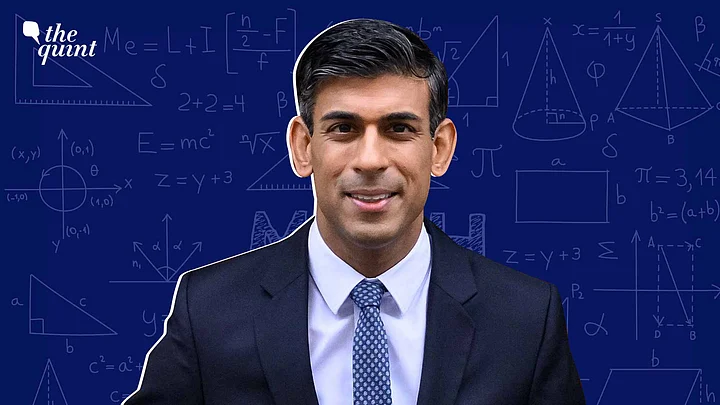
For most Indian and other East Asian families, Maths and Science are an imperative part of children’s education, so when UK Prime Minister Rishi Sunak announced his 'Maths to 18' policy earlier this month, many attributed its importance to his own upbringing and Indian roots. But does it also include some political number-crunching leading to the local elections in May?
Mr Sunak said, "This is personal for me. Every opportunity I’ve had in life began with the education I was so fortunate to receive.” He added: “We’ve got to change this anti-maths mindset. We’ve got to start prizing numeracy for what it is—a key skill every bit as essential as reading.”
In fact, researchers have pointed out that "cultural and social factors" may be behind the strong scores in East Asian countries. A study by researchers at the Institute of Education, University of London found that England's cleverest pupils can match their peers in leading East Asian countries at the age of 10 but then fall behind, suggesting that more needed to be done to ensure the most able pupils can keep pace with the highest achievers in other countries.
The study noted: "In East Asian cultures, education has historically been highly valued. This can be seen not only in teachers' high salaries but also in the heavy investment of families in private tutoring services." No one can miss the advertisements for various private coaching classes while travelling through the streets of Indian cities.