
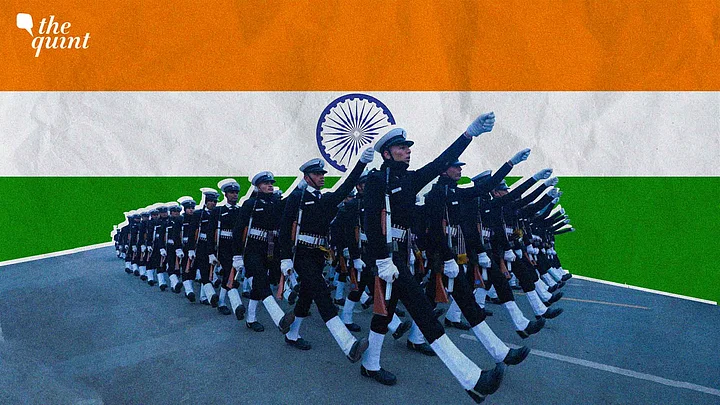
(This is Part 3 of our special series on the occasion of India's 74th Republic Day. Read Part 1 here and Part 2 here.)
War memorial commemorating the most unforgiving and the ‘highest battlefield in the world’ ie Siachen Glacier, has a timeless inscription, “Quartered in snow, silent remain when the bugle calls, they shall rise and march again”. It hauntingly captures the conditions, sacrifices and nobility of the profession of arms, as also its inviolable tenet of discipline. As a substantial part of that fabled discipline, the combatants don’t just walk, saunter, or even run—they simply ‘march’ as ordained since eons.
Therefore, despite fighting tooth and nail and routing the enemies consistently, the preferred phraseology is always that the Indian Army ‘marched’ into Panjim in 1961, ‘marched’ onto the outskirts of Lahore in 1965, and ‘marched’ into Dhaka in 1971.
The act of ‘marching’ is part of standard drill for all militaries across the globe. What started as a deliberate method of choreographed way of moving troops from one place to another in an identifiable cluster, it has evolved as the most visibilised form of military discipline and elan.