
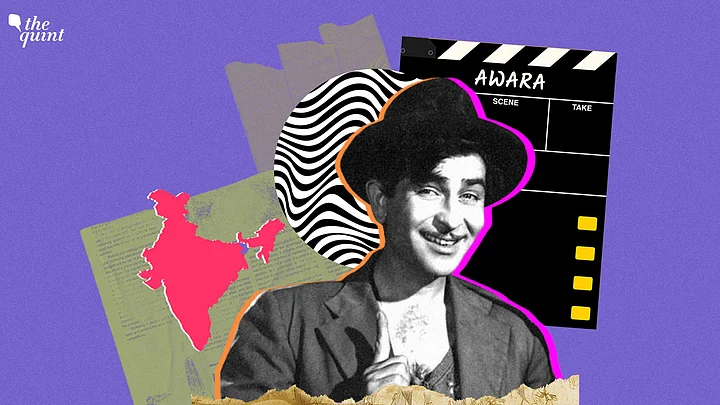
I have lived a life and inherited a legacy of constantly being on the move—a state of mind that Spivak has referred to as being in a state of permanent roots in the air. There are only two things that have remained constant in this journey—Pashtunwali as a life truth and Raj Kapoor’s cinema as a worldview.
Mine has been a childhood raised under strict Islamisation and militarism in a garrison town of Pakistan in the public space and a private world where my generation had its own baggage of gender and cultural politics.
Somewhere along the years, I found my hands on a video cassette of Raj Kapoor’s Awaara (1951). As the film began I leaned back in my seat and told my grandfather conversationally, “I hear the father and son actors here are like royalty, India’s film dynasty."