
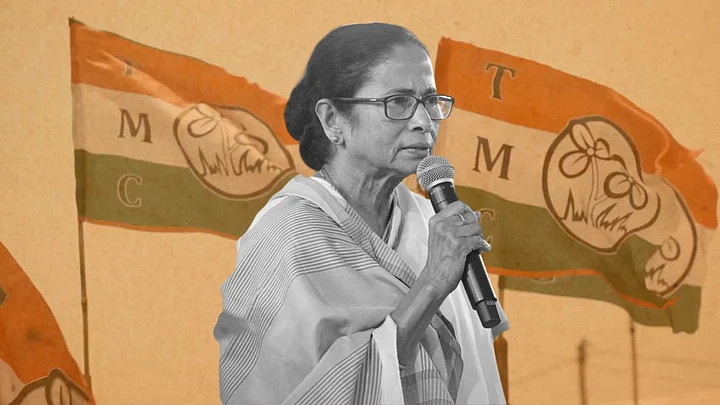
The temptation, after the Trinamool Congress’s (TMC) defeat in West Bengal, is to begin with the numbers and conclude that the party is wounded but not finished. After all, the Bharatiya Janata Party (BJP) won 207 seats and TMC was reduced to 80, but the vote-share gap was far less dramatic. Roughly 46 percent for BJP and 41 percent for TMC, with a vote-share difference of only 5 percent. On paper, this seems to suggest that TMC remains socially entrenched, even if electorally devastated.
But this is precisely where the numbers may deceive us.
TMC’s 41 percent vote share should not be read as a stable reservoir of loyalty. It may be better understood as a residual incumbency vote – the last accumulation of welfare memory, minority protection, local brokerage and Mamata Banerjee’s fading charisma under conditions in which many voters were still living politically inside the old regime.
The more important question is not how many voted for TMC in the election just concluded, but how many will still have reason to do so when panchayat, municipal, and Lok Sabha elections arrive under a new dispensation.