
"When a country follows their interests, there is always the issue of whether they have tilted too far in favour of interests and away from principles. Everybody is trying to strike a balance between contrasting interests, but nobody will be able to strike the perfect balance."TCA Raghavan, former Indian diplomat
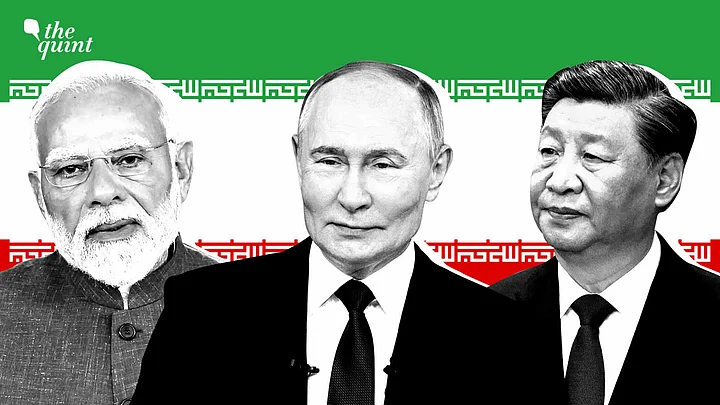
A slight 'tilt' by India towards the US and Israel. An official condemnation of US strikes by Russia but a refusal to get involved directly. And an oft-repeated 'wait and watch' policy by China.
In a nutshell, this is how the foreign policy stances of New Delhi, Moscow, and Beijing are being widely perceived regarding the ongoing conflict between the US and Israel on one side and Iran on the other.
However, beyond the official statements issued and phone calls made, there's far more to these countries' positions than meets the eye.
With help from former diplomats and academics, The Quint dissects the backdrop in which these three major stakeholders formed their foreign policy stances on the West Asian war.