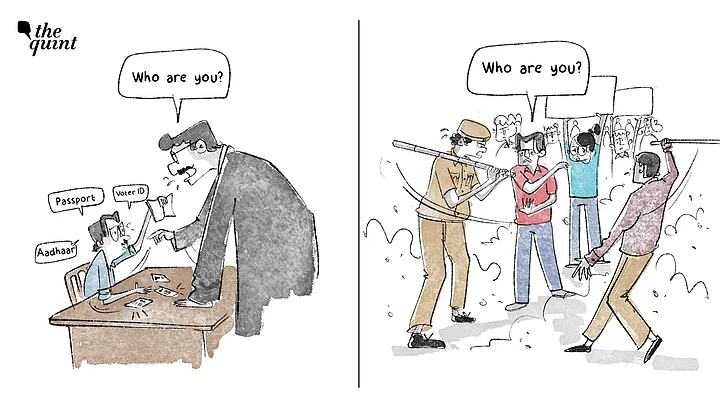
The recent state Assembly elections saw the Special Intensive Revision (SIR) of electoral rolls fuel concerns over documentation and disenfranchisement—with lakhs of deleted voters losing their democratic right to vote. More recently, the Ministry of External Affairs said a passport is a travel document, and not a proof of citizenship. Aadhaar and voter IDs, too, are treated as proof of residence and identity—not citizenship.
Even as Indian citizens are increasingly being burdened with proving who they are, those exercising State power are seemingly not.
On 20 July, protesting students marching from Delhi's Jantar Mantar towards Parliament were met with tear gas and batons from security personnel, including members of the Rapid Action Force—many of whom were in plain clothes, without visible name badges or identification tags!
In response, The Times of India quoted Delhi Police sources saying personnel from "specialised detection and intelligence units often do not wear uniforms because their work involves undercover operations."
But in a democracy, shouldn't accountability run both ways?