T20 World Cup 2026: Suryakumar Focused, Salman Frustrated — Tale of Two Captains
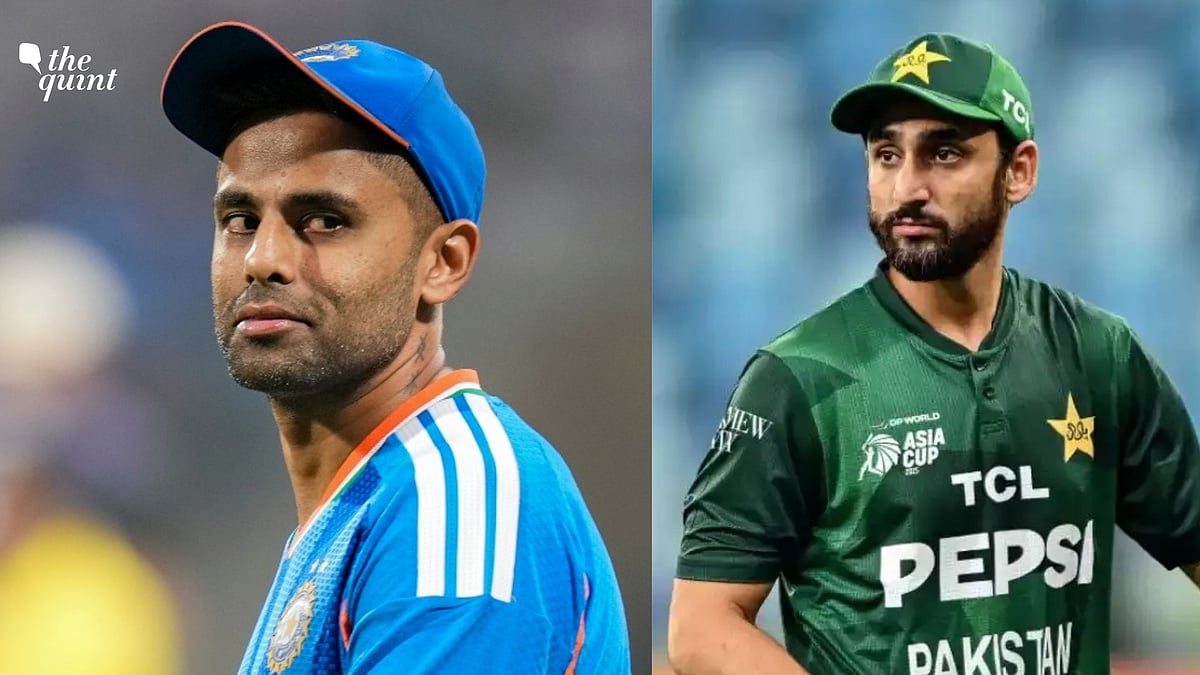
T20 World Cup 2026: A stark contrast could be discerned between the Indian and the Pakistani captain.
advertisement
Should a cricket journalist feel compelled to resort to body language analysis, it is usually a sign that there is little left to analyse within the sport itself. Cricket, ultimately, is not chess, where a Ding Liren would take 28 minutes and 17 seconds to make a single move against Dommaraju Gukesh in his World Chess Championship match.
And given the brand of cricket India have played of late, with a home T20 World Cup looming large, there ought to be no shortage of cricketing narratives demanding attention.
Yet, allow us the liberty to do the former, as if this indeed is the World Chess Championship.
Take 1 — Salman Ali Agha in Colombo
At around 12:30pm, Pakistani captain Salman Ali Agha faced curious reporters at the Mercantile Cricket Association in Colombo, for a Captains’ Press Conference organised by the ICC. Should he have anticipated a questionnaire focused around how his team whitewashed Australia, such optimism would have been misplaced.
When Agha was eventually asked about the 3-0 win over Australia, he heaved a sigh of relief so evident that it barely attempted to mask how long he had been waiting for such a question.
“Nice to have a question apart from the India game,” he acknowledged.
Before that, however, he had been asked, on multiple occasions, about boycotting (note — the Government of Pakistan has steered clear from the ‘boycott’ term) the match against India.
With the candidness often associated with Pakistani cricketers — arguably, one could say, not as staunchly media-trained as their Indian counterparts — Agha clarified that the decision has come from the administrative hierarchy. Yet, he lacked clarity on whether anything could happen between now and 15 February for the government to change its stance.
With mild signs of frustration discernible, and perhaps recognising the contradiction in stating that the government had instructed them not to play while also professing uncertainty over whether the game would actually be called off, Agha sought refuge in a simple escape hatch: “I do not know about the game.”
Take 2 — Suryakumar Yadav in Mumbai
Roughly 2,000 kilometres away, and approximately three hours later, Indian captain Suryakumar Yadav stepped into the MCA. Not Mercantile Cricket Association, but Mumbai Cricket Association, where at the BCCI headquarters, he was a part of the 12-strong cohort addressing the press.
Effectively, he confirmed that India will be travelling to Colombo regardless of whether Pakistan reverses their decision, abide by the protocols, and should there not be any game, return with a couple of points.
A section of Indian fans had also demanded a boycott prior to the Asia Cup, which happened in the immediate aftermath of Operation Sindoor. Yadav, however, made it clear that India would not mirror Pakistan’s approach and would be ready to play should the opportunity present itself.
All Aboard the 'Indian Mentality' Hypetrain
In many ways, Yadav’s answers echoed the brand of cricket his team has come to embody — what he described as the “Indian mentality”. Though there were concerns regarding India’s future in the shortest format of the game a couple of years ago, considering three crucial figures in Virat Kohli, Rohit Sharma and Ravindra Jadeja had all announced their retirement post the 2024 T20 World Cup triumph, Yadav and Gautam Gambhir’s team have not seemed flustered one bit.
Undoubtedly, India will be the team to beat in this competition. That is, if a team opts to turn out against the defending champions at all.