
'Chhutta Nahi Hai' Is Back? UPI Fee Could Break India's Payment Habit
A UPI fee is the last thing we need at a time when the cost of living is going up, and salaries are stagnant.
advertisement
I have made only two trips to the ATM in the past two years. The last occasion was more than a year ago. And most of what I withdrew is still lying at home, unused.
That’s because I make all payments through UPI or my credit card. And till very recently that ratio was 90:10—overwhelmingly UPI. I have forced myself to increase my credit card usage in the past couple of months, because I realised I wasn’t getting enough points. Also, I was losing out on the interest that one effectively earns, when one uses a credit card.
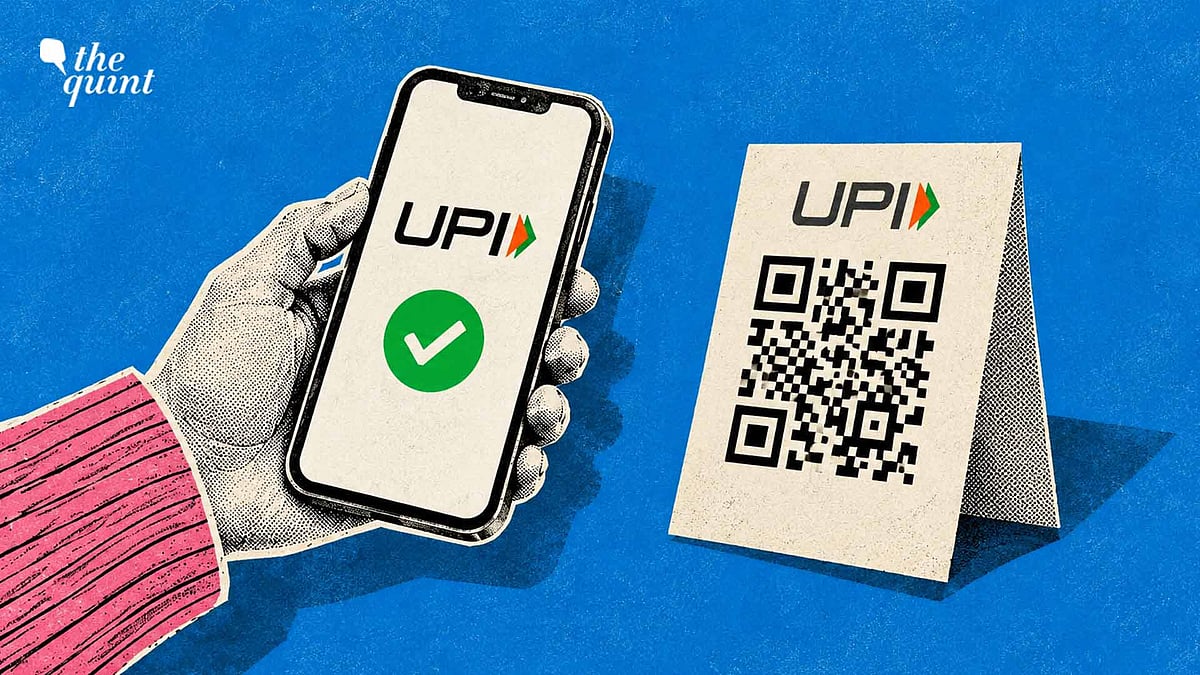
For me—and I am sure for most of you—UPI is no different from cash. It is effectively the same as any government-backed sovereign currency.
In fact, it is better than cash, because it rids you of the need to keep loose change.
If your Uber fare is Rs 273, that is exactly what you pay with UPI, instead of rounding up to Rs 275 or even Rs 280, if you don’t have a five-rupee note on you. It has rid the world of those dreaded three words—“chhutta nahi hai.”
UPI is No Different From Cash
For those on the other side—shopkeepers, chaatwalas, plumbers, cabbies, and all kinds of traders and vendors—it also works exactly like cash. People trust it. There have been many situations where I have paid someone using UPI, but the recipient hasn’t been credited immediately. Yet all they have asked for is a screenshot of the transaction on my UPI app, which they have accepted as a legitimate payment. That is a level of trust that is reserved for physical currency notes.
In short, UPI is not a payment mechanism. It is cash.
A part of the costs—as it turns out, a very small part—is borne by the government. According to the Department of Financial Services, the subsidies or incentives that the government transfers to private UPI players cover just 11 percent of their costs. In this year’s Budget, for example, only about Rs 2,200 crore has been allocated for UPI incentives, whereas the industry claims it costs them Rs 20,700 crore to run the system.
So, the government decided to allow UPI service providers to levy a small 0.4 percent Merchant Discount Rate (MDR) on some UPI transactions. Person-to-person transactions will not face any MDR. And even among person-to-merchant transactions, only those above Rs 2,000 will face the MDR. This too will only be applicable to merchants who have a monthly turnover higher than Rs 1 lakh. And the MDR a UPI app can charge is capped at Rs 300.
Now, merchants already pay a much higher MDR on credit card transactions, which is why some smaller shops ask for 2 percent extra on credit card payments. Then the question is—why are they opposing this relatively small MDR on UPI?
Immediate Payment, No Fee
The reason is exactly what I started this article with—UPI has been treated as cash, and that is why it has been accepted by small traders, grocers, hawkers, as a medium of exchange. You can go and buy a bottle of Coke from a roadside stall and pay with UPI. They will never accept a credit card payment for that. They accept UPI because the payment is immediate, and they don’t pay any fee on it.
Credit cards are useful for larger merchants, because they induce people to spend more than they have in their pocket, or even in their bank.
For consumers it is a double advantage—the money sits in their savings account and earns interest till they square up their credit card bill at the end of the month, and they also get rewards, cash-backs, and points, which can be used to make further purchases.
In fact, several studies have shown that, at a macro level, merchants are able to jack up their margins to earn back the MDR they pay to credit card companies. In the case of UPI, the law expressly prohibits them from doing that. That means merchants will have to swallow the extra cost of larger UPI transactions.
This is especially a problem for those operating in sectors where the margins are very low. If a merchant works on a two-percent margin and mainly earns through high sales volumes, a 0.4 percent MDR would reduce their earnings by 20 percent. That’s a sharp drop in an economy where consumption demand is stagnant and merchants are already giving big discounts to lure customers.
One should not be surprised, therefore, by the overwhelmingly negative response from traders’ associations. Many of them have said they will not accept UPI payments any more. In fact, UPI transactions already dropped in September compared with August—in both value and volume—in anticipation of the MDR levy coming on the 15 October.
Who Gains?
If merchants are the losers, who are the gainers?
Obviously, it is the UPI platforms and banks who have been providing UPI services for free, and supposedly losing big money on it. Estimates made by investment banks and brokerages suggest that the MDR on UPI will bring in Rs 16,000-20,000 crore annually for payment apps like PhonePe, Google Pay, Paytm and others. The biggest beneficiaries are likely to be Walmart-owned PhonePe and Alphabet-owned Google Pay, which together accounted for 80 percent of UPI transaction value in August 2026.
Despite denials by the National Payments Corporation of India (NCPI)—which oversees the UPI ecosystem—the fact that Apple Pay was launched in India right after the MDR announcement doesn’t help the optics.
Of course, there is an argument to be made for levying MDR on UPI. If the private payment apps continue to lose money on it, they will stop providing UPI services. But then, why do they give us the free UPI interface at all?
One reason is that it gives them access to a huge database of customer transactions, which can be used to specifically target advertisements to individuals, based on their purchase history. It is invaluable data in a world dominated by ecommerce.
The second reason is that it gives them transaction volumes which they can show to investors, where none of their other businesses are making money. They leverage these revenues to boost their equity valuations and raise more money.
And, yes, you and I will ultimately have to pay for these new transaction fees. Merchants might not be able to pass the MDR on to us, but they will reduce discounts and recover their costs. That is the last thing we need at a time when the cost of living is going up, and salaries and wages are stagnant.
(The author was Senior Managing Editor, NDTV India & NDTV Profit. He tweets @Aunindyo2023. This is an opinion piece. The views expressed above are the author’s own. The Quint neither endorses nor is responsible for them.)
- Access to all paywalled content on site
- Ad-free experience across The Quint
- Early previews of our Special Projects
Published: undefined