
RSS Chief's Vijayadashmi Speech: A Call to Save the Saffron Camp From Gen Z Fury
In his speech, Bhagwat urgently shielded the larger ideological ecosystem from youth assault, writes Manish Anand.
advertisement
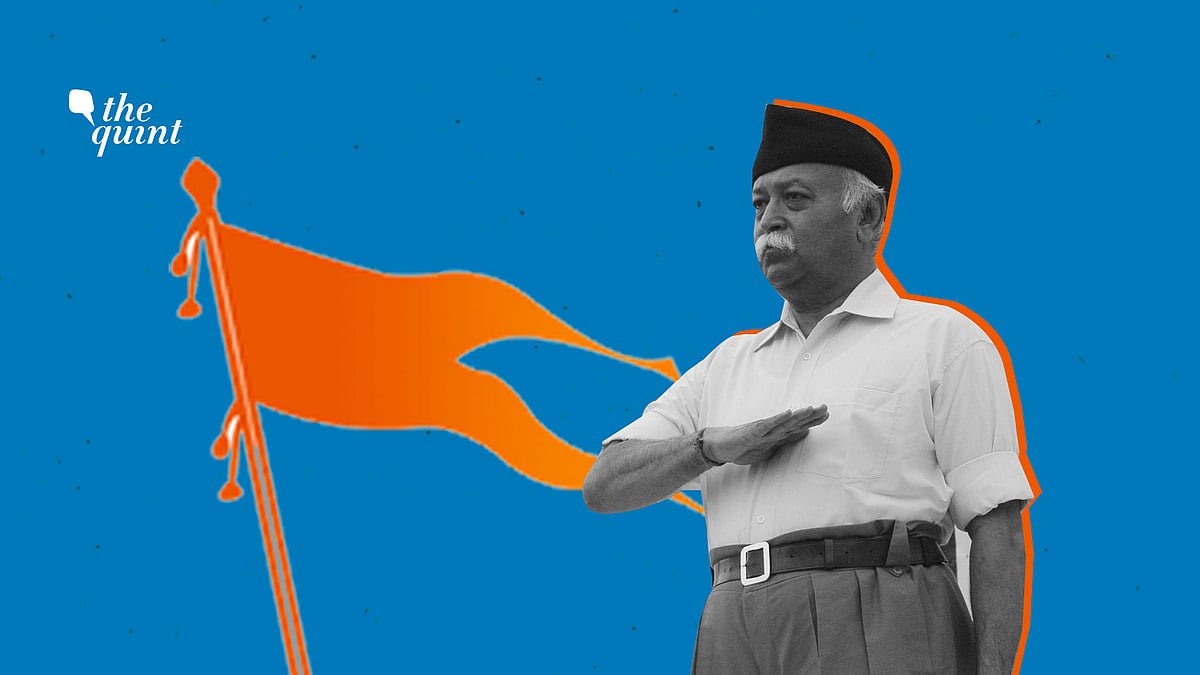
Rashtriya Swayamsewak Sangh (RSS) chief Mohan Bhagwat, in his annual Vijayadashmi speech, appears to have normalised youth protests as a global phenomenon. At the same time, he added a conspiratorial air by amplifying the "regime change" plot, seemingly sending a message to his cadre to guard against the widening ambit and targets of agitations in the country.
Bhagwat—who's aware that the rising youth angst in the country wouldn’t be just limited to issues connected with the Narendra Modi-led government at the Centre, but eventually target the whole ideological basis of the ruling dispensation—appears to have given his most unequivocal endorsement of the Centre’s response to protests as a law-and-order issue.
In this year's Vijayadashmi speech, Bhagwat comes out as a stern grandfather who seems miffed with his son for the behaviour of his grandchild, as he calls for “discerning and responsible conduct” from the younger generation, while ruing that “transmission of sanskaar” has been disrupted due to reasons such as OTT platforms.
In admonishing politics for partaking in agitations for the “lure of votes,” he also leaves none in doubt that his stakes are with the ruling Bharatiya Janata Party (BJP). Raising the pitch that “demonic forces” all over the world are seeking to “destroy all that is good,” he seems to give a call to the collective organisational strength of the RSS-BJP to come to the fore in the defence of Modi-led government at the Centre.
Bhagwat's Bid to Rescue Modi
The RSS chief's Vijayadashmi speech came as a relief to the ruling dispensation. Modi richly lauded Bhagwat. His Cabinet ministers paid their homages more cheerfully. After raising the heat on Modi for over two years, Bhagwat’s words—"the collective endeavour of Bharat’s society is bearing fruits everywhere, driven by strong policies and leadership"—will predictably address doubts within the ranks of the saffron cadre about the appeal of the Prime Minister.
Set in the backdrop of Bhagwat’s past veiled indictments of the building of the Modi cult, the Vijayadashmi speech may be seen as a much-needed lifeline for the Prime Minister’s leadership. But Bhagwat himself dropped hints on the context for his somersault—from a Modi critic with veiled utterances to his fulsome endorsement verdict.
His laments for attacks on the RSS should arguably bring back the Ram Temple donation theft row in the spotlight. The Ram Temple Trust consisted mostly of members who have been in the leadership roles of the Vishwa Hindu Parishad (VHP), an affiliate of the RSS.
Champat Rai, who was in the eye of the storm, has been a powerful face of the VHP. The RSS’s own Suresh ‘Bhaiyaji’ Joshi, former joint general secretary of the outfit, quit his role as “palak” (patron) after the donation theft row erupted.
The RSS’ links to the functioning of the Ram Temple Trust, thus, are too revealing for Bhagwat to gain any credibility that his organisation has no association with the incidents for which the outfit is being targeted.
In over 12 years of the Modi-led government, the RSS has also come under scrutiny for gaining from the power. The construction of its massive headquarters in Jhandewalan in Delhi often is a subject of social media commentary.
The RSS influence in India’s education sector is widely commented upon, too. In substance, Bhagwat’s laborious claims that the RSS has nothing to do with the functioning of the government seem cosmetic.
The Common Agenda and SIR Protests
In the Assembly elections held in the country since 2024, the RSS and the BJP have worked in tandem, closing ranks in an unprecedented manner. The RSS workers manned and strategised electoral flanks for the BJP in Maharashtra, Haryana, Delhi, Jammu, Jharkhand, Bihar, Assam, and West Bengal.
It may be noted that demography is currently the top agenda of the RSS, and many of its senior functionaries are active in Assam and other northeastern states, West Bengal, and elsewhere. Modi himself has accorded seriousness to the demography agenda of the RSS by announcing a high-powered demography mission during his Red Fort speech last year.
Electoral wins in Assembly elections in the last two years make the case of the RSS easier to push its narrative on demography. If those wins come with attacks from the youth protests due to alleged SIR irregularities, then the RSS will naturally hear the alarm bells.
Besides, the RSS’ Hindutva laboratories—Uttar Pradesh, Gujarat, Uttarakhand, Manipur, and Himachal Pradesh—are warming up for Assembly elections in 2027. Barring Himachal Pradesh, the BJP has been ruling other the four states for multiple terms.
Signs of anti-incumbency against the current governments in these four states have been noted by the RSS.
The youth protests directly challenge the Hindutva narrative and threaten to rupture the social engineering of the BJP under the guidance of the RSS. Bhagwat in his Vijayadashmi speech has made an unequivocal call to the cadre to close ranks and save the saffron turf.
(Manish Anand is a Delhi-based journalist, who has been covering the BJP and the RSS for several years. This is an opinion piece and the views expressed above are the author’s own. The Quint neither endorses nor is responsible for the same.)
- Access to all paywalled content on site
- Ad-free experience across The Quint
- Early previews of our Special Projects
Published: undefined