
Escalate or Back Down? SIR Protests Leave the Modi Govt with No Easy Exit
Neither retreat nor escalation comes cheap for the government as the fight over electoral rolls hardens.
advertisement
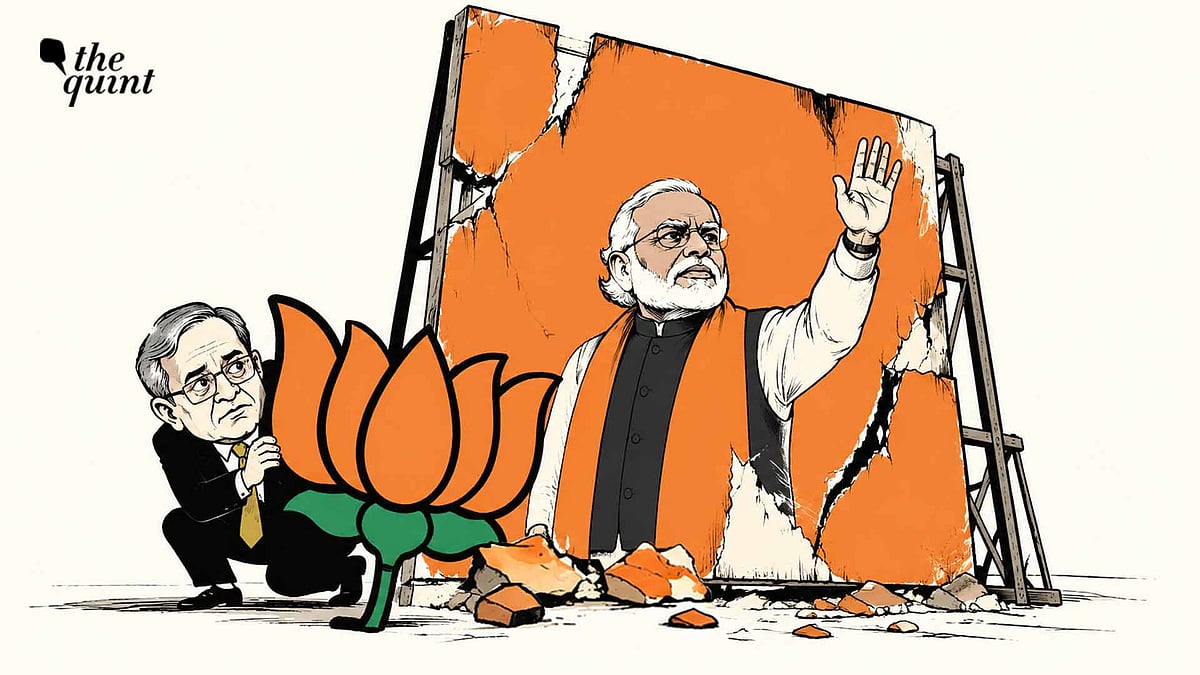
The ongoing protest against Special Intensive Revision (SIR) of the Election Commission and the accompanying demand for the resignation of Chief Election Commissioner Gyanesh Kumar has deepened the political crisis for Prime Minister Narendra Modi's government at the Centre.
With the Congress, leaders of the Cockroach Janta Party (CJP) and students’ unions escalating protests, the Modi-led government is showing signs of narrowing of scope of political manoeuvring, leaving confrontation as the likely outcome.
With polls and a Parliament session looming, the Modi government is sensing that the protests will only escalate and the best course is to pick a political duel with the Congress and test the perseverance of youth agitators.
Modi in Eye of Protest Storm
Modi is growing a veteran at facing protests and unease in parts of the country since taking charge at the helm of the Centre in 2014. From Jammu and Kashmir to Manipur, from Punjab to New Delhi, Modi has seen a wave of challenges. His track record in handling protests and street anger shows clearly that Modi believes in the use of force to get at the top of the protestors.
Thus, Modi conceded in at least four cases — the farmers’ agitation by taking back three contentious farm laws, withdrawing amendments to prevention of atrocities against SCs and STs, taking back amendments to land acquisition law, and sacking Union Minister Dharmendra Pradhan on pressure of the CJP protests.
Yet, Modi-led dispensation has left the street raging with crisis in cases such as Manipur, Ladakh agitation, and Citizenship Amendment Act (CAA) protests. The remoteness of Ladakh and Manipur gave the Modi-led government reprieve despite unresolved and prolonged protests. The COVID pandemic brought down curtains on the CAA protests, while the BJP spun off a polarising narrative.
In the case of the SIR protests, Modi seems to be sensing that the scope of political engagement is zero, as the Congress has taken the lead position. The CJP stirs worry in the ruling dispensation, for the outfit rallies the youth.
To deal with the CJP, Modi is banking on the strategy to trap its leaders into the police maze. For the students’ unions, the strategy appears clear to give a free hand to the police and paramilitary security forces for a crackdown, to not repeat the 20 July events but at the same time raise the cost of street protest for the youth.
Protests Deepening Anti-incumbency
By 2019, the BJP strategists had become aware that the youth in the age group of 18-22 was drifting away from the party. By 2024, they sensed that the age group with a visible negative bias against the BJP and Modi-led government was 18-28. To beat the political cost of the youth drifting away from the BJP, the Modi-led government mounted on an extraordinary politics of populism.
In the course, Modi forgot that he had summoned chief secretaries of the states for a brainstorming session in Dharamshala in Himachal Pradesh in 2022 to build a case against the prevalence of politics of populism. The backdrop was an adverse Reserve Bank of India (RBI) report that spotlighted poor health of the finances of states.
Worse for the BJP, the politics of populism that the party mounted in 2023 has hit a plateau. The BJP leaders worry that the heavy doses of conditions attached in implementation of several promises such as cash transfer to women now capped scope of further raising scale of freebies-based politics.
Stirring Core Constituency with Conspiracy Theories
The only fallback option for the BJP is to stir the conspiracy theory — that foreign agents are working against Modi, external forces don’t want a stable government, foreign money is funding agitation, forces inimical to the rise of India are fuelling unrest, et al.
To amplify this mode of crisis management, the BJP in the past has conveniently gained from the reach of the television studios. The BJP hopes that the same tool will again be employed.
The BJP’s visible struggle on the social media is worrying the party leaders much, as they lament that the instrument that amplified party’s narrative is now lost to the Opposition.
The BJP leaders now plead critics to not form an opinion for the party by consuming contents on the social media. Ironically, the Modi-led dispensation since 2014 had been following a strict regime for ministers, MPs and MLAs, and party leaders for their round the clock presence on social media, while they were fed with centralised contents.
In the course, the BJP leaders, per the lament in sections of the party, became more virtual than physical as they went in midst of the people less frequently.
The void, thus, is making the crisis management more challenging for the BJP. The antidote seems to once again fall back on negative campaigning against Rahul Gandhi and raising the narrative that he is orchestrating the protests at behest of foreign powers.
(Manish Anand is a senior Delhi-based journalist, who has been covering the affairs of the BJP for over two decades. This is an opinion piece and the views expressed are the author's own. The Quint does not endorse or is responsible for them.)
- Access to all paywalled content on site
- Ad-free experience across The Quint
- Early previews of our Special Projects
Published: undefined