
India-China Face-Off in Arunachal? Decoding ITBP Chief’s Sudden Warning
Despite enormous challenges, Modi govt appears to not be paying adequate attention to border security.
advertisement
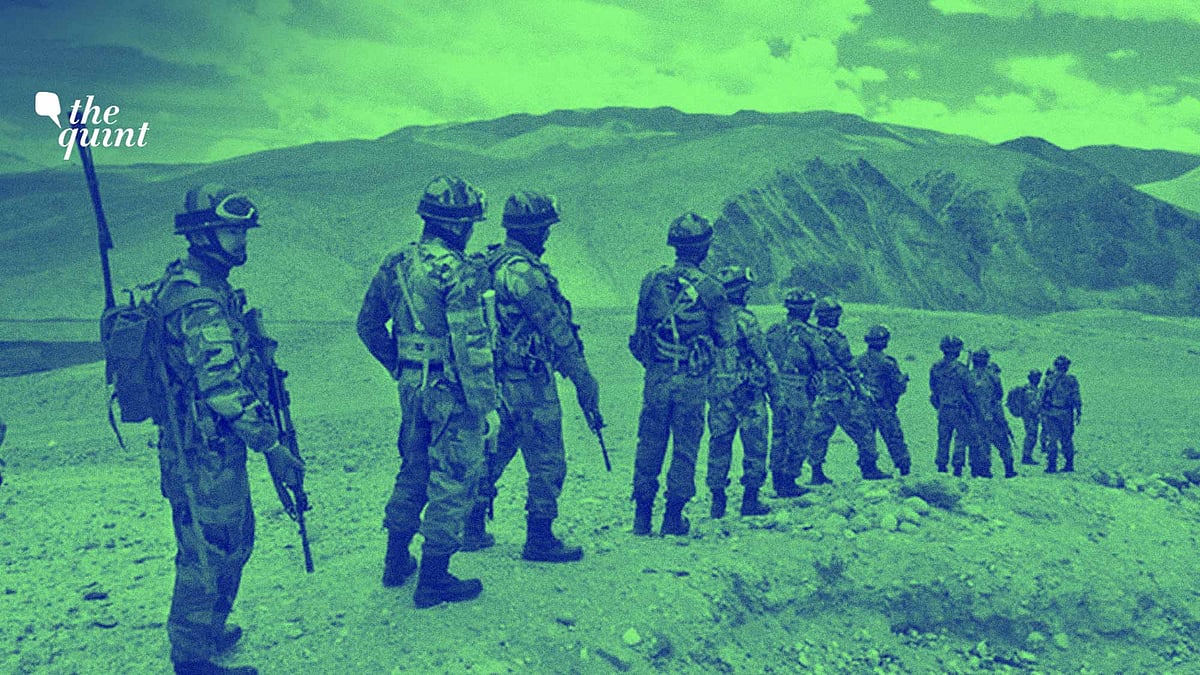
A statement by the Chief of the Indo Tibetan Border Police Force (ITBPF) has raised concerns about the status of security along the India–China Border. While addressing his troops in an internal function, Shatrujit Kapoor said, “In the past few days, a situation arose where face-off happened (with Chinese troops) at various locations in Arunachal and it still continues."
The event was live streamed by ITBP and extracts containing above statement have found their way in the media. The statement indicates that the confrontations were taking place even while the Chinese President was in India for the BRICS Summit in September 2026.
The Chinese troops are reported to have entered and pitched tents within 6-7 km of the Line of Actual Control (LAC) as perceived by India in the Taksing–Maza area after a confrontation between the patrols of both sides in July this year.
Decoding the ITBP Chief's Words
Kapoor’s statement has three aspects to it.
The first aspect is the methodology of “salami slicing” tactics adopted by the Chinese along the LAC to nibble away territory. As is evident in the incident mentioned above, the Chinese assert their presence in an area by establishing a post after they find the Indian patrols, in what they perceive to be on their side of the LAC. This is the tactic that they adopted in Eastern Ladakh, be it Depsang in 2103, or Chumar–Demchok in 2014. Their presence prevents Indian Patrols from going to those areas. The occupation of ground by the Chinese in the disputed territory is a tactic that they adopt to assert “de jure” right to those territories.
In fact, in the Kailash range, India withdrew from the heights that gave it tactical advantage and observation over the Chinese line of communication.
Thus, while China is aggressive in their domination of LAC, India has chosen to adopt an accommodative stance. This needs to change.
Decoding Chinese Intent
The aggressive intent of the Chinese has been evident from their oft repeated claims over the entire state of Arunachal—especially in the Tawang area—which they call South Tibet. To strengthen their claim over Arunachal, they have given Chinese names to various towns in Arunachal. They also issue only stapled Visas to the residents of Arunachal besides vociferously objecting to visits by any Indian dignitary to Arunachal.
Recently, on 13 October, they also objected to Indian sovereignty over the Union Territory of Ladakh, assigning standard names to 28 peaks and other geographical features.
The second aspect of the statement by the Director General, ITBP, relates to the comparative preparedness of the forces of two countries. It is a fact that the Chinese People's Liberation Army (PLA) has improved its war-fighting abilities by leaps and bounds. On the other hand, it appears that the Indian Army and also ITBP is lacking in modernisation of equipment as well as infrastructure on the border. While the fighting of wars is indeed undergoing a lot of changes globally, conventional preparedness remains crucial to prevent any capture of territory.
That India’s border security modernisation faces several challenges is a fact. There is a wide gap between the procurement of technology and operational capability. Sophisticated equipment is available aplenty. However, it is of no value unless the user is well trained to utilise it. The troops will need to be trained to optimally utilise the technology. Integration of technology with the surveillance system is also extremely important in order to obtain and disseminate real time information to the concerned field commanders for action.
Decoding India's Intent
The quantum of budget allocation for defence forces as well as for the border guarding forces, however, indicates that it is going to be a long drawn process to build infrastructure as well as to modernise the forces. What the DG ITBP said in this context is therefore required to be taken in the right spirits and acted upon with urgency.
This is apparent from the frequent withdrawal of border-guarding forces from the borders for various duties and for prolonged periods in the interior of the country. Even at the time of writing, several units of the ITBP and other Central Armed Forces (CAF) are deployed in Delhi and other inland places in order to control protests and potential riots.
As per reports, 2.4 Lakh troops from CAF were deployed for West Bengal elections from March onwards and 70,000 were to remain deployed till further orders. One doesn’t know whether these 70,000 troops have been released for their original deployment or not.
A large share of the 2.4 Lakh troops must have come from the three main border guarding forces, viz the Border Security Force (BSF), ITBP and the Sashastra Seema Bal (SSB). Such withdrawal of forces leads to severe compromise of border security. It must be understood that secure borders are important to ensure internal security too.
The plainspeak by the DG ITBP is a very timely reminder to the government to take corrective measures as discussed above. Border security, especially along the India–China border/LAC, is an important component of India's overall strategy to counter the aggressive designs of China and ensure security and territorial integrity of our nation.
(Sanjiv Krishan Sood (Retd) has served as the Additional Director General of the BSF and was also with the SPG. He tweets @sood_2. This is an opinion piece and the views expressed above are the author’s own. The Quint neither endorses nor is responsible for the same.)
- Access to all paywalled content on site
- Ad-free experience across The Quint
- Early previews of our Special Projects
Published: undefined