
Can the INDIA Bloc Turn Public Anger Into Political Momentum?
The challenge for the INDIA bloc is to harness simmering anger and turn it into a movement.
advertisement
It took Trinamool Congress (TMC) chief Mamata Banerjee's humiliating defeat in the recent West Bengal Assembly election to burst the bubble of arrogance cocooning the INDIA bloc, which had come to believe in its own invincibility after it stopped the Modi juggernaut in its tracks in the 2024 parliamentary elections.
Two and a half years after they beat all odds to deprive the Bharatiya Janata Party (BJP) of a full majority, Opposition parties have woken up to the fact that they are back to square one, staring at the same existential crisis that had gripped them in 2023 when the BJP was gobbling up state after state, smaller parties, and opposition leaders seeking greener pastures.
The INDIA bloc was born from fear that the Opposition would soon disappear, unless it united to fight back for its very existence.
A Reality Check After the 2024 High
The collapse of Mamata Banerjee’s seemingly impenetrable West Bengal fortress and the subsequent crumbling of her party has come as a shock. It is also a rude reality check of the extent of political ground the BJP has recovered since 2024. From vulnerable to unassailable, the BJP appears to be on top of the electoral game once again.
In a surreal development, TMC MPs were flirting with the BJP in another corner of Lutyens' Delhi while their leader was seeking solace from the INDIA bloc.
Mamata’s Defeat Changes the Political Mood
Yet, before laughing the INDIA bloc out of the room as a failed project, consider the prevailing socio-economic and geo-political environment buffeting the Modi government.
The rupee is in free fall and the economy is floundering. Even loyal cheerleaders like economist Surjit Bhalla have begun to question the ruling dispensation’s fiscal management and its economic policies.
India’s dreams of supping at the global high table as a Vishwaguru lie in tatters. Foreign policy experts are not alone in questioning the judgement errors that have led to the diminishing of our voice in international affairs. Rashtriya Swayamsevak Sangh (RSS) chief Mohan Bhagwat too expressed concern about our declining status with an admonishment of "incomplete preparations" to be a world leader.
Cracks in the Modi Government’s Narrative
But the biggest challenge for the government comes from the simmering anger among the youth over the lack of jobs and opportunities and unmet aspirations. The anger exploded in the open on the most unlikely forum— social media—through the creation of a meme that began as satire but snowballed quickly into something more serious.
The Cockroach Janata Party may or may not evolve into a serious political formation capable of challenging the government, but it has certainly exposed the sweep of youthful angst about the future.
The tipping point has been the successive exam scandals: the leakage of the NEET-UG paper which is the entry point for aspiring doctors followed by the marking fiascos in this year’s CBSE exams that will determine college placements for school-leaving students.
These are just the bare bones of issues that are nibbling away at the foundations of the governance structure that Modi and his BJP have fashioned in 12 years of pursuing the RSS ambition of turning India into a Hindu state.
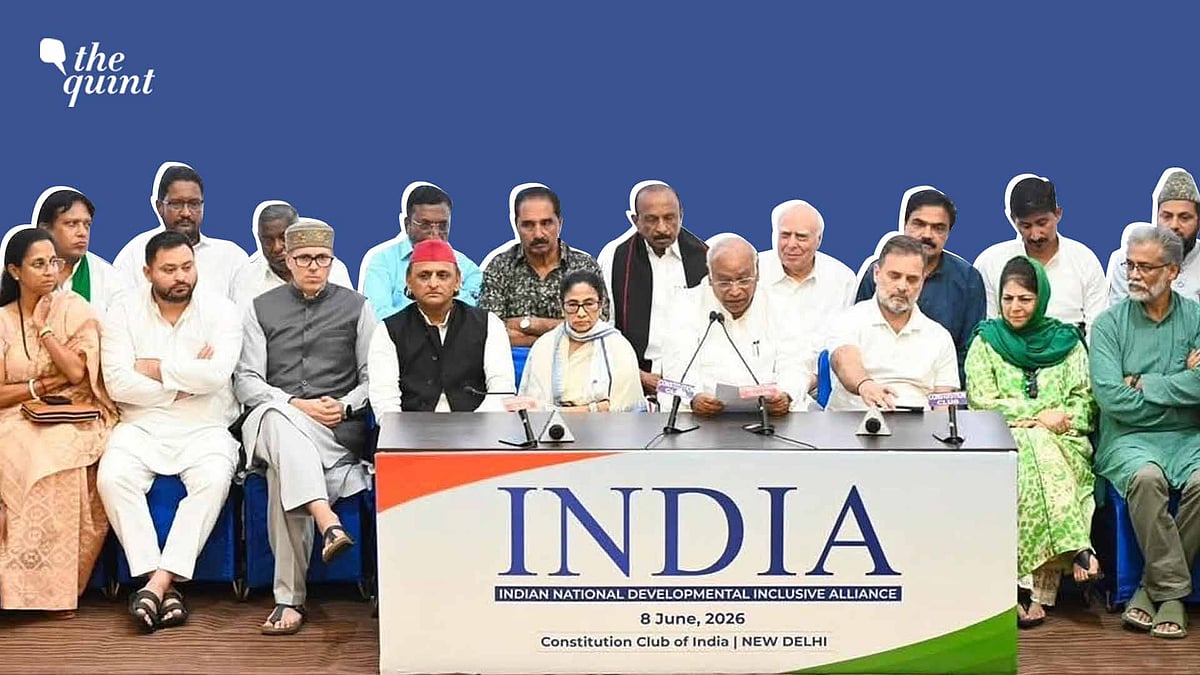
However, two starting points did emerge. One is the realisation that they have to stay together come what may. United they stand, divided they fall. The message was clear as leader after leader spoke of the criticality of remaining united to face the BJP.
The second is that all the opposition parties seem to have accepted that the Congress has to lead the INDIA bloc. This is a huge change as before the last round of Assembly elections, there were calls for Mamata Banerjee to take over the leadership of the INDIA bloc as she is the only person capable of standing up to the BJP. Her decimation in the assembly election proved how hollow that claim was, and it has sent her scuttling back to the Congress for support.
Unity and Congress Leadership Gain Acceptance
Yes, the alliance has lost a vital pillar in the defeat of Dravida Munnetra Kazhagam (DMK) leader MK Stalin in Tamil Nadu, but there is every possibility of the new rising star in the state, Vijay and his Tamilaga Vettri Kazhagam (TVK), whose party currently shares power with the Congress in Chennai, joining the INDIA bloc in the coming months.
Congress president Mallikarjun Kharge announced that INDIA party leaders will meet every day in the morning when Parliament is in session to discuss and decide floor coordination. But equally important is to coordinate voices on specific issues.
The Opposition alliance should borrow a leaf from the NDA’s playbook. Every partner of the ruling alliance speaks in the same voice, almost like echoes, when posting on social media or giving sound bytes to TV cameras. The INDIA bloc will have to evolve a similar communication strategy to counter accusations of dissonance and disarray.
Coordination Will Determine the Alliance’s Future
The real test will come outside Parliament. A slew of state elections is due over the next two years, the biggest one being in BJP-ruled Uttar Pradesh. Can the Congress and the Samajwadi Party (SP) agree to a common strategy to put a good fight even if they lose?
Ultimately, all this will have to shift to the ground in a resistance movement for the INDIA bloc to have any impact. Rahul Gandhi’s padyatra did wonders for his image overhaul, from a Pappu to a more serious politician. It is only through street movements that the Opposition can tap into the simmering angst of young people and learn a new political language.
These are no easy tasks. The BJP too, is preparing its tool kits to meet any challenge that the INDIA bloc may pose. From cooption to outright repression, the ruling party has an array of weapons to crush dissent. The run-up to the 2029 general election may throw up interesting trends.
(Arati R Jerath is a Delhi-based senior journalist. She tweets @AratiJ. This is an opinion piece and the views expressed above are the author’s own. The Quint neither endorses nor is responsible for the same.)
- Access to all paywalled content on site
- Ad-free experience across The Quint
- Early previews of our Special Projects
Published: undefined