
What Lies Behind the RSS's Doubts Over India's Vishwaguru Dream
Bhagwat may be signalling the need for course correction if Vishwaguru remains a distant goal even after 12 years.
advertisement
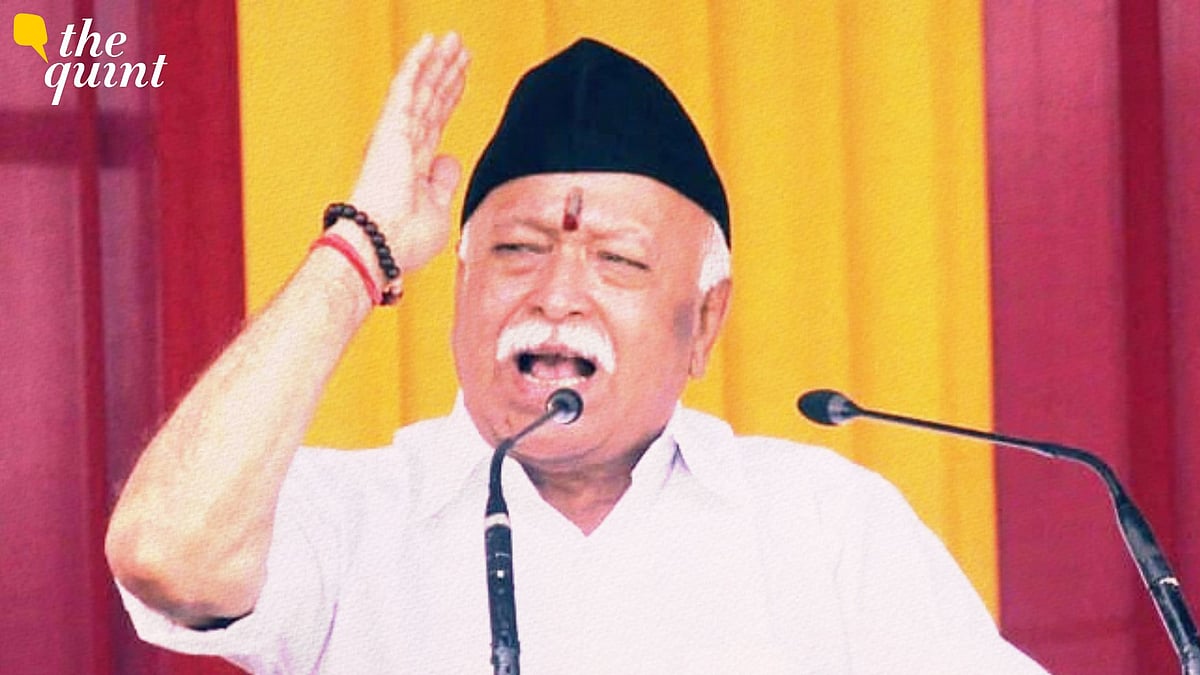
Rashtriya Swayamsevak Sangh (RSS) chief Mohan Bhagwat's observation that India's preparations to become a 'Vishwaguru' are incomplete has put the spotlight on the Narendra Modi-led government's economic and geopolitical report card.
Bhagwat’s remarks become graver when viewed against the backdrop of the RSS’ global outreach since the launch of its centenary celebrations in October last year. From its Nagpur headquarters, the RSS has held some very grandiose ideas at the core of its discourse, which includes the likes of ‘Akhanda Bharat’, ‘Vishwaguru’, and ‘Atmanirbhar Bharat.’ In the seven months since the celebrations began, the organisation has interacted with foreign opinion-makers and think tanks, gathering assessments of India's standing that appear to differ from the Modi government's own claims.
Vishwaguru to Vishwa Mitra
Until the Covid-19 outbreak and Galwan clash in eastern Ladakh with China, the Modi ministers often laced their rhetoric with India racing to become the Vishwaguru. They projected the image of Modi as a leader who was accelerating India’s arrival on the big stage. The ministers were arguably intoxicated with a mammoth victory in the 2019 Lok Sabha elections.
A clever readjustment subsequently was done. In one of the Bharatiya Janata Party (BJP) parliamentary party meetings, held on Tuesdays when parliament is in session, External Affairs Minister S Jaishankar seized the opportunity during a presentation on India providing Covid vaccines to Global South nations to argue that India is a “Vishwa Mitra.”
The shift suited the diplomatic urge to present India as a friendly nation, and not one that bosses over others. Feedback reaching the government suggested that India's neighbours — Nepal, Bangladesh, Sri Lanka and the Maldives — were uncomfortable with the Vishwaguru rhetoric.
RSS's Reckoning at 100
The RSS enjoys significant outreach within India's diplomatic community. Many retired Indian diplomats regularly attend RSS programmes and help shape the organisation's outlook on global affairs. Within these circles, a view has been emerging since the pandemic that India is missing a major opportunity to enhance its global standing.
The concern, according to them, lies primarily with the state of the economy. Despite three consecutive mandates at the Centre and BJP governments across several states, the economy continues to wobble, while extensive welfare measures increasingly define the Modi government's economic approach.
Later, two key RSS functionaries — Dattatreya Hosabale, General Secretary of the RSS, and Ram Madhav, a member of the RSS national executive and former Bharatiya Janata Party (BJP) national general secretary — travelled to foreign capitals to engage with think tanks.
Madhav made his frustration known when he asked at the Hudson Institute in the US why India’s relations with the US were not improving, even when New Delhi accepted tariffs with protests, stopped buying Russian oil when asked, and so on. His remarks quickly went viral, placing the Modi government in an uncomfortable position. Madhav later issued a clarification on X, acknowledging factual inaccuracies in his comments.
He is a regular commentator on geopolitics and an author of several books. That he will make factually incorrect statements while interacting at a global think tank could be a contestable idea. But what was made clear to the RSS was that the Vishwaguru rhetoric had not travelled beyond Indian boundaries despite almost 12 years of a government led by the outfit's political offshoot — the BJP.
Sources say the RSS received more than 50 interview requests for Hosabale following his overseas engagements. In an attempt to strike a balance, the organisation chose to speak to the Press Trust of India (PTI). In that interview, Hosbole bared the organisation’s fixation with grandiose ideas as he said that “the people of India, Pakistan, and Bangladesh” constitute one nation and therefore the people-to-people engagement should take place. The basis of the statement is the RSS’ argument of common ancestry of the people in South Asia.
Drift and Disappointment
Bhagwat’s remarks will be read very carefully in the top echelons of the BJP, as he remains one of the few figures capable of exercising moral authority over both the party and Modi.
If preparations to become a Vishwaguru cannot be complete despite 12 years in power, then Bhagwat may be sending cues to Delhi that course corrections are unavoidable.
Having sensed that not only Vishwaguru, but even the rhetoric of Atmanirbhar Bharat is in a crisis, as exposed by the West Asia crisis, Bhagwat’s message is clear to Modi — reboot, because time is running out.
Nagpur appears to have sent this message just as the Modi government prepares to celebrate the anniversary of its third term. Bhagwat's caution seems equally clear: enough time has been spent celebrating achievements; the focus must now return to governance.
(The author is a senior Delhi-based journalist, who for over two decades reported on PMO, BJP, and the RSS for India’s leading English dailies. This is an opinion piece and the views expressed above are the author’s own. The Quint neither endorses nor is responsible for the same.)
- Access to all paywalled content on site
- Ad-free experience across The Quint
- Early previews of our Special Projects
Published: undefined