
The Media Trial of Sahil Wakode: For Dalits, No Empathy Even in Death
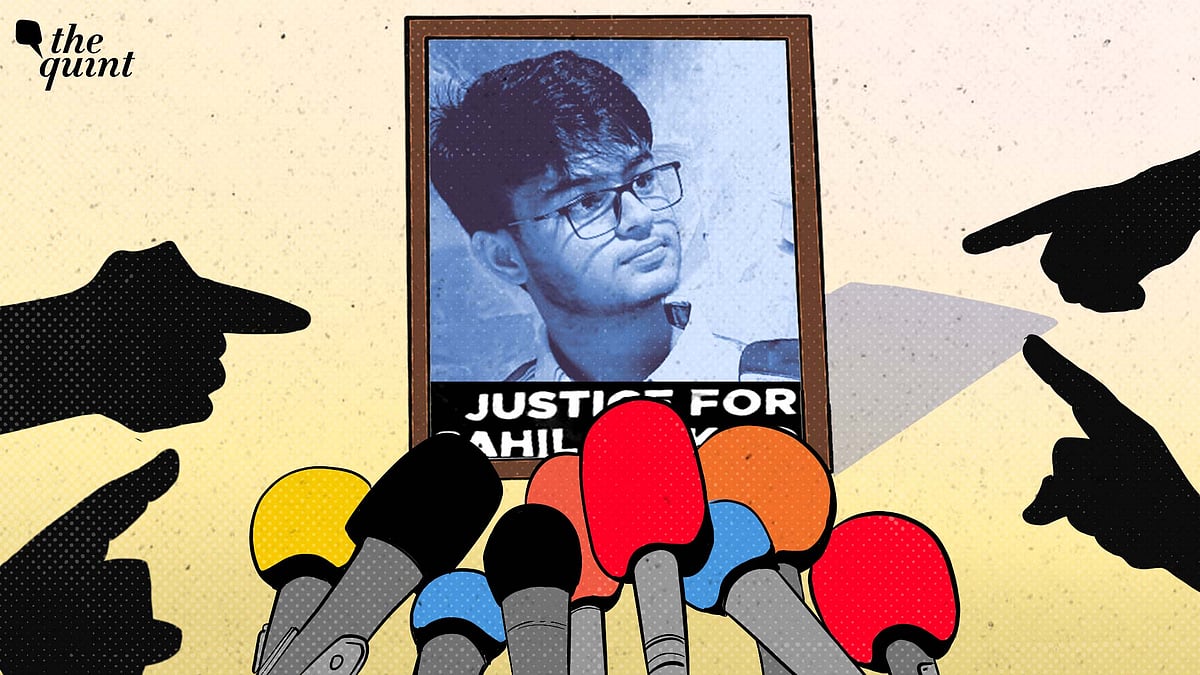
TV media has gone all berserk, obsessively trying to humiliate a Dalit student after his death, writes Sumit Samos.
advertisement
What explains a country’s national media obsession with debating whether or not a Dalit student cheated on his exam for days after his death? What explains this mentality? What are the shared beliefs and ideas they hold? It would be quite reductive to point to their upper-caste Hindu background as an explanation for their voyeuristic spectacle over the death of a Dalit student.
The clues to understanding the shared mentality of a section of upper-caste Hindus lie in their opposition to reservations for Scheduled Castes (SC), Scheduled Tribes (ST), Other Backward Classes (OBCs), and the Scheduled Castes and the Scheduled Tribes (Prevention of Atrocities) Act, 1989.
These two provisions, despite their piecemeal success, have generated a great deal of anxiety and paranoia among a section of upper-caste Hindus.
The late Professor Gail Omvedt had a word for them: “twice-born riot against democracy.”
'Cheating' Trumps Casteism & Student Welfare
There is no final investigation report on the unfortunate IIT Bombay incident yet, but the national TV media has gone all berserk, obsessively trying to humiliate a Dalit student after his death.
In fact, Sahil’s parents have come forward to claim that they were made aware of casteism and that, unfortunately, they did not pursue it then. There is a reason why the law is mandated to be considerate towards Dalit and Adivasi victims and to take their cases seriously: in Indian society at large, they are often denied the possibility of having their grievances and complaints heard, and their evidence is often discounted, while witnesses are intimidated.
This is because of the lopsided nature of Indian institutional power in the bureaucracy and criminal justice system, which largely lies in the hands of upper-caste Hindu officers who, on many occasions, are seen to be siding with their caste and kin groups.
Sandhya Fuch’s recent book, Fragile Hope: Seeking Justice for Hate Crimes in India, is a detailed ethnography of this process in the state of Rajasthan. But even if, let’s say, a student was caught cheating on an exam, is that the biggest crime in India to be telecast and debated on national media? There is always mentoring, guidance, and a kind of reprimanding that could help students.
India is a country where having backlogs, ragging, bunking, and copying in exams are staples in stand-up comedy and are part of nostalgic conversations among engineering students years later. Ragging is another staple conversation for engineering students, where they take pride in mistreating junior students, almost as though it is a rite of passage for establishing a certain kind of legitimate masculinity in life.
Thousands of primary government schools are being closed down, many more are in dilapidated conditions, even as competitive exams have a few hundred seats for lakhs of students. But an accusation of cheating in a college exam has become the biggest crime on national TV because a Dalit is named.
Discrediting Dalit Merit
It is something to think about in a country where elite upper-caste Hindu parents in metropolitan cities pay lakhs of rupees to consulting agencies to write statements of purpose and sample essays for their children to be able to study abroad.
Not only does this segment want to keep Dalits out of institutional spaces at all costs, but they actively want to deny them any human dignity. Some are outright hateful and humiliate them with caste caricatures, while others, who have to pretend to be civil, bring up the narratives of Dalits being frauds to deny them even a quiet moment of grief. Making Dalits out to be frauds in front of the national media is an agenda towards further validating the section of upper-caste Hindus who are anti-reservation and anti-SC/ST Act.
If impurity and inferiority have been the norms in denying a place to Dalits in society historically, then now attributing fraud and falsity is the new trend.
To make Dalits look fraudulent would be to deny caste without having to engage with the deeper, fundamental aspects of caste that shape economic opportunities, access to resources, land, and capital, and presence in policy and public-influencing institutions.
Furthermore, the Dalit movement, in its many fragments, despite the failures of its larger electoral parties, has continued to question upper-caste hegemony and injustices, which has made it antagonistic to a segment of the upper-caste Hindu population that the Delhi-based national media is actively conscientising. It is even more ironic to see people like Anand Ranganathan and Sai Deepak on the frontlines of these TV news channels debating fairness and merit, given their track record of dubious scholarship.
Maybe being Brahmin and being right-wing allows one to claim, “Bursting firecrackers during Diwali is a ritual meant to light the path back to heaven for ancestors who visit during the Pitru Paksha or Mahalaya period,” and still proudly sit on national media.
(Sumit Samos hails from South Odisha. He recently completed MSc in Modern South Asian Studies from the University of Oxford. He is a young researcher and anti-caste activist and his research interests are Dalit Christians, cosmopolitan elites, student politics and society and culture in Odisha. This is an opinion piece and the views expressed above are the author’s own. The Quint neither endorses nor is responsible for the same.)
- Access to all paywalled content on site
- Ad-free experience across The Quint
- Early previews of our Special Projects
Published: undefined