'Must Protect Minorities': New Bangladesh Govt Faces its Hardest Critic in Youth
Youth in Bangladesh welcomed the return to competitive elections, but few see it as the end of the struggle.
advertisement
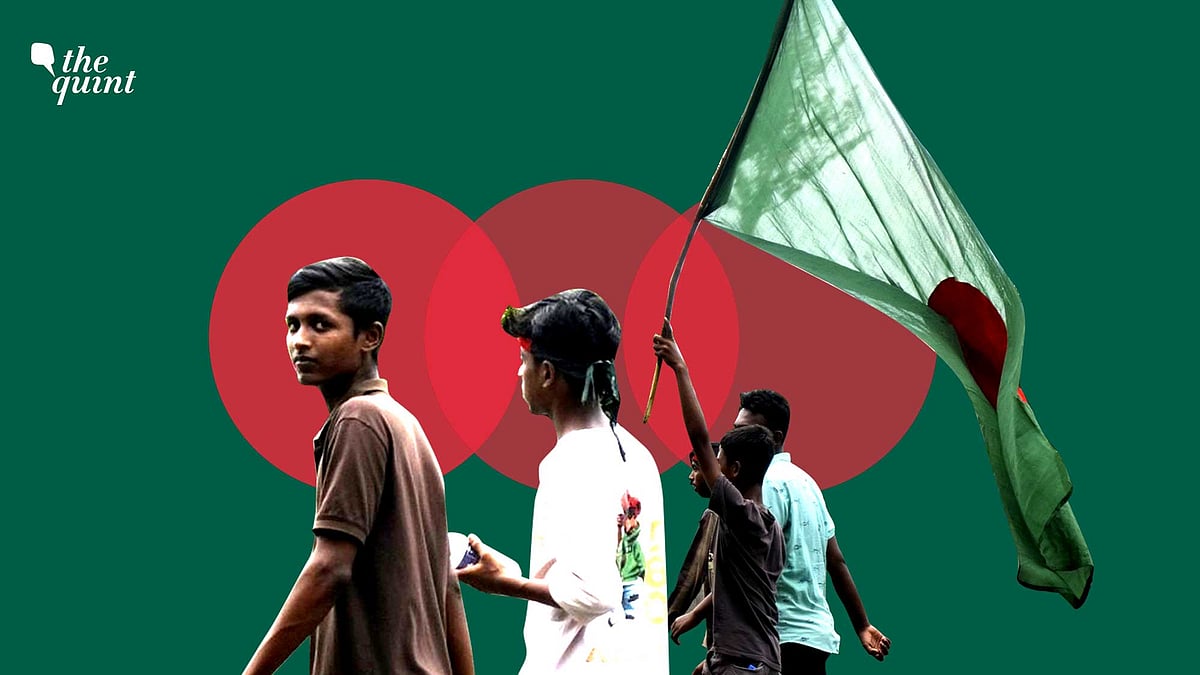
Moontakim Hassan, 26, was among thousands of protestors in the "Long March to Dhaka" that August 2024 morning when the news rippled through the city's streets: Prime Minister Sheikh Hasina had fled. He will never forget what came next. "Suddenly, everyone poured into the streets with Bangladeshi flags, singing and celebrating," he recalls. "It felt surreal.”
For Hassan's generation, the July Uprising, which culminated in the death of 1,400 protesters before Hasina's exit, was the defining moment of their lives. It was an awakening to the possibility that Bangladesh could be something else entirely.
Eighteen months after the uprising, this possibility was put to the test with Bangladesh’s first competitive election, held under the interim government headed by Nobel Laureate Muhammad Yunus—which saw the return of the Bangladesh Nationalist Party (BNP) after 15 years under the helm of the 'prodigal son', Tarique Rahman.
With the results in and Rahman sworn in as the new Prime Minister in a historic ceremony, many young voters like Hassan are still trying to make sense of what they mean.
Bangladeshi Youth’s First Real Test at the Polls
After the uprising, the election is yet another defining moment for Hassan's generation—long denied meaningful ballots, testing whether political change could finally translate into democratic agency. It was also a chance to see whether the youth uprising could translate into lasting democratic change.
For Hassan, a graduate of Dhaka University, the act of voting itself carried weight. Hassan's generation had known only one leader and one party for 15 years.
Hassan is one of 56 million voters between the age of 18-37, making up 44 percent of Bangladesh's electorate, according to the Election Commission. It's a generation that spent their formative years watching their votes stolen or rendered meaningless. "Even my younger brother who just turned 18 could vote with me," Hassan says. "It feels surreal because I am 26 and I am voting for the first time."
Man with a Plan: Rahman's Exile, Return & Resounding Mandate
After Sheikh Hasina’s government collapsed, Bangladesh—shaped by years of authoritarian rule—entered an uncertain political landscape. Into that void returned the main Opposition party leader, Tarique Rahman, who had spent 17 years in exile. Addressing a rapturous audience, he promised to take the country towards a better direction. “I have a plan,” he vowed.
The election results reinforced his popularity: his party, the BNP–led alliance captured 212 of 297 seats, securing a commanding majority in parliament. Its main rival, the Jamaat-e-Islami–led alliance—which includes the youth-led National Citizen Party (NCP)—captured 77 seats. Within that bloc, the NCP managed just six seats.
Voter turnout reached 60 percent, according to the Election Commission—a figure many observers see as a reflection of renewed public engagement after years of contested ballots.
Ballots Without Full Belonging
Despite the decisive outcome, for many young voters, the results fell short of expectations. Aashnai Syeda, 24, a student and artist, said the election felt like an illusion of choice in many ways. As a non-binary person, she felt that none of the major parties genuinely represented the voices of minorities or gender-diverse communities. Yet, she voted, this being her first time.
Unu Marma*,19, an indigenous youth, says that after the uprising she had hoped her community would gain rightful recognition of their rights. She had taken part in the student protests, and the interim government had promised reforms for indigenous communities, but, in her view, those promises fell short.
“I don’t know what expectations to have from the newly elected government,” she says. “As a citizen, I want to keep hope, but as an indigenous youth, I don’t have any. I cast my vote because it was the first election after the uprising. I don’t have faith in any of the parties—they don’t represent my interests. Instead, I voted to reject the group that would threaten women’s rights if they come to power”.
Youth Demand More Than Promises
Post results, conversations have already shifted: will the new government create jobs? Will it stabilise the economy? Will it hold those responsible for the 2024 killings accountable? Will it uphold the rights of women, minorities, and gender-diverse communities? The country’s new leadership now faces these urgent questions.
For an entire generation that risked their lives in the streets, empty promises are no longer enough; they demand change. Something seismic has shifted in how they engage with politics and young voters are no longer willing to be passive observers.
“Politics is always on my mind,” Unu reflects. “I dream of Bangladesh and want to contribute to my country. Even after the uprising, I’m very hopeful—particularly about the youth and how the political landscape is shifting.”
From Uprising to Institutional Influence
Khandakar Tahmid Rejwan, a lecturer at Independent University Bangladesh (IUB), said that after the fall of Sheikh Hasina, there has been "a paradigm shift in which youth representatives have been included in critical policy decisions and key government positions."
Across Bangladesh, this renewed sense of political agency drove young people to the polls—and many are determined not to let it fade.
Despite everything, Hassan, the Dhaka University graduate, said that the election felt like a fundamental step in the right direction.
"I am hopeful about our future because I see many young people actively participating in the political space and exercising their rights now, and I believe that will guide us toward a better direction.”
(Usraat Fahmidah is an independent journalist based in Dhaka, Bangladesh.)