Tarique Rahman Sworn In As Bangladesh Prime Minister In Historic Ceremony
Tarique Rahman sworn in as Bangladesh Prime Minister; ceremony marks BNP’s return to power.
advertisement
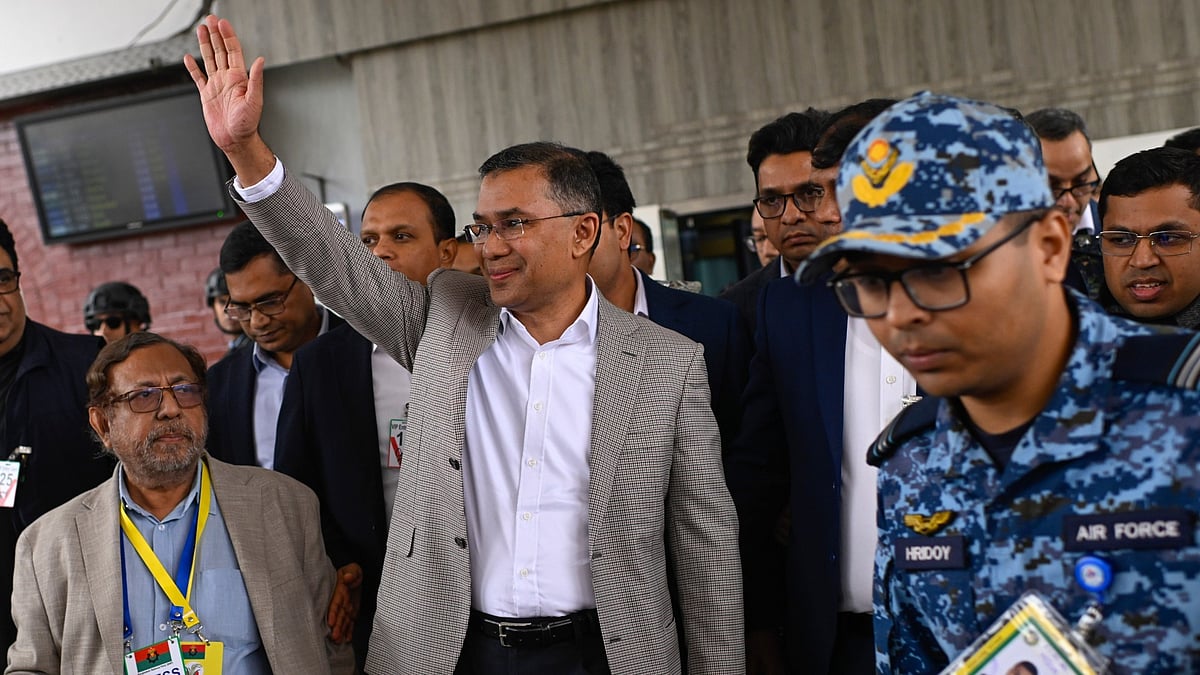
Tarique Rahman was sworn in as the Prime Minister of Bangladesh on 17 February 2026, following the Bangladesh Nationalist Party’s (BNP) decisive victory in the 13th Parliamentary Election. The oath-taking ceremony took place at the South Plaza of the Jatiya Sangsad Bhaban in Dhaka, with President Mohammed Shahabuddin administering the oath. Nearly 1,200 guests, including regional dignitaries, attended the event. Earlier in the day, 297 newly elected Members of Parliament also took their oaths, marking a significant transition in the country’s political leadership.
According to The Indian Express, the BNP’s return to government comes after almost two decades, following a landslide electoral win. The ceremony was held at the National Parliament complex’s South Plaza, a departure from previous venues, to accommodate the large number of attendees. The BNP-led alliance secured over 200 seats in the 300-member Jatiya Sangsad, providing Tarique Rahman with a strong mandate to address economic stability, inflation, and rule of law.
As reported by Hindustan Times, the event was attended by high-profile international guests, including Om Birla, Speaker of the Lok Sabha from India, and representatives from Bhutan, Pakistan, Nepal, Maldives, Sri Lanka, and the United Kingdom. The BNP’s victory followed a period of political upheaval and the exclusion of the Awami League from the election.
As highlighted by Financial Express, the guest list included leaders and ministers from 13 countries, reflecting the diplomatic significance of the transition. The BNP-led alliance won 212 out of 299 seats, while the Jamaat-e-Islami-led alliance secured 77 seats. The National Citizen Party, which emerged from last year’s political movements, won six seats. The ceremony’s location was chosen to accommodate the expanded guest list and to mark the occasion’s importance.
As noted in an article by The Hindu, a “Constitution Reform Commission” was also sworn in alongside the MPs. This commission, formed as a result of a recent referendum, will operate for 180 days, with all MPs serving as its members. The development has led to some unease among newly elected leaders regarding the division of responsibilities between parliamentary and commission duties. Lok Sabha Speaker Om Birla represented India at the event, as Prime Minister Narendra Modi was unable to attend due to prior commitments.
Further details confirmed that the swearing-in of the Constitution Reform Commission and the new government marked a significant transition for Bangladesh. The BNP’s leadership, under Tarique Rahman, is expected to focus on economic reforms and restoring governance structures. The event was closely watched by regional and international observers, given its implications for Bangladesh’s foreign relations and domestic policy direction.
The ceremony’s coverage also noted that the Chief Election Commissioner, AMM Nasir Uddin, administered the oath to the MPs, a first in Bangladesh’s parliamentary history. The BNP’s stated priorities include stabilising the economy, addressing inflation, and strengthening the rule of law, as outlined by party officials during the transition.
In recent statements, senior BNP advisers emphasised the need to recalibrate Bangladesh’s foreign relations, particularly with India, following the change in government. The new administration’s approach is expected to focus on mutual benefit and constructive engagement with neighbouring countries.
“The shift comes after former prime minister Sheikh Hasina and her Awami League exited power, signalling a new political phase for the country,” said Humayun Kabir, senior adviser to Tarique Rahman.
Political observers indicated that the BNP’s strong mandate and the formation of the Constitution Reform Commission are likely to shape Bangladesh’s legislative agenda in the coming months. The transition is being viewed as a pivotal moment in the country’s democratic evolution, with expectations of significant policy shifts under the new leadership.
Note: This article is produced using AI-assisted tools and is based on publicly available information. It has been reviewed by The Quint's editorial team before publishing.