
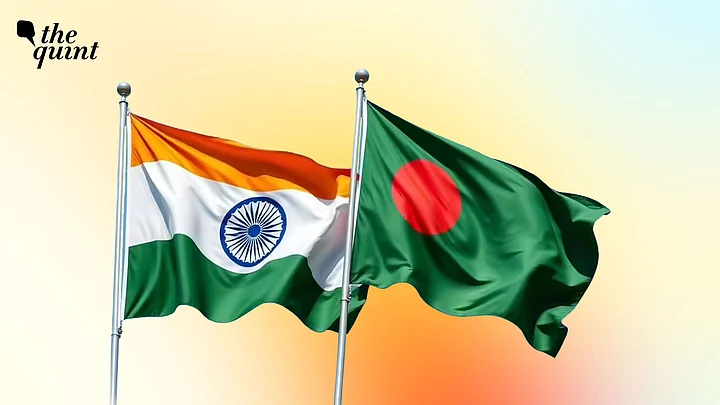
The thumping victory of the Tarique Rahman-led Bangladesh Nationalist Party (BNP) is as much a source of quiet satisfaction in India’s power corridors as Sheikh Hasina’s fall in August 2024 was a cause for despair and wringing of hands.
New Delhi is off to a fairly good start in Dhaka because it placed its bets early on the BNP—the very same party the Indian government had helped Sheikh Hasina to short-sightedly victimise and marginalise from 2008 to 2024.
It must be said to the credit of Indian diplomats that they were not dictated by their bruised egos. They quickly came to terms with a resurgent BNP and swung into action no sooner the Muhammad Yunus-led interim administration announced the elections last year.
They sought out the BNP—which responded positively to Indian overtures—setting the stage for structured talks to arrive at a tacit understanding, which should now pay dividends to both sides.
Backchannel Diplomacy
The India-BNP dialogue behind closed doors is of huge significance because it took place after a complete breakdown in New Delhi’s ties with the principal Opposition party in a neighbouring country that we keep claiming is one of our foremost foreign policy priorities.
To appease Hasina, India treated the BNP as persona non grata and refused to have anything to do with it, despite the BNP ruling the country multiple times.
But fortunately, after Hasina was kicked out by her own people, India smelt the coffee and adjusted to the new realities—displaying both pragmatism and professionalism.
Clearing the Path for Rahman
If the truth be told, Rahman’s homecoming in December to take the BNP’s reins in his hands wouldn’t have been possible without India and the BNP making peace with each other on an equal footing through sustained dialogue behind closed doors.
The decks for his return were finally cleared after the BNP leadership and the Indian government arrived at a working agreement to safeguard their respective interests.
The visible improvement in India-BNP ties ahead of general elections manifested in Prime Minister Narendra Modi’s touching condolence message after Khaleda Zia’s death on 30 December—five days after Rahman’s 25 December homecoming—and Foreign Minister S Jaishankar’s presence at her funeral.
As I understand it, late 2025 onwards, the BNP’s top leadership and Indian government representatives sat across the table in Bangladesh and the UK to arrive at an understanding, which is now going to play a key role in establishing a working relationship between the new regime in Dhaka and New Delhi.
In London—the headquarters of the BNP since 2018 when Khaleda Zia was convicted and jailed in Dhaka and her UK-based son and heir-apparent, Rahman, became the Opposition party’s acting chief—India was represented in the behind-the-scenes talks by High Commissioner Vikram Kumar Doraiswamy, Minister Consular Swayam Prakash Pani, and his predecessor Kapil Dev.
Significantly, Doraiswamy is a key Bangladesh expert as he was India’s High Commissioner in Dhaka before his London posting. In Dhaka, High Commissioner Pranay Verma and Minister Consular Subhash Ramakrishna Pillai engaged the top BNP leadership for a structured exchange of views, which resulted in Rahman’s return to lead the BNP into the election battle.
I understand that during the long consultations in London and Dhaka, the two sides candidly aired their fears and expectations and laid down their red lines pretty firmly.
Shared Stakes Against Jamaat
India’s strategy was two-fold.
First, it wanted to normalise its badly strained relations with the BNP, a mainstream political party next door which had done India no harm, and yet, India had persistently boycotted it to please Hasina.
Second, India calculated that in the Awami League’s absence, if any party could stop the Jamaat-e-Islami from coming to power, it was the BNP.
India’s objectives coincided with the BNP’s own goal. Even as India-BNP talks progressed in the two continents, the BNP fired salvo after salvo at the Jamaat. Many found the BNP’s attacks baffling as the Jamaat was its coalition partner in Khaleda Zia’s last government from 2001 to 2006. Ultimately, to keep India in good humour, the BNP even flatly turned down the Jamaat’s offer of forming a unity government—and sarcastically announced that the nation deserves a good Opposition party for which the Jamaat had the perfect credentials.
There is no doubt that the Jamaat will rake up a BNP-India “nexus” if the new government in Dhaka shows any signs of being soft towards New Delhi.
The BNP has the overwhelming majority to keep the Jamaat in check inside the Parliament, but outside the House, the Jamaat certainly has the wherewithal to ignite trouble for the greenhorn PM.
Whatever understanding the BNP and India might have reached, New Delhi is bound to forever miss Hasina because she could never say “no” to India. I don’t think that India is unlikely to be blessed again with someone like Hasina; her unquestioning loyalty and allegiance thoroughly spoilt us.
But, alas, all good things come to an end.
(SNM Abdi is a distinguished journalist and ex-Deputy Editor of Outlook. This is an opinion article and the views expressed are the author’s own. The Quint neither endorses nor is responsible for them.)
