
‘I Hid This Bad Memory Deep Down’: One Bohra Woman’s Fight Against FGM
When this woman began seeking answers about khatna from those around her, most responses were ‘it’s not a big deal’.
advertisement
Samina (name changed) is among the survivors-turned-activists from the Dawoodi Bohra Muslim community who have been advocating against the practice of female genital mutilation (FGM) in their community for over a decade. She is part of the group behind the Supreme Court petition seeking a ban on the practice—and directing the government to enact specific anti-FGM law. A nine-judge Constitution bench of the Supreme Court is set to hear the petition next week. The case is part of a batch of cases dealing with broader constitutional questions on religious freedom.
Choosing to cut one’s daughter is not an individual choice. It is coloured by pressure from elders in one’s family, community members, neighbours, friends and religious acquaintances—all of whom may start enquiring about a young mother’s khatna plans as a daughter approaches the age of seven.
Traditional cutters, whose livelihood is vested in cutting young girls, are often members of one’s close-knit community.
Despite being angry and resentful towards her mother years later, as an adult, Samina understood that she had suffered from a lack of awareness and choice. She also understood that social acceptance was a particularly thorny subject for her family.
Losing a Home and Finding Courage
When she was about 12 years old, her father had stood up against an injustice within their joint family, and the repercussions were severe. They were pushed out of a 1,400-square-foot, three-bedroom house in a swanky gated community that belonged to Samina’s grandfather in an expensive part of Mumbai and into a poky one-room flat in a Bohra ghetto.
The overnight change in their economic class led to a rapid decline in their social life as well—there were no more colony friends, next-door relatives, mosque visits or jiazats (The custom of inviting the Syedna home to bless the family and business).
They missed out on most daily conversations and connections with other Bohras and found themselves deeply isolated.
Detached from the community, Samina saw this period as one in which her family, which had earlier been easily described as highly compliant, began thinking more rationally and developing ideas independently.
Even the religious teachings they followed became more humanity-based. She feels the incident took their blinders off, preparing them for situations where the truth may be uncomfortable at times, such as questioning whether her khatna was really the harmless symbolic ritual people said it was, or whether the rationale behind it was more insidious.
“I knew something was amiss. Do you mean that the hundreds of millions of uncut girls are incapable of experiencing sexual pleasure? The explanation just didn't fit. And then the memories started coming back. When you have bad memories, you really hide them very, very deep down,” she said.
Finding Her Voice in a Room Full of Women Who Understood
Samina can vividly recount the first time when she met other survivors and allies at the Horniman Circle Starbucks in Mumbai through WeSpeakOut—one of the petitioners in the Supreme Court seeking a ban against the practice of FGM.
After a round of coffee orders were placed, all the women sized each other up guardedly, trying to gauge how traditional the other was, calculating what was safe or appropriate to say out loud.
The ice broke eventually, and the energy, enthusiasm, and vulnerability of their online camaraderie soon began to emerge in real life.
Her reaction had been defensive and protective, even though at the time she didn’t actually have a clue about the actual reason behind the practice.
But here, in this group of women, everyone belonged. They were all insiders with a genuine desire to stop the intergenerational cycle of violence.
Loving Her Community While Questioning It
Outspoken by nature, Samina remembers blurting out during this first meeting that khatna was only one of the outdated, unjust issues facing women in the community.
She unconditionally loves her community and was raised with the belief that Bohras are the best, better than anyone else—an echo of the model minority complex that has been etched into the psyche of all Bohras.
For several years, many Bohras have been speaking out against the corruption and oppressive practices of Syedna Burhanuddin (the leader of the Dawoodi Bohra community), also accusing him of levying several taxes on the community and various other un-Islamic practices.
The Bohra reformist struggle was launched in Udaipur in the 1970s, and today has spread to different parts of the world where Bohras live.
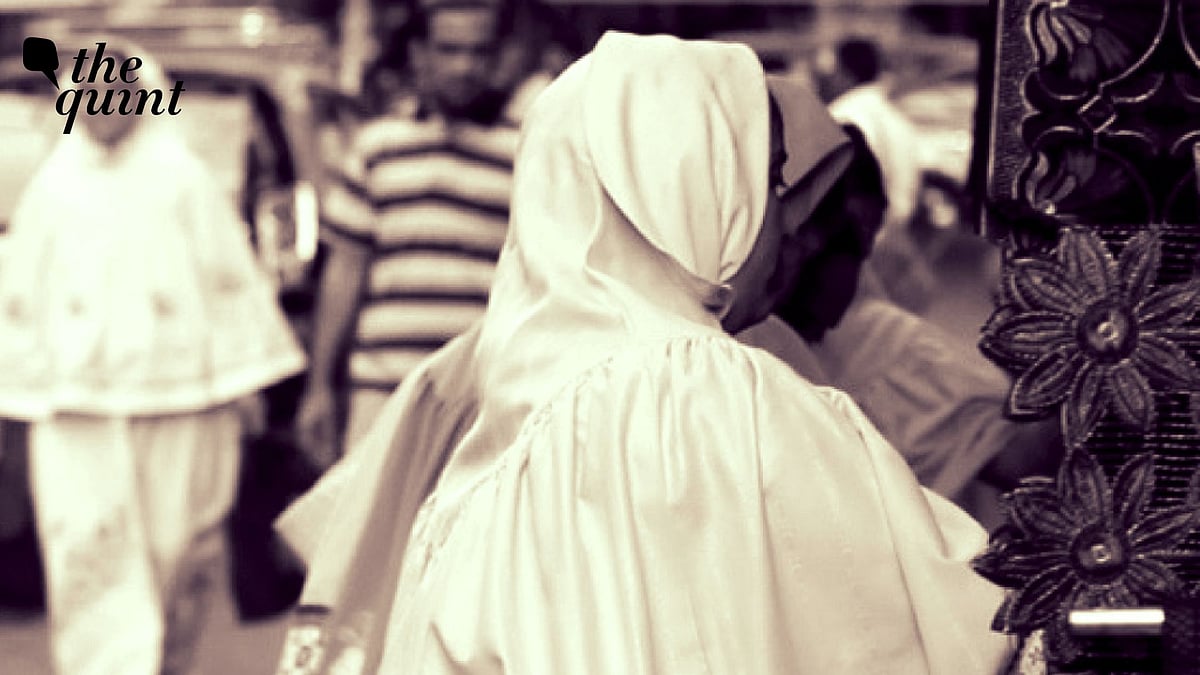
Amidst this rosily progressive picture, certain regressive moments stood out starkly to her—the same community that once saw women like her grandmother visit the mosque in sleeveless sari blouses was now advising women to avoid banking or accounting jobs and stick to designing ridas (a two-piece dress akin to a hijab traditionally worn by Bohra women) and topis (men’s caps).
Reimagining Bohra Womanhood
Bohra women have been historically viewed as more empowered, educated and economically independent compared to other Indian women, including other Muslim women.
Yet, in the community, the moral values of modesty and sexual control are considered the sole responsibility of women, and gender-based traditional discriminatory practices such as Iddat continue to exist.
Sitting around these women and being able to openly speak her mind on these issues felt like a freedom Samina didn’t know she could afford.
These women were well-read, well-spoken, driven towards change and not afraid of the pushback they were sure to receive for daring to challenge an age-old tradition.
Samina had always felt like a misfit, driving around the neighbourhood sans rida, working a busy office job with late hours, with priorities and ambitions very different from the women she saw around her every day.
Meeting these survivor-turned-activists shattered any biases she may have held, expanding her sense of what a Bohra woman could look and sound like, and reaffirming her own unconventional Bohra-ness.
From Hushed Conversations to a Wider Dialogue
Over the past four years, as an anti-FGM activist, Samina and her colleagues engage with young Bohra women in the 14-18 age group.
The rationales of sexual illicitness and promiscuity are no longer in the foreground; khatna is now purely about ‘religious purity’. Samina has seen up close the robustness of the Bohra clergy’s PR machinery, and she’s unsurprised, claiming that ever since the matter went to the Supreme Court, the community administration has worked in overdrive to control its image.
This has made Samina increasingly feel the need to speak to a wider section of the community, namely through accessible media that can show both sides of the debate and show that the movement is for the Bohras by the Bohras.
Not knowing how long the bandwidth of her and her colleagues working on the cause voluntarily will last, she wants to now focus on creating dialogue that can potentially be shared, disseminated, consumed widely, reach the last mile of the community and take on a life of its own.
(This article is an extract from the essay ‘FGM in India: A Memoir of a Movement’ that was first published by CREA. The author is a New-Delhi based writer and communications specialist.)
- Access to all paywalled content on site
- Ad-free experience across The Quint
- Early previews of our Special Projects
Published: undefined