
Explained: From Nepal to Afghanistan, India's Policy Signals in Budget 2026-27
Budgetary allocations towards Afghanistan saw an uptick amid India's apparent desire to draw closer to Kabul.
advertisement
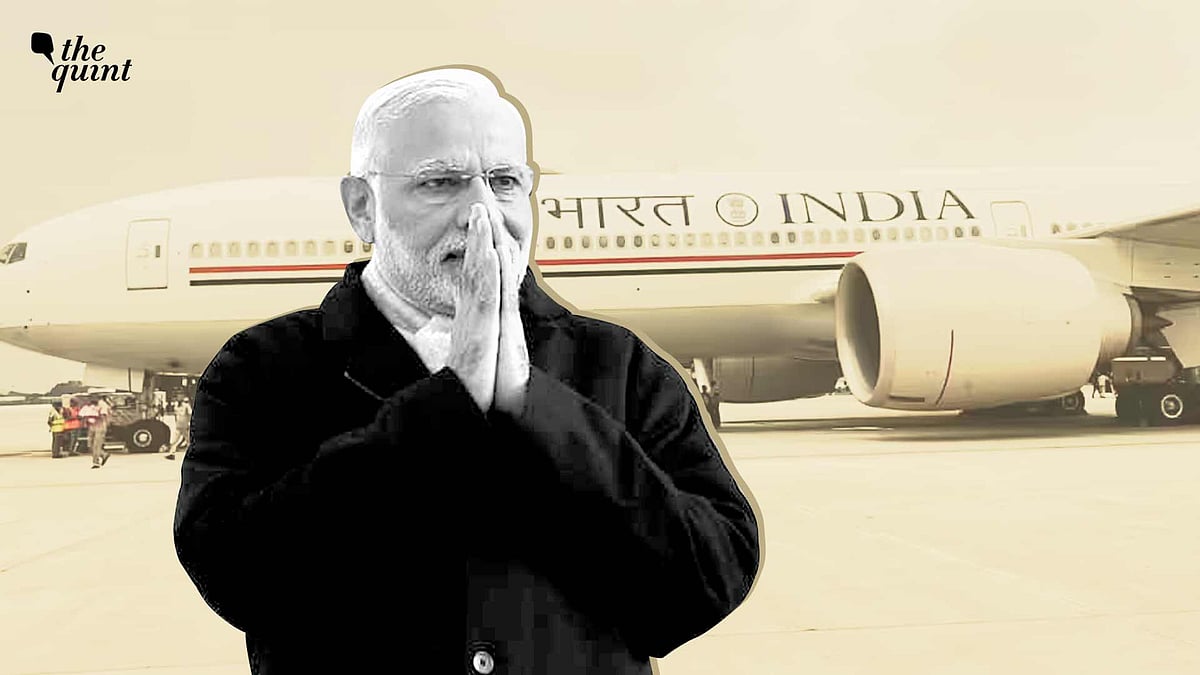
A reduced allocation for Bangladesh, an uptick for Afghanistan, and the lion's share of external aid to Bhutan, Nepal, and Sri Lanka—the recently tabled Budget 2026-27 makes clear the Narendra Modi government’s foreign policy priorities, especially toward its neighbours.
The Budget, tabled on Sunday, 1 February, saw a total of Rs 22,118 crore for 2026-27 allocated to the Ministry of External Affairs (MEA), up marginally from last year's outlay of Rs 20,516 crore. Of this, Rs 5,685.56 has been reserved under the “Central Sector Schemes/Projects – Aid to Countries" head.
Bangladesh: The First Casualty
It is no secret that ties between New Delhi and Dhaka have seen a massive deceleration following the ouster of former prime minister Sheikh Hasina and the emboldening of far-right forces like the Jamaat-e-Islami and certain sections of the student-led National Citizen Party. Attacks against minority Hindus have also become a thorn in ties, with the MEA rejecting Bangladesh's stance that they weren't along religious lines.
"The reduced allocation for Bangladesh is a clear reflection of rising tensions bilaterally," says Deepanshu Mohan, professor of economics at OP Jindal Global University, while speaking to The Quint. "It's also a reflection of India's position to not support any kind of fundamentalist or radical militant movement in Bangladesh. You'd expect fiscal reorientation to be aligned with bilateral interests."
The meagre allocation is also indicative of the new geopolitical partnerships Dhaka has been forming in the region. The country's Chief Adviser Muhammad Yunus had met Pakistan Prime Minister Shehbaz Sharif on the sidelines of the D-8 Summit in Egypt in December 2024. The meeting reportedly focused on resolving grievances from the 1971 war which led to the separation of the two countries.
On the trade front, the two countries have vowed to reinvigorate the Joint Economic Commission and set up a new Trade and Investment Commission to explore trade and investment opportunities.
Having said that, however, experts suggest that it would be unwise for India to completely ignore Bangladesh owing to its geographical and strategic location.
Chabahar Port: The Next Casualty
The 10-year agreement between India and Iran for the former to operate the Shahid Beheshti terminal of the strategic Chabahar Port in May 2024 was hailed as a major foreign policy achievement at the time. The signing, which came 22 years after the idea was first floated in 2002, had given New Delhi unimpeded access to trade with landlocked Afghanistan and Central Asian republics: Uzbekistan, Kazakhstan, Kyrgyzstan, Tajikistan, and Turkmenistan by bypassing Pakistan.
The reduced allocation comes following the US' announcement to impose 25 percent tariffs on any country that trades with Iran. Further, the US' waiver to India to operate the Chabahar Port is scheduled to lapse in April this year. This means that if India continues to operate the Shahid Beheshti terminal after April, it could lead to additional tariffs.
"A 'zero' for Chabahar this year is best read as a budgeting and risk-management signal, suggesting that New Delhi is being more cautious about new public outlays while the sanctions and compliance environment remains fluid," Indian economist Soumya Bhowmick tells The Quint.
Experts also suggest that ties between India and Iran—which have historically been extremely close—are becoming a casualty only because of the Trump administration's 'bullying' antics. It started in 2019, when India eliminated its import of Iranian oil following the first Trump administration's decision to withdraw from the Joint Comprehensive Plan of Action. At the time, Iran accounted for 11 percent of India's crude basket.
Afghanistan: A Case of 'My Enemy's Enemy'
An uptick in budgetary allocations towards Afghanistan from Rs 100 to Rs 150 crore shows not only deepening ties between India and the Taliban regime, but also New Delhi's apparent desire to draw closer to Kabul while the latter grows distant from Islamabad.
The tensions between Afghanistan and Pakistan witnessed a peak last year, characterised by border clashes and tit-for-tat precision strikes that claimed the lives of hundreds. Amid recent attacks in Balochistan as well—which began on Saturday, 31 January—Pakistan has claimed Afghanistan's backing of the Balochistan Liberation Army (BLA), which claimed responsibility for the attacks, alleging that senior officials of the outfit were operating from Afghan soil.
"Afghanistan is a case of reengagement with a key Indian partner from earlier times and mirrors the general need to engage the Taliban administration and develop a working relationship with it in the context of Pakistan remaining bitterly antagonistic to India," says Sanjeev Ahluwalia, Distinguished Fellow at the Chintan Research Foundation, while speaking to The Quint.
Bhutan, Nepal & Sri Lanka: India's Commitment To 'Neighbourhood First'
By assuring the lion's share of external aid to Bhutan, Nepal, and Sri Lanka, India has once again reaffirmed its age-old 'neighbourhood-first' policy.
While Bhutan was the highest recipient of grants, pegged at Rs 2,288 crore, a commitment of Rs 800 crore was made for Nepal and Rs 400 crore for Sri Lanka.
This, despite the fact that Nepal, like Bangladesh, was rocked by student-led protests in 2025, as was Sri Lanka in 2022. However, while Colombo now has a stable government in power, a political vacuum still persists in Kathmandu with elections scheduled for March 2026.
Hence, by pledging Rs 800 crore to Nepal, is New Delhi gambling blindly, hoping for a pro-India party to come to power following the elections—as opposed to Bangladesh, where the relationship seems doomed for the moment? Experts suggest that a key difference needs to be made here.
"Whatever has been happening in Nepal has been largely internal. The events there have no anti-India angle. On the other hand, what's happening in Bangladesh has resonance in India," says Manoj Joshi.
Sanjeev Ahluwalia agrees, saying that India-Nepal ties cannot be compared with that of any other nation.
Further, India also realises that it is in active competition with China over economic interests in both Nepal and Sri Lanka. Beijing and Kathmandu had inked an agreement to implement projects connected to China's Belt and Road Initiative (BRI) in December 2024. China also has stakes in several ports and hydropower projects in Nepal.
Similarly, China is Sri Lanka's largest bilateral creditor and helped restructure around $2.5 billion in commercial loans in 2024 to help the country navigate its debt default situation. Beijing has also been initiating FDI inflows in Sri Lanka, having invested heavily in the Hambantota port.
Hence, experts suggest that keeping grants to both countries stable is the least that New Delhi can do to maintain positive ties.
"We have to do much more when it comes to Nepal and Sri Lanka," says Mohan.
The Curious Case of the Maldives
Surprisingly, India's allocation towards the Maldives saw a reduction from the revised allocation of Rs 625 crore last fiscal to Rs 550 crore in the current fiscal.
Ties between India and the Maldives have seen a positive reset in the last few months following the bitterness that had initially crept in when Mohammed Muizzu first came to power in April 2024. Muizzu had fought the polls on an 'India Out' plank, and asked the Indian government to withdraw its 80-odd military personnel stationed in the country for "humanitarian purposes".
Having put those issues on the back burner, however, New Delhi and Male have made efforts to reset ties in the last few months. India extended a Rs 4,850 crore line of credit to the Maldives for infrastructure development and even agreed to reduce the country's loan repayment obligations by 40 percent. Further, PM Modi was invited in July 2025 by Muizzu as the chief guest to commemorate the country's 60th Independence Day.
Hence, amid the ongoing thaw in ties, it is surprising that India decided to cut grants for Male.
- Access to all paywalled content on site
- Ad-free experience across The Quint
- Early previews of our Special Projects
Published: undefined