'The Odyssey' Culture War: What Critics on Both Sides Missed
The conservative right blames the film for being "too woke". The left-liberal argues it distorts Homer's epic poem.
advertisement
In the pre-social media era, the decision to watch a film was a fairly simple one. Usually this decision would be based on the director’s oeuvre, the leading actors, and/or the basic premise, genre or plot of the film.
For example, in the mid-noughties, if you had been a fan of Steven Spielberg’s previous work, chances were that you would be willing to spend time and money on watching his latest film in a theatre.
One also had the option of picking up a newspaper or a magazine to read a professional review of the film. Things have changed drastically since then. We now live in a post-truth world where a small but vocal minority can come to dominate the discourse at any given time. This extends to the critique of films. Often the ill-informed lay person gets more traction on social media than a professional film critic.
The Odyssey has become the latest recipient of unenlightened criticism around the world.
A third criticism is that Nolan is not an auteur, but a commercial filmmaker who panders to his audience.
A piece written by film editor Catherine Shoard in The Guardian which gives strength to the feminist critique of The Odyssey, postulates that women may shun the film. Another piece in The Variety critically examines how academicians view the film. There have been more pieces on similar lines since the above two were published.
Then there are others who assert that Nolan should have continued making small, independent films rather than blockbusters which aim at the lowest common denominator. Author Manu Joseph says that Nolan is popular because he creates mass cinema while retaining an element of the abstract, which makes his viewers feel good about making a cerebral choice.
Can Epics Films be 'Independent'?
Epics call for vision and scale. Scaling up a production doesn’t come cheap, which means that you need a big studio to produce the film. In order to ensure a decent return on the huge investment, filmmakers usually mix historical facts with fiction to make the film appeal to mass audiences. They also hire A-lister stars.
Hollywood studios have backed epic and historical cinema in the past such as Ben Hur (1925 and 1959), The Ten Commandments (1923 and 1956), Cleopatra (1963), and Gladiator (2000), to name a few, all of which made money except Cleopatra.
On 29 November 2019, Netflix released an original documentary in four parts called The Movies That Made Us, which was dedicated to popular movies from the 1980s and 1990s, such as Die Hard, Pretty Women, Ghostbusters, and Jurassic Park.
For instance, Pretty Woman was originally written as a dark tale about class and prostitution, and was titled 3000. The script changed along the cast, and the film became a blockbuster. Spielberg’s Jurassic Park (1994) was considered near-impossible to make. Spielberg employed path-breaking CGI and life-sized animatronic dinosaurs to make the film special. Jurassic Park helped revive the interest of young children all over the world in paleontology. The series helped audiences appreciate the effort that goes into making a big-budget film and the phenomenal impact these have had on the audiences.
Passion for Cinema
It is no secret that Nolan loves cinema, and this shows in his films. Nolan is famous for shooting his films on photographic film rather than digital video, and in different formats. For example, Nolan shot Dunkirk partly on IMAX 65 mm (for landscapes) and partly on standard 65 mm film (for intimate scenes), alternating between the two as required, so that the film could be enjoyed on screens of all sizes. It follows, therefore, that if you had to watch Dunkirk on a television screen, the standard aspect ratio for TV screens (1.78:1), would work better than it does for most films.
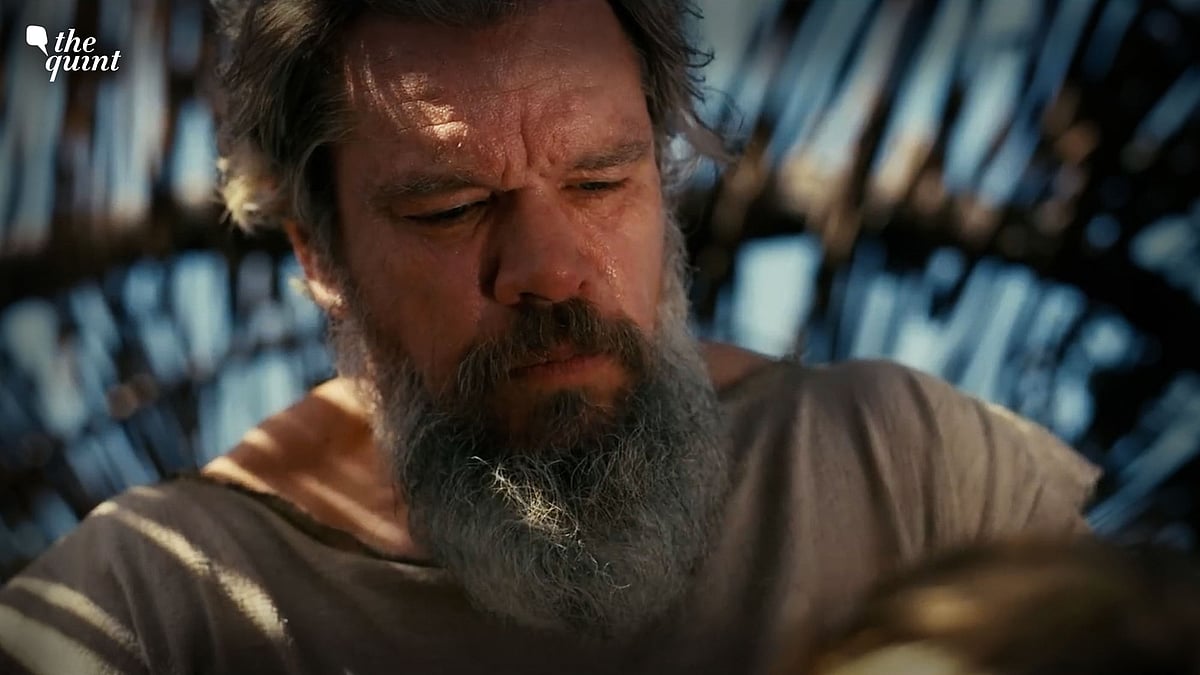
He shot the scene featuring the Cyclops on location, in a 95-foot-high cave in Greece known as Nestor’s cave—legend goes that the cave is the birthplace of Zeus. He also shot the ship scenes on a real ship (a 35-metre-long Viking ship) in the open ocean, which is why you would notice real dolphins in the frame when Odysseus heads out to sea. Besides Greece, the film was shot on real-life locations across Italy, Scotland, Iceland, and Morocco, while some indoor scenes were shot on a set in California.
In the behind-the-scene documentary, The Odyssey:The Making of an Epic, Nolan explains why he makes films the way he does:
Women in Odysseus’s World
The feminist perspective postulates that women may like to shun the film, the reason being that women are reduced to mere props in all of Nolan’s films. Let’s focus on The Odyssey for now. Homer’s original story was about the long journey made by Odysseus to Ithaca after winning the 10-year-long Trojan war, and spending 10 more years lost at sea. In Nolan’s adaptation, women play rather important roles in Odysseus’s journey.
Odysseus’s queen Penelope is no pushover. She guards the seat of Ithaca, keeping suitors at bay, while carefully preparing her young son for taking over the reins. At one point Penelope (played by Anne Hathaway in what is arguably her career-best role) castigates her son for remarking that the throne of Ithaca has been vacant for 20 years. “Empty throne?” she thunders, “I’ve been sitting on that empty throne for 20 years!" This dialogue firmly establishes that Penelope has agency and power, and exercises these at the right time.
The sorceress Circe (magnificently portrayed by Samantha Morton) forces Odysseus to put into perspective his own brutal behaviour and that of his men in the past. Calypso, the nymph who keeps Odysseus in captivity for seven long years, finally teaches him to let go and to stop trying to control his own fate.
Charlize Theron breathes life into the character of the ethereal beauty. The fact that Nolan does not dwell upon the story of the seduction of Odysseus by Circe or Calypso, seems to be a conscious choice to ensure unrestricted viewing of his film. What appears to be an act of self-censorship by Nolan, could help younger audiences look at these female characters as sentient beings, rather than as temptresses who ensnare Odysseus with their wily charms.
Film vs Book
Coming to the “woke” argument, the conservative viewpoint is that Nolan’s Odysseus is a vulnerable, repentant peacenik, whereas the protagonist in Homer’s poem was a brute of a man whose hubris led to his downfall. While Nolan has admitted that Emily Wilson’s progressive translation was his starting point for the film, perhaps academicians, especially those who teach Greek mythology and literature, are better equipped to comment on this issue.
Many of these academicians have argued (including in the Variety piece quoted above) that the Illiad and Odyssey are old Greek ballads, open to interpretation, and that Nolan’s adaptation should be seen as his unique interpretation.
Authenticity vs Inclusivity
As for the complaints that there are no Greek natives in the film’s cast, or the fact that Helen of Troy is not white, casting decisions are clearly the director’s prerogative. Theatre has always been more progressive than film in this aspect, and theatre directors around the world have been adapting classical as well as modern plays as per their vision.
These include Peter Brook’s 1985 adaptation, The Mahabharata, of the great Indian epic for the stage, which was based on the French version written by Jean-Claude Carrier. The cast comprised 21 actors from 16 countries. This was a deliberate device employed by Brook to emphasise the humanistic aspects and universal values of the characters of the epic.
Nolan has made a film with an ensemble cast for modern audiences.
Nolan has said it more than once in his interviews about the making of The Odyssey that he wanted to make a classical Greek tale relatable to people living in the modern age. Composer Ludwig Goranssen, his collaborator in The Odyssey (also Oppenheimer earlier), has used ancient Greek instruments such as the aulos (wind instrument), lyre (string instrument) and bronze gongs, to create timeless, contemporary music that uplifts and thrills. There is, to quote producer Emma Thomas, “intimacy and humanity in the soundtrack”.
Epics and Indian audiences
Indians love epics and historical dramas. We have seen many film and television adaptations of Ramayana and Mahabharat since the advent of silent cinema.
Coming to historical dramas, K Asif’s Mughal-e-Azam (1960) has stood the test of time. So enduring is the impact of the film that the depiction of Mughal emperor Akbar in popular culture continues to be influenced by how Prithviraj Kapoor looked in the film. Fortunately, there was no social media those days or else trolls would have castigated the filmmaker for tampering with history, there being no credible historical accounts of a slave girl called Anarkali who fell in love with Prince Salim.
The release of The Odyssey has come at a propitious time for director Nitesh Tiwari whose film adaptation of Ramayana is due for release around Diwali this year. The magnificent climax scene of The Odyssey has resonated with Indian audiences because it is reminiscent of Goddess Sita’s ‘swayamvar’ in Ramayana, where her suitors have to string Lord Shiva’s divine bow to compete for her hand. Let’s hope Nitesh’s Ramayana lives up to its promise.
(Nirupama Kotru is a senior civil servant.This is an opinion piece and the views expressed are the author’s own. The Quint neither endorses nor is responsible for them.)