
At 25, Lagaan Feels Like a Film From Another India
Today, Lagaan's story of cross-community resistance against state-backed exploitation would be called anti-national.
advertisement
Looking back from the vantage point of a quarter-century, Lagaan (2001) feels like an artefact from a lost time. If it was “almost impossible” to get made at the turn of the millennium, then in the increasingly intolerant and divisive contemporary landscape of India, Lagaan would not be cleared for production at all.
Today, its story of unified, cross-community resistance against state-backed exploitation would be swiftly labeled “anti-national” in its sentiment like the other rabble-rousing, reformist films of that era: from Ashutosh Gowariker’s own Swades (2004) to the iconoclastic Rang De Basanti (2006), which also starred Aamir Khan.
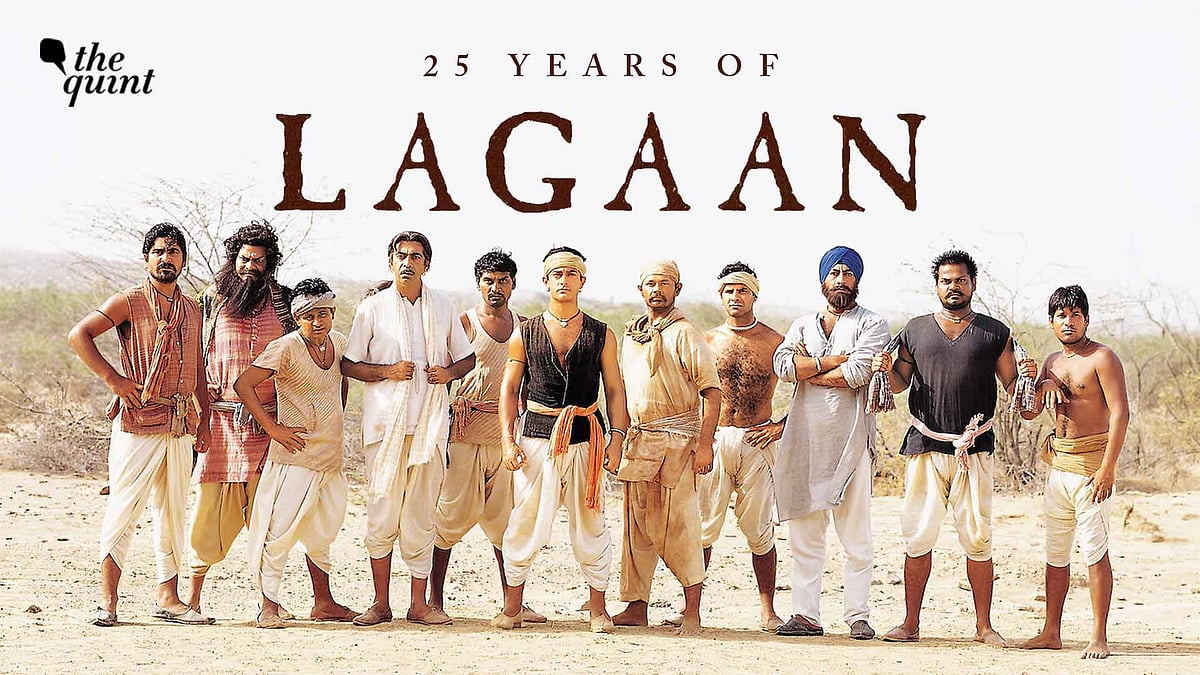
Gowariker’s Lagaan was simultaneously way ahead of its time and a contemporary reflection of the socio-political mood of a post-colonial India stepping into the world stage of neocolonial globalisation. An epic musical sports drama, Lagaan was essentially a story of subaltern protest against an exploitative, oppressive regime.
Cricket as Anti-Colonial Resistance
Gowariker constructed Champaner as a microcosm of an idealised India. The film's radicalism lay in its subversion of several traditional cinematic hierarchies all at once.
The core cricket team was seamlessly diverse, assembling characters across lines of religion, caste, and various disabilities to form a collective front.
Rachel Shelley’s Elizabeth Russell, who betrayed her own colonial apparatus to champion the oppressed, was a structural pivot, who presented a nuanced, transnational solidarity into the diegesis.
The Film That Conquered the World
Loosely inspired by B R Chopra’s Naya Daur (1957), which similarly pitted human labour against mechanical and institutional exploitation, the first cut of Lagaan was, according to Aamir Khan, a staggering seven and a half hours long. The final theatrical cut of Lagaan was compressed to 233 minutes unlike the 1994 Hungarian masterpiece, Béla Tarr’s Sátántangó, which clocked in at exactly 7 hours and 19 minutes (439 minutes) and is celebrated in cinephile circles for its uncompromising use of slow cinema to convey post-communist decay.
Nonetheless, the film retained its epic scope while surviving the conditions of commercial distribution. The gamble paid off greatly as Lagaan was celebrated across borders, in international film festival circuits as well as commercial venues. The legendary film critic Roger Ebert famously canonised Lagaan as “an enormously entertaining movie, like nothing we've ever seen before.”
When Collective Action Still Felt Possible
Indian cinema then operated within a Nehruvian framework of nation-building, championing the spirit of reclaiming a geography and identity drained and distorted by imperialist forces for almost two centuries.
The heavy, ongoing brain drain of the time, with skilled Indians migrating to the West, was treated as a correctable tragedy. In Swades, Gowariker urged a return of the diaspora, operating on a critical patriotism that acknowledged India was not yet the greatest nation in the world, but possessed the latent democratic potential to become so.
Now Gowariker stands more as a cautionary tale of how easily the utopian artistic imagination can be subsumed by the machinery of hate. And we have more people leaving the nation for foreign shores in search of better opportunities and quality of life having given up entirely on its government and fellow citizens to do better.
Gowariker's Uncomfortable Legacy
Even if Gowariker had never directed another frame, his legacy as the architect of the last Indian film to receive an Academy Award nomination for Best Foreign Language Film, standing alongside Mother India (1957) and Salaam Bombay! (1988), would have secured his place in the pantheon. He assembled a constellation of artistic genius: Bhanu Athaiya’s historically grounded costuming, A R Rahman’s transcendent, raga-infused score, Javed Akhtar’s poetic lyricism, Nitin Chandrakant Desai’s evocative art direction, and Anil Mehta’s sweeping, naturalistic cinematography.
Alas, the tragedy of the film's 25th anniversary is having the 20-20 hindsight where we can clearly see the stark dissonance between Gowariker’s past work and his present political alignment.
Contemporary Hindi cinema has largely been co-opted into this very apparatus, serving as a tool for either othering or entirely erasing the marginalised.
While history might remain kind to the brilliance of Lagaan, its creator's current standing will forever remain an ugly blotch upon its legacy.
(The author is an independent film, TV, and pop culture journalist who has been feeding into the great sucking maw of the internet since 2010. This is an opinion piece. The views expressed above are the author’s own. The Quint neither endorses nor is responsible for them.)
- Access to all paywalled content on site
- Ad-free experience across The Quint
- Early previews of our Special Projects
Published: undefined