
Polling Day Diary: Bengal's Two Kinds of Voters, Courtesy of Election Commission
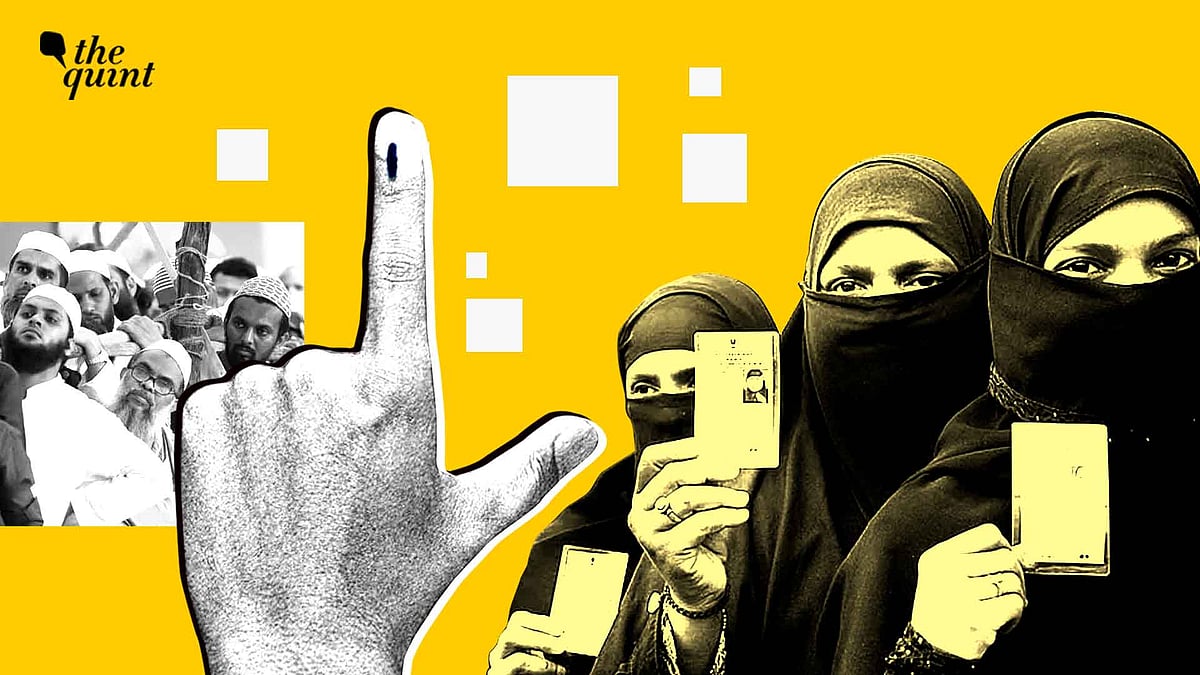
Unlike previous polls, most voters wanted to keep a copy of the voter slip in this election, writes Adil Hossain.
advertisement
On the morning of 23 April, people in their checked lungis, carrying plastic folders stuffed with papers, arrived early and patiently waited for their turn to vote at the stationary shop on the way to Chakulia High School in Uttar Dinajpur district of West Bengal.
Unlike in previous elections, most voters, before casting their ballots, made copies of the voter information slip that they had received from their booth level officers a day or two earlier.
In the past, locals would never save such documents. But this time, they had seen Facebook and Youtube videos on their mobile phones or heard at a local tea shop that during polling, the presiding officer would take the voter slip, and that they must keep a record to prove their status as a 'valid voter' in the 2026 Assembly elections—and thus effectively an Indian citizen.
Mansur, a local mason in his 50s, while waiting in the queue, said to me jokingly:
Two Kinds of Voters
23 April was the first phase of the much-awaited West Bengal Assembly elections. Electorates in the Uttar Dinajpur district, who were allowed to vote after the Election Commission Of India (ECI)'s Special Intensive Revision (SIR) exercise, have seemingly decided the fate of nine seats, including my hometown Chakulia, constituency number 31.
In Uttar Dinajpur, along with Murshidabad and Maldah, which are the primary Muslim-majority districts of West Bengal, the ECI had put almost 58.65 percent of the total electorate under adjudication. According to the data compiled by Kolkata-based Sabar Institute, in Chakulia Assembly seat, net (non-death) deletions due to SIR stands at 26,846 or 11.13 percent of the total electorate of 2,50,364 recorded in 2025.
The religious or communal angle in the SIR deletions is obviously the most talked-about topic in almost every tea shop in the area. In Chakulia, 61 percent of the voters are Muslim, who mainly come from two linguistically and culturally distinct groups—Shershahbadia and Desi Nasya Sekh.
It is now public knowledge that most Muslim villages like Shikarpur, Gerua, and Baligura have witnessed almost 300-500 voter deletions, half of their existing electorates. That is nowhere close to the deletions in Hindu villages like Haripur, Kaliara, and Ladhi, where the number is around 10-20.
This is consistent with the religious profile of the deleted voters during the SIR exercise in other parts of West Bengal as revealed by the Sabar Institute’s meticulous work.
Vote Polarisation Between TMC and Congress
In Chakulia constituency, Ali Imran Ramz, popularly known as Victor, from the Indian National Congress, Minhajul Arfin Azad from the ruling Trinamool Congress (TMC), and Manoj Kumar Jain from the Bharatiya Janata Party (BJP) are among the top candidates. The current MLA from the TMC is facing a tough challenge from Victor who won this constituency in 2011 and 2016 on a Left Front ticket (All India Forward Bloc) before switching to the Congress.
The BJP has a substantial voter base among the Hindu population, but not enough to win this seat despite Hindu-Muslim polarisation.
And yet, his performance was better than the other Left-Congress coalition candidates in the district at that time whose vote percentage dropped from double digits to a mere 2-3 percent.
At the same time, in this election, SIR means 'advantage TMC' because the deleted voters and their families hope that if Mamata Banerjee gets elected again, she would address the issue. Locally, both the Congress and the TMC had organised big rallies against the SIR deletions.
A Visible Migrant Vote Surge
Along with SIR, the migrant workers issue has become considerably visible in local politics. Just before the polling day, buses full of migrant workers arrived in the surrounding villages from Punjab, Delhi, and Karnataka.
“We have travelled in buses for 3-4 days to come back and vote out. We fear that if we don’t vote this time, they would delete us too,” said Asif, a youth in his 20s, speaking to The Quint outside the Chakulia High School polling centre. He works in a hotel in Delhi.
The Congress is likely to increase its voting percentage this time owing to Victor's work among the migrant workers who were attacked or harassed by local law enforcement agencies in the NCR region following Operation Sindoor last year.
Many Hindu voters also voiced their support for Victor after he secured the bail of two Hindu migrant workers from Majra village. The duo had got embroiled in a local criminal case in Bengaluru. The mother of one of these migrant workers campaigned with Victor in many Hindu villages.
Outside Chakulia High School, where polling for Booth no 80, 81, and 82 was being conducted, many deleted voters came with their families.
Old Muslim men sitting on unfinished school walls were complaining about top-level conspiracies to stop them from voting in this election, and how they had been voting since the 1970s.
One septuagenarian shopkeeper said with visible agitation:
Young men sitting next to them wondered why, despite submitting birth certificates, passports, and board certificates, they were deleted from the electoral rolls.
At 3.30 pm, someone informed the crowd that in booth no 80, 565 out of a total of 647 registered voters had already cast their votes.
“This time, people are voting like never before. Not even in Panchayat elections did the people come out to vote in such large numbers or with such gusto,” said a local party worker associated with the Congress.
In West Bengal, Panchayat elections are fiercely contested as local groups aim to establish their control in villages and the distribution of government welfare schemes.
As a result, Panchayat polls often register a higher voting percentage than the Assembly and the Lok Sabha elections. “People are not voting for any schemes this time. They are voting just to be recorded as voters and seen for the next elections. Who knows what new SIR-like thing will happen in five years?" asked Asif said after photocopying his voter slip.
He, too, will save the slip till the next polls.
(Adil Hossain is a faculty at the School of Development, Azim Premji University. He can be reached at @adilhossain. This is an opinion piece and the views expressed are the author’s own. The Quint neither endorses nor is responsible for the same.)
- Access to all paywalled content on site
- Ad-free experience across The Quint
- Early previews of our Special Projects
Published: undefined