The events of 6 June 2024 should have signalled the dawn of an era of ascendancy for cricket in the United States of America. Nitish Kumar’s last-ball four off Haris Rauf, Saurabh Nethravalkar’s resolute defence of 18 in the Super Over, and the kaleidoscopic mosaic of unrestrained euphoria that ensued ought to have been the opening chapter of a sustained success story. The USA had beaten a former world champion in Pakistan, and from that historic night in Dallas, there should have been no need to look back.
Except, they did. Or, they were unfortunately compelled to
Three months after that victory, USA cricket was placed on notice by the ICC, for non-compliance with the apex governing body’s membership criteria. A year later, they had to be suspended for repeated breaches of obligations, which included the lack of a functional governance structure and failure to make progress towards National Governing Body status with the United States Olympic & Paralympic Committee, which is crucial for Olympic recognition.
In the wake of that suspension, a side many expected to spring further upsets has played only three T20Is. As they head into the ICC Men’s T20 World Cup 2026, the USA’s cumulative competitive exposure over the past eight months amounts to virtually nothing.
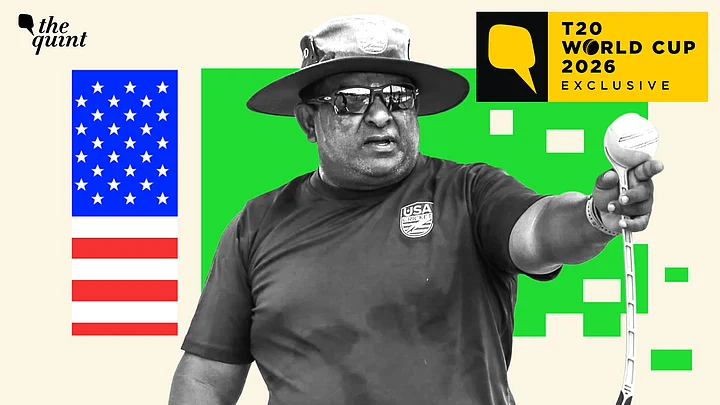
It is in such a turbulent time that Pubudu Dassanayake, former Sri Lanka international, took over the helm of USA cricket, for what is his second stint with the team. In his first stint, notably, he helped USA earn ODI status and essentially chalked out the path for progress.
With his team exuding resolve in the warm-up matches against India A and New Zealand, it will be fair to expect USA to cause major teams issues yet again. This time, though, he has an appeal — the full-member teams must extend their support, in the way of matches and invitations, for the holistic development of USA cricket.
The Quint spoke to Pubudu Dassanayake at length in an exclusive interaction. Excerpts follow.
USA cricket has had to deal with administrative challenges in the last few months. Amid the external turbulence, how has your team's preparation been for the T20 World Cup 2026?
Building up to the World Cup, we had a lot of plans. But in the last six months, our scheduled plans got cancelled because of internal issues. We were supposed to play West Indies A, and we were also supposed to come to Sri Lanka earlier, but that didn’t happen.
At the end of the day, when you talk about this camp in Sri Lanka, we came here on January 7, and so far everything has gone according to plan. We have played quite a few matches. The training has also been high quality, and we got everything we wanted in these three weeks.
What we missed was playing high-intensity games — official internationals. That couldn’t be helped. We have had to depend on the two warm-up games before the main game on the 7th. But when you talk about expectations, I think we have a good team and we are expected to play well against any team.
Considering the predicament USA cricket finds itself in, how challenging has it been for you to isolate the squad from whatever is happening?
There have been internal issues in the last three or four months, and right now we are under the ICC, so some scheduled games got cancelled at the last minute.
I took up the job at a very challenging period because the old board was scrapped and it is under ICC now. Under these circumstances, it has been challenging to bring unity back into the team.
Our team is very diverse — we have Indians, Pakistanis, Sri Lankans, South Africans and Caribbeans. They have all learned the game differently, but they are high-quality players. Most of the current lot has played first-class cricket — Ranji Trophy in India or first-class cricket in Sri Lanka or Pakistan. They are very seasoned players.
My job is to bring everyone together and play under USA. I think we have achieved a lot in the last six months. Despite some issues around the team, it is highly talented, and on the ground we have always produced results. My focus is to keep improving every day and put up a good show, especially against the big teams.
Many of your players have spent their formative years in the subcontinent. How crucial is that experience?
I think experience is very important, especially because the World Cup is happening in Asia. When you play for your national team, you go through everything in that country — from junior cricket to the top level. You understand the pressure and how to handle things when you represent a full member. That experience is unbelievable.
Even our first-class players from India and South Africa are well-seasoned. Experience, I think, is the key when you come to big events like this.
USA have shown that they can beat Pakistan. What needs to be done to ensure sustained development of the team?
We are playing in World Cricket League 2 in the ODI cycle, which is all associate teams. But I strongly believe the USA team is one or two notches better than associate teams currently. We have defeated Pakistan. We want to play against full-member nations, but we don’t get those opportunities or invitations.
Hopefully, down the line, some full members will offer us more games. Once we start playing regularly against full members, we will grow into a bigger nation in the cricketing world.
Why do you feel it is essential that the full-member nations extend their support to USA cricket?
It’s not just because we have a good team — the whole structure is built towards it. We may have the highest player pool in the associate world. America is a big country with a huge South Asian community, and online following is second only to India.
Funding and professionalism are there. Every sport in the USA is treated like a world-class event. Cricket has come to this country, and very soon it will be treated the same way. World cricket will gain if USA gets full-member status.
What we need right now is support from full members to play more quality games throughout the year. That’s the one thing we are missing.
This is your second stint with the USA team. When did you learn about the opportunity, and why did it feel the right fit at the right time?
I didn’t have any plan initially. I was fully settled with the Canadian team, and even until the last T20 World Cup we did very well. But they didn’t accept my contract, so I left.
When the USA vacancy opened, I applied, but I never thought they would be interested. I went through the procedures and they decided to hire me. I’m glad to be back. The boys are familiar with me — from 2016 to 2019, five or six players from that era are still key players. They know how the team grew from Division Five to becoming an ODI nation.
There are different challenges now, but this is a good team. My next target is to get them to full-member status, and hopefully that happens soon.
What do you make of your group in the T20 World Cup?
We know India and Pakistan are among the best in the world. Even in the associate world, teams like the Netherlands and Namibia are very decent.
The good thing about our team is that we have done the hard work. We have a balanced batting lineup, a balanced bowling lineup, and experience in the team. We focus on playing high-quality cricket and don’t worry too much about the end result. If someone wants to beat us, they have to play quality cricket.
We will be ready against every team we face, with all plans in place, and we are really looking forward to playing the big teams.
Your first match will be against India. Would it be fair to say that you are commencing your campaign against the best team in the world?
India are playing very good cricket and have top-quality players, for sure. But in T20 cricket, I don’t put anyone too far ahead. Any team can beat any team on any day.
In T20s, a few overs can change the game. Our team is capable of doing those little things. We are going to play hard and play our best cricket. If the opportunity comes, we can be on top.
After the match against India, your team will travel to your nation, Sri Lanka, to face Pakistan. Will it be nostalgic to lead a team on your home soil?
I’ve experienced this before, in 2011, when I was the Canadian coach. We played Sri Lanka and Pakistan here, and that feeling was great. I’m humble and grateful to have that opportunity again, playing in my home country and knowing the conditions well.
The team has spent three good weeks here, so they are also very familiar with the conditions now.
Saurabh Nethravalkar has been a revelation since the last T20 World Cup. How important a role does he have in USA's success?
He is a very intelligent and talented cricketer. I first saw him in 2017 when he played against USA before qualifying. I immediately felt that once he qualified, he would be a key player.
He has contributed a lot, not just with the ball. When you give him a plan, he knows how to execute it. Conditions don’t matter to him — he knows what length, line and variations to use. He may not be the fastest bowler, but he is very accurate and gets the job done in almost every game. USA cricket is very lucky to have him.
Your team is very diverse, and often ridiculed for that very reason. What do you make of it?
That’s our strength. Conditions don’t matter much because we have seasoned players from different backgrounds. We learn the game differently in West Indies, South Africa and Asia, and that diversity helps us.
We are able to put all of this together as a team, and we have players who can handle different situations.
Fans in the subcontinent have already seen what the likes of Saurabh Nethravalkar and Ali Khan can do. Which cricketers should we keep a close eye on this time around?
We have a very seasoned team, but I want to mention two youngsters in particular — Sai Mukkamalla and Sanjay Krishnamurthi. They are born in the USA and learned the game here.
They are high-quality players, comparable to anyone in our team, and among the best in associate cricket. They will surprise people. It’s not just players coming from outside — these two are products of the USA system, and they are ones to watch.
Do you think the matches that could not be played because of administrative issues will eventually come back to haunt USA?
Some tournaments were lost for other reasons, but in terms of preparation, I didn’t lose much. My top eight to ten players are continuously playing Premier Leagues around the world.
They are not just participating — they are leading scorers and leading wicket-takers. These leagues have really helped us build this team
What do you feel going into the match against a daunting India side?
Beating India at Wankhede is a big task, but we are capable. We want to take one game at a time. To go to the next level, we need to beat at least one full-member team.
Even the associate teams are quality sides, so all four games will be competitive. If we want to get into the top eight, we need to take one big team down.