
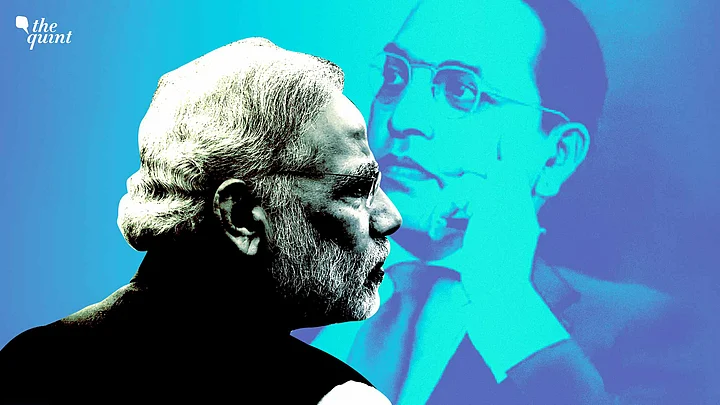
(India's next Census exercise, which will include caste data for the first time since Independence, will be conducted in two phases, starting 1 March 2027, with some regions like Jammu and Kashmir, Ladakh, and Uttarakhand beginning earlier in October 2026. This piece has been republished in light of the recent announcement. It was first published on 3 May 2025.)
In the wake of the Bharatiya Janata Party's (BJP's) announcement that the next census would be a caste census (totally opposed to its earlier long-held stance), many commentaries will be written, wondering what the policy and political impact of the same would be. It is however, also important to take a moment to understand how this moment was reached in the first place.
In 2023, when the Bihar government published the results of the statewide caste census, I had written for The Quint, predicting that this momentum will eventually shift to a national stage and end the ‘Modi consensus’. The latter has been a reshaping of national political and policy discourse away from the social-justice, caste-based mobilisations, which started in the 1970s, gathered momentum during the 1990s, and peaked in the early 2000s.
Under the ‘Modi consensus’, the discourse pivoted massively towards centralising religion—primarily the ‘Hindu’ identity—as the cultural glue keeping all the different caste groups together, who often have antagonistic interests. The othering of religious minorities, particularly Muslims, became the mobilisational goal of his formation.
Parallel to this pivot was the branding of ‘caste’ political action as a vestige of primitive and antiquated social thinking. This branding was carried out by the cultural intelligentsia, which remains almost exclusively savarna. For them, the future was supposed to be a ‘valhalla’ of ‘development’, with IT, bullet trains, and super-power status, which could only be achieved through market reforms and not caste action.